


How to Stop Toddler From Grinding Teeth: A Parent's Reassuring Guide
- Fun Valley

- Jun 29
- 13 min read
It's 2 AM and you're peeking into the nursery, expecting to hear soft snoozes, but instead, you hear a sound like tiny pebbles crunching together. That unmistakable noise is enough to keep any parent awake with worry. You aren't alone in wondering how to stop toddler from grinding teeth or if those precious baby pearls are in danger. While the sound is startling, it's often just a noisy part of your child’s dental adventure as they explore their growing bodies.
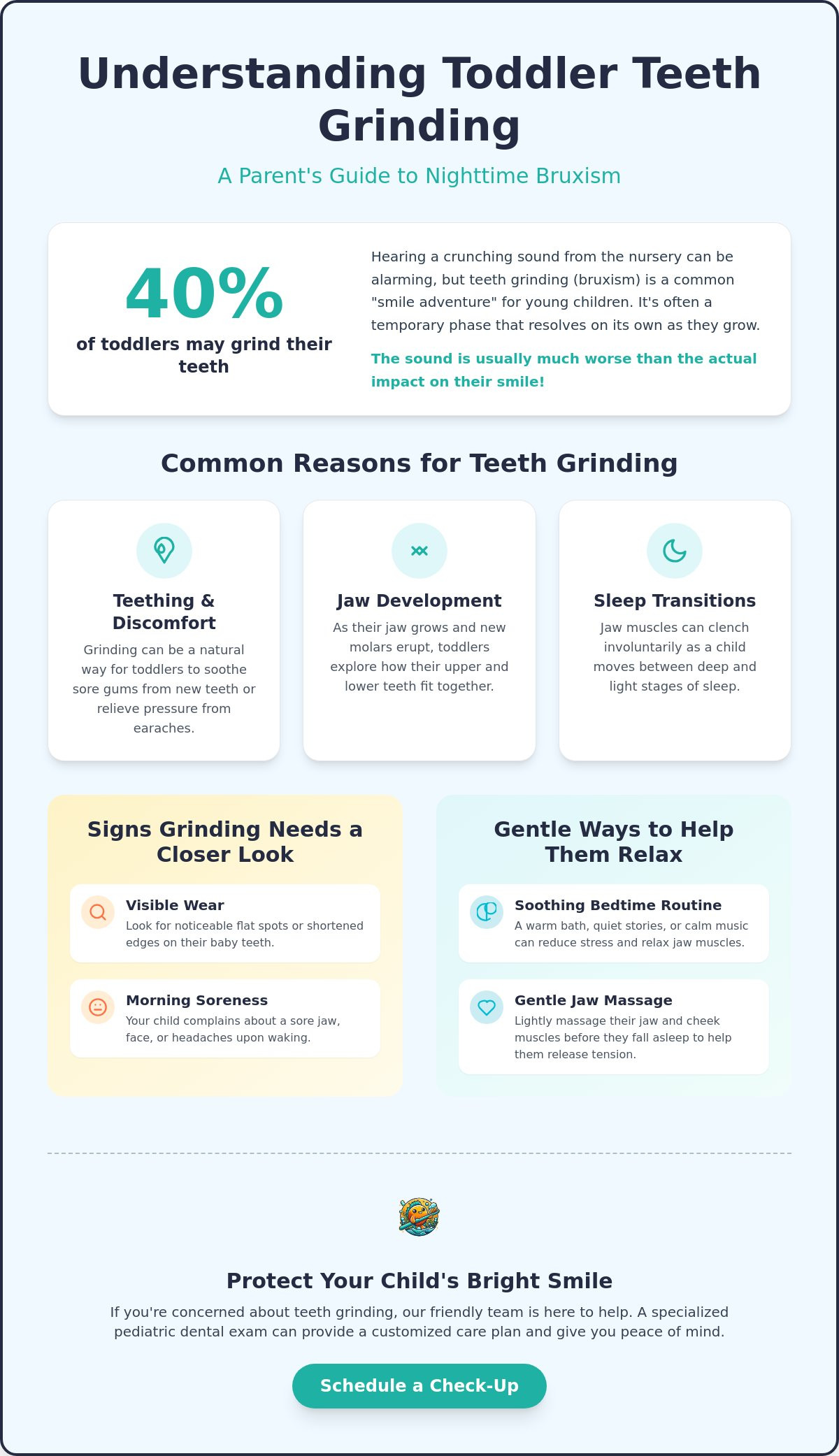
We know that hearing your little explorer grind their teeth can feel stressful, especially when you worry about wear and tear on their bright smile. It's a common milestone, with some studies suggesting up to 40 percent of toddlers experience this "discovery phase" at night. Our guide will help you find peace of mind by explaining exactly why this happens and offering gentle, expert-backed strategies to protect their teeth. You'll learn immediate ways to encourage relaxation and know exactly when it's time to book a dental exam to ensure their smile journey stays on the right track.
Table of Contents
What is Toddler Bruxism? Understanding the Noisy Nighttime Habit
Every child’s journey toward a healthy smile is filled with wonderful surprises. Sometimes, those surprises happen in the middle of the night. Bruxism is the official name for when a child clenches or grinds their teeth. While the name sounds a bit clinical, we prefer to think of it as a temporary "smile adventure" your little one is navigating. Research shows that this habit is incredibly common. In fact, nearly 30 percent of preschoolers experience some form of grinding during their early years.
Many parents feel a rush of anxiety when they first hear that crunching sound coming from the nursery. It feels like those tiny teeth must be breaking, but we want to reassure you that the sound is almost always worse than the actual impact on their smile. For most kids, this is a self-limiting habit. This means it usually goes away on its own without any fancy gadgets or interventions. Because baby teeth are temporary placeholders, occasional grinding rarely affects the permanent teeth waiting patiently beneath the surface.
Why Does It Sound So Loud?
If you've heard it, you know the sound is surprisingly loud for such a small person. It can sound like a rock tumbler! This happens because a toddler's jaw is quite compact, which can amplify the noise as teeth rub together. The sound often occurs when your child moves between different stages of sleep, particularly when transitioning from deep sleep to a lighter cycle. During these moments, their jaw muscles might flex or tighten instinctively. Even though it sounds like they're munching on gravel, your child is usually completely unaware of the noise. They're dreaming of playgrounds while you're awake searching for tips on how to stop toddler from grinding teeth. Just as toddlers experience these natural muscle flexes, adults dealing with persistent tension can find support through the comprehensive services at Chiropractic Natural Care Center.
Is It Common in Infants and Toddlers?
Grinding can start much earlier than many parents expect. For infants, it often begins as soon as their first few teeth arrive. It's their way of exploring how their mouth works and testing out their new "equipment." As they grow, the habit often peaks when those big, sturdy molars begin to erupt.
Infant Grinding: Usually related to teething and sensory exploration as they discover their bite.
Toddler Habit: Often peaks between ages 3 and 5 as the jaw develops.
Resolution: The vast majority of children stop naturally once their permanent teeth arrive.
Understanding that this is a normal developmental milestone can help lower your stress. While you might want to know how to stop toddler from grinding teeth immediately, remember that patience is often the best tool in your kit. Occasional grinding is simply a sign that your child's oral world is growing and changing every single day.
Why Do Toddlers Grind Their Teeth? Investigating the Root Causes
Every adventure has a roadmap, and understanding why your little one is clenching those tiny pearls is the first step in your journey. While it might sound like a construction site in the nursery, there are several common reasons toddlers grind their teeth. From physical growth spurts to emotional milestones, their bodies are constantly processing new experiences. If you are looking for ways on how to stop toddler from grinding teeth, identifying these triggers helps us create a path toward more peaceful nights.
Teething and Earaches: The Physical Triggers
Imagine a lot of activity happening in a very small space. When new teeth are pushing through, it creates pressure that can feel quite strange to a toddler. Grinding often acts as a natural, self-soothing mechanism to relieve that jaw pressure. It is their way of "massaging" the gums from the inside out. Similarly, our ears and jaws are very close neighbors. If your child suddenly starts grinding, it might be a response to the pressure of an earache. Checking for a fever or tugging at the ears can help you rule out a temporary infection. Often, as the tooth finally erupts or the ear pressure clears, the grinding fades away like a passing cloud.
Sometimes, the cause is simply a matter of how the jaw fits together. As new molars erupt, they can temporarily shift how the upper and lower teeth meet. This can create "high spots" that feel a bit like a tiny pebble in a shoe. Your child might grind or clench to try and smooth out that uneven feeling while they sleep. It is a natural reaction to a changing mouth, but it’s helpful to keep an eye on how frequently it happens.
Alignment and Bite Issues
Just as a map guides an explorer, the primary teeth guide the permanent ones into place. If the teeth don't align perfectly, a condition called malocclusion, it can lead to unconscious clenching. This is why an early visit to a pediatric dentist Sun Valley CA is so helpful. We can look for these alignment clues and ensure their smile journey is staying on track. These early checks help us understand if the grinding is a simple phase or something that needs a bit more attention.
Beyond the physical, we also look at how they breathe. Sometimes, enlarged tonsils or other airway issues can make it harder for a child to breathe comfortably at night. Their body might respond by moving the jaw forward to open the airway, which leads to grinding. Even "happy" stress, like getting a new big kid bed or a visit from a grandparent, can make their sleep a little more active. By partnering with a specialist, you can gain the peace of mind that comes from knowing exactly what’s happening in your child’s world. Scheduling a pediatric dental exam is a wonderful way to celebrate their health and catch any alignment needs early.
Signs Your Toddler’s Grinding Needs a Closer Look
While we’ve shared that most grinding is a natural part of your child’s dental discovery, it’s helpful to know when to put on your detective hat. Sometimes, the habit can leave little clues behind on their teeth or in how they feel when they wake up. If you are researching how to stop toddler from grinding teeth, the first step is identifying if the habit is causing any physical stress. We want every child to feel bright and comfortable, so we look for specific signs that the "smile adventure" might need a little extra support from a professional.
Start by taking a peek at the chewing surfaces of their teeth while they’re laughing or brushing. You might notice unusual wear patterns or "flat spots" where the natural ridges of the teeth look a bit smoothed out. In some cases, you might even spot tiny chips in the enamel or small fractures. These are visual signals that the pressure from clenching is a bit too intense. Another telltale sign is increased sensitivity. If your little explorer pulls away from a cold glass of water or a warm spoonful of soup, their enamel might be thinning from the nighttime activity.
Morning Symptoms to Watch For
Since toddlers can't always explain a dull ache, we can use playful language to check in with them. Instead of asking if their jaw hurts, try asking if their "smile feels tired" or if their "teeth had a long workout" last night. A child who clenches through the night might wake up feeling unusually restless or grumpy, even after a full night of sleep. Unexplained headaches in the morning are another clue that those jaw muscles have been working overtime. By paying attention to these subtle mood shifts, you can better understand the impact the grinding is having on their daily joy.
Visual Red Flags on Baby Teeth
Checking enamel thickness at home is easier than it sounds. Healthy enamel is bright, shiny, and white. If you start to see a yellowish tint or if the teeth look "dull," it might be a sign that the protective outer layer is wearing down. It’s a bit like a shield getting thinner after a long battle. This is a particularly important red flag because knowing how to prevent cavities in children becomes much harder when that protective enamel is compromised. Worn teeth have more nooks and crannies where sugar bugs can hide, making professional guidance even more vital.
Monitoring these signs doesn't have to be scary. It’s simply a way for us to partner together to ensure your child’s mouth stays a happy, healthy place for exploration. If you notice these red flags, it’s a wonderful time to reach out so we can help protect those precious baby pearls.
Simple Ways to Help Your Toddler Relax and Stop Grinding
Creating a peaceful environment is one of the most effective tools in your parenting kit. Since much of the clenching we see is linked to the body’s natural response to daily growth and excitement, focusing on relaxation can make a big difference. When you are looking for how to stop toddler from grinding teeth, think of your child’s bedroom as a "Smile Sanctuary." This is a special place where the day’s big adventures wind down into quiet, cozy moments. For parents looking to optimize the room's atmosphere, professional window films from Sun Guard Tint can provide the perfect balance of privacy and light control to support better rest. By lowering the energy level before sleep, you help their jaw muscles transition into a state of rest rather than tension.
The Power of a Relaxing Bedtime Routine
A consistent rhythm helps a child’s nervous system feel safe and settled. Start your wind-down at least one hour before lights out by turning off bright screens and skipping high-energy games. Instead, try incorporating a warm bath. The gentle heat works wonders for relaxing the facial and jaw muscles that may have been active all day. While you're drying off, you can practice "adventure talk." This is a simple way to help your toddler process the day’s events. By talking through their favorite parts of the day or any little worries, you help clear their mind so their body doesn't have to "grind through" those feelings during sleep. Soft music or a favorite calm story can provide the perfect finishing touch to this soothing journey.
Hydration and Diet Tips
What your little explorer eats and drinks also plays a role in how their muscles behave at night. Staying hydrated is essential because even mild dehydration can lead to increased muscle tension and irritability. Ensure they are sipping water throughout the day to keep their body in balance. It is also wise to limit sugary snacks or any caffeine-heavy treats in the evening, as these can lead to restless sleep and more active jaw movement. If your toddler is currently navigating the "molar mountain" of teething, a soft-food diet for a few days can reduce the work their jaw has to do. Foods like yogurt, applesauce, or mashed bananas are gentle on tender gums and help prevent the urge to clench for relief.
Another wonderful addition to your nightly routine is a gentle jaw massage. Using your fingertips, make light, circular motions along their jawline while they listen to a story. This simple physical connection can release lingering tightness and signal to their body that it is time for deep, quiet rest. If you have tried these home strategies and still have questions, we are here to help. You can easily schedule a pediatric dental exam to discuss your child’s specific needs and ensure their smile stays bright and healthy.
How Fun Valley Kids Dental Group Protects Your Child’s Smile
Every child deserves a smile that glows with confidence and joy. At Fun Valley Kids Dental Group, we turn routine check-ups into magical milestones. When you visit us to learn how to stop toddler from grinding teeth, you’ll find a community that celebrates your child’s unique health journey. Our specialized pediatric exams are designed to be thorough yet gentle. We carefully check for signs of bruxism wear, ensuring your child’s primary teeth remain strong and adventure-ready. Our team looks for those subtle clues we’ve discussed, like tiny fractures or thinning enamel, so we can act before your little one feels any discomfort.
A Stress-Free Visit in Sun Valley
Our Sun Valley office is a Disney-themed destination where dental anxiety simply disappears. We’ve traded clinical white walls for vibrant colors and playful characters, making every visit feel more like a fun playdate than a medical appointment. This whimsical environment helps lower the heart rate of both children and parents, creating a sanctuary of safety. Our team is specifically trained to handle toddler-sized worries with patience and an energetic spirit. We speak the language of imagination to explain every step of the exam. For children who have more complex needs or higher levels of anxiety, we offer pediatric sedation dentistry Sun Valley. This gentle support ensures that every explorer can complete their dental journey without distress, leaving our office with a happy heart.
Finding medical providers who prioritize a stress-free experience is a win for the whole family; for example, you can discover Frankel Foot & Ankle Center to see how specialized centers apply advanced, minimally invasive techniques to ensure patient comfort and excellent results.
Similarly, for adults requiring highly specialized neurological care, check out Dr. Rodrigo Ávila Cervantes · Spine Neurosurgeon to find expert treatment for complex spine conditions.
Furthermore, if your family requires specialized non-medical support for seniors or those recovering from surgery, learn more about Providential Fijian Home Care to see how they can help maintain a comfortable home environment.
Additionally, for families who consider their pets part of the household, Animal Hospital of Sullivan County provides essential guidance on pet health and nutrition to ensure every member of your home is well-cared for.
Moreover, as children grow into their adolescent years, seeking specialized teen therapy Alberta can provide the mental health support necessary to navigate new emotional milestones alongside their physical development.
Alongside these resources, families seeking a patient-centered approach to wellness can turn to Russell Health Collective for collaborative chiropractic care that supports healthy development at every stage of life.
Specialized Orthodontic Expertise
A healthy bite is the foundation of a lifetime of physical ease. As a kids orthodontist 91352, we take an exploratory approach to early screenings. We don't just look at individual teeth; we evaluate the jaw as a whole to see how everything fits together. If we discover that alignment issues are contributing to the grinding, we can use space maintainers or early alignment checks to guide their permanent teeth into the perfect position. These proactive steps help clear the path for a straight, healthy smile. We also offer tooth-colored fillings or crowns if the grinding has caused significant wear, restoring the brightness of their smile. We invite all local families to join the Fun Valley community, where we treat every patient like a neighbor and every milestone as a reason to celebrate. Together, we can ensure your child’s smile adventure is filled with nothing but bright discoveries.
Your Child’s Bright Smile Adventure Awaits
Watching your little explorer grow is a wonderful journey, and navigating nighttime grinding is simply one part of that discovery. Most toddlers outgrow this noisy habit naturally as their jaws develop and their permanent teeth prepare for their debut. By establishing a soothing bedtime routine and keeping a playful eye on their enamel, you're already taking the right steps toward a lifetime of healthy smiles. Learning how to stop toddler from grinding teeth doesn't have to be a solo mission; it's a partnership between your family and a team that truly cares.
Dr. Shukan C. Kanuga and our specialized team provide expert pediatric dentistry and orthodontic care tailored to your child's needs. Our Disney-themed office in Sun Valley turns every check-up into a celebrated milestone, ensuring your child feels safe and empowered. We're ready to help you protect every tooth on this exciting journey with clinical skill and whimsical warmth. Let’s work together to ensure your child’s smile remains a bright light in their world.
Schedule Your Child's Smile Adventure at Fun Valley Kids Dental!
We can't wait to welcome you into our community sanctuary, where every child’s well-being is our greatest passion. Your child's comfort is our priority, and we're here to make every dental visit a joyful discovery.
Common Questions About Toddler Teeth Grinding
Can a toddler wear a night guard for teeth grinding?
Night guards are not recommended for toddlers because their jaws are growing and changing every single day. A custom-fit device would become ill-fitting very quickly and could potentially interfere with their natural jaw development. Instead of a guard, we focus on gentle relaxation techniques and regular check-ups to monitor their progress as they navigate this discovery phase.
Will my toddler's teeth grinding damage their permanent teeth?
It is very unlikely that grinding will affect their future adult smile. Most children stop this habit long before their permanent teeth arrive, which usually begins around age six. Since baby teeth act as temporary placeholders, occasional wear on them rarely impacts the healthy teeth waiting beneath the surface to start their own adventure.
Is teeth grinding a sign of worms in children?
There is no scientific evidence linking teeth grinding to intestinal parasites or worms. This is a common old myth that has been passed down through generations. In reality, bruxism is almost always related to physical milestones like teething, ear pressure, or the simple exploration of a growing mouth.
How long does the toddler grinding phase usually last?
The duration varies for every child, but most little ones outgrow the habit by the time they reach elementary school. Research shows that peak prevalence often occurs between ages five and seven. After this milestone, the frequency usually decreases naturally as their permanent teeth and adult jaw structure begin to settle into place.
Should I wake my toddler up if I hear them grinding their teeth?
You don't need to wake your child if you hear that crunching sound. Waking them disrupts their important sleep cycles and doesn't actually help them learn how to stop toddler from grinding teeth long-term. It’s much more effective to focus on a soothing "Smile Sanctuary" routine before they tuck in for the night to help their muscles stay relaxed.
When is the best time to see a pediatric dentist about bruxism?
We recommend scheduling an exam if you notice visible flat spots, chips, or if your child mentions that their "smile feels tired" in the morning. Even if you don't see these signs, your routine cleaning is the perfect time to discuss how to stop toddler from grinding teeth. We love partnering with parents to ensure every child’s dental journey is comfortable and safe.
Can stress at preschool cause a toddler to grind their teeth at night?
While stress can affect older children, official 2024 pediatric guidelines state there isn't evidence linking stress to grinding in children under five. For toddlers, the habit is typically a physical response to growth rather than emotional worry. We focus on keeping their environment bright and positive to support their overall emotional well-being.
Does teething always cause bruxism in toddlers?
Teething is a very frequent trigger, but it isn't the cause for every child. Many toddlers use grinding as a way to "massage" their gums and relieve the pressure of new teeth pushing through. Once those sturdy molars finally erupt and the pressure subsides, you'll often find that the noisy nighttime habit disappears on its own.


Comments