


Pediatric Dental Surgery: Post-Op Care Guide for Parents

Imagine your brave little explorer waking up from their "Smile Adventure" at our Sun Valley office, feeling a bit sleepy and noticing a "ghostie" cotton roll tucked into their cheek. While the hard part is over, you might feel a swirl of worry about how to handle post-op care for pediatric dental surgery once the numbness wears off. It's completely natural to feel anxious about your child's comfort or feel uncertain about what "normal" healing looks like after a procedure. We understand that you want this final stage of their journey to be as gentle and joyful as possible.
We're here to turn that uncertainty into confidence. This guide will show you how to soothe discomfort, manage swelling, and choose the perfect "healing treats" that turn recovery into a celebration. Whether you live in Sun Valley or the San Fernando Valley, our goal is to ensure your child enjoys a fast, complication-free recovery. We'll walk you through clear instructions on diet and hygiene, giving you the peace of mind to know exactly when to cheer them on and when to give us a call. Let's make this recovery a smooth, sunny part of your family's health story.
Table of Contents
Immediate Steps: Navigating the First Few Hours Post-Surgery
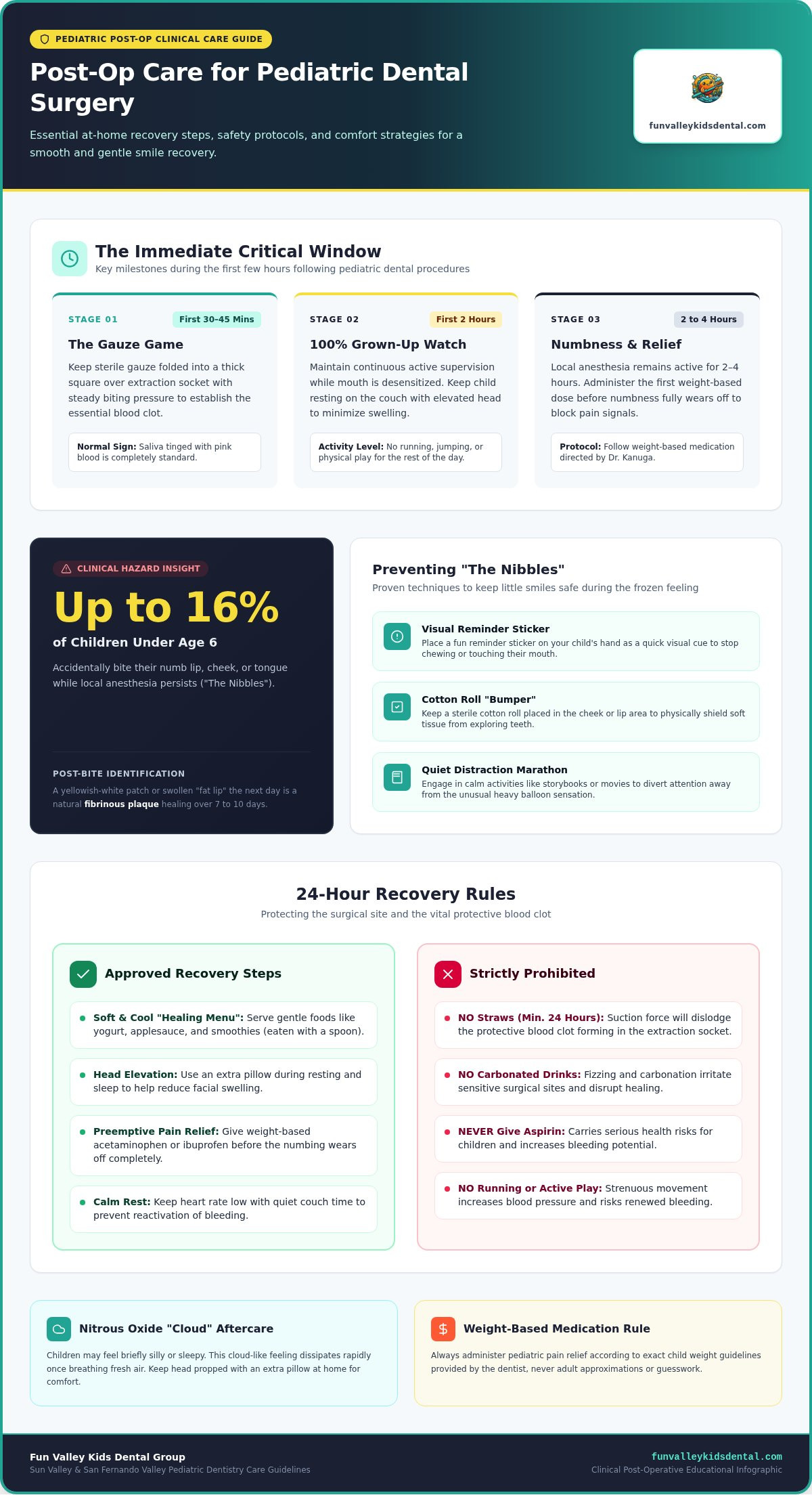
The first few hours after your child's appointment are the most important part of their journey home. This is when the foundation for a speedy recovery is built, turning a clinical visit into a successful milestone. As you leave our office, remember that post-op care for pediatric dental surgery starts with keeping your little one calm and comfortable. If we used nitrous oxide sedation, they might feel a bit silly or sleepy for a short while. This "cloud-like" feeling fades quickly once they breathe fresh air, but it's best to keep their head elevated with an extra pillow once you get home. This simple trick helps reduce initial swelling and keeps them feeling their best as the "sleepy bubbles" wear off.
The Gauze Game: Managing Initial Bleeding
If your child had a child tooth extraction, you'll see a small piece of gauze over the site. Fold a fresh piece of sterile gauze into a thick square and place it directly over the area. Ask your child to bite down firmly, like they are holding onto a precious treasure. This steady pressure is vital for the dental extraction healing process because it helps a protective blood clot form in the socket. You should keep the gauze in place for about 30 to 45 minutes. Don't worry if their saliva looks pink; a little bit of blood mixed with plenty of bubbles is perfectly normal and expected. To help a wiggly child stay still, try a "quiet contest" or read a favorite storybook together while they maintain that firm, steady bite.
Supervision and Activity Levels
Your child needs a "Grown-Up Watch" for at least the first two hours after their procedure. This isn't just about the sleepy feeling; it's about physical safety while their mouth is still desensitized. You must provide 100% supervision during this time to ensure your child does not accidentally chew or bite their numb lips, cheeks, or tongue. We recommend setting up a cozy recovery station on the couch with plenty of blankets. Put on a favorite Disney movie and encourage some "quiet time" to let their body rest and focus on healing. Avoid any running, jumping, or physical play for the rest of the day. Keeping their heart rate low helps prevent the surgical site from starting to bleed again. By making post-op care for pediatric dental surgery feel like a relaxing movie marathon, you help your child associate recovery with comfort and care.
Managing Numbness and Discomfort Safely at Home
The "frozen" feeling after a visit to our office usually lasts between 2 to 4 hours. During this window, your child might feel like their lip or cheek is a funny, heavy balloon. While this is a normal part of the process, it requires a bit of teamwork to keep their smile safe. The most important rule for post-op care for pediatric dental surgery is to stay ahead of any discomfort. We recommend giving your child their first dose of weight-based medicine while their mouth is still numb. This preemptive approach helps block pain signals before they even start. It ensures a much smoother transition as the local anesthesia fades and they begin to feel like themselves again.
The Lip-Biting Hazard
Accidental biting is a common hurdle during the first few hours of recovery. Research indicates that up to 16% of children under age 6 accidentally bite their numb lip or cheek while the "frozen" feeling persists. Watch closely for "The Nibbles"-when a child explores that strange, heavy sensation with their teeth. You might notice them tugging at their lip or chewing on the inside of their cheek without realizing it. To help them remember, try placing a "reminder sticker" on their hand or use a cotton roll "bumper" to physically protect the area. If you notice a yellowish-white patch or a "fat lip" the next day, don't worry. This is often a fibrinous plaque, which is the body's natural way of healing a small bite wound over 7 to 10 days.
Safe Medication Practices for Kids
When it comes to keeping your little adventurer comfortable, stick to the specific plan Dr. Kanuga provided. Use weight-based acetaminophen or ibuprofen, as these are the gold standard for pediatric recovery. Always avoid aspirin or products containing it, as these carry serious health risks for children and can increase bleeding. For a detailed look at safety protocols, you can consult this MedlinePlus guide to tooth extraction care. Keeping a simple log of what was given and at what time will help you maintain a steady schedule through the first 48 hours. If you ever feel uncertain about a dose or a sensation your child is describing, the team at Fun Valley Kids Dental Group is always here to guide you through the process.
The Healing Menu: Safe and Tasty Soft Foods for Recovery
Every adventure deserves a delicious reward. Once the numbness we discussed earlier begins to fade, your child will likely be ready for a snack. Choosing the right texture is a vital part of post-op care for pediatric dental surgery because it protects the sensitive healing site. For the first 24 hours, stick to cool or lukewarm soft foods. This helps the protective blood clot stay firm and prevents unnecessary irritation. It is best to avoid anything steaming hot, as high temperatures can actually dissolve those important healing clots before they have a chance to settle properly.
What to Eat: The Recovery All-Stars
Think of this as the "Magic Menu" for your little hero. Cool, smooth options like Greek yogurt, chilled applesauce, and creamy pudding are perfect first choices. These feel soothing on the gums and are easy to swallow without much chewing. For something more filling, lukewarm mashed potatoes or soft scrambled eggs provide the protein needed for tissue repair. Smoothies are a fantastic way to pack in nutrients, but remember the golden rule: eat them with a spoon. While they are cold and tasty, sipping through a straw is off-limits for now. Keeping the environment calm and the food soft makes the transition back to a regular diet much easier for your brave explorer.
What to Avoid: The 'No-No' List
Some foods are just too tough for a healing smile. Steer clear of crunchy, spicy, or acidic snacks that might sting a pulpotomy site or irritate fresh gums. Small, "sneaky" foods like popcorn kernels, rice, or strawberry seeds can easily get trapped in healing areas, which can lead to discomfort. According to Cleveland Clinic's tooth extraction recovery guidelines, avoiding negative pressure is crucial for success. This means no straws and no forceful spitting for at least 48 hours. Using a straw creates suction that can dislodge the blood clot, leading to a painful condition called dry socket. By keeping the menu soft and the drinks straw-free, you ensure your child's post-op care for pediatric dental surgery stays on the right track toward a bright, healthy smile.
Maintaining a Clean Smile: Brushing and Rinsing After Surgery
Keeping a clean mouth is the next big step in your child's recovery quest. While it might seem a bit tricky to brush around a healing area, maintaining hygiene is essential for post-op care for pediatric dental surgery. On the first day, your goal is to keep the rest of the smile sparkling while giving the surgical site a "rest day." This prevents bacteria from moving in while the area is most sensitive. If your child received pediatric tooth-colored dental crowns, you'll want to be especially gentle around those shiny new landmarks to ensure the gums heal smoothly around them. Proper hygiene keeps the adventure on track and ensures their new smile stays bright and healthy.
The Salt Water Rinse: Nature's Healer
Starting 24 hours after surgery, you can introduce nature's gentle healer: a warm salt water rinse. Mix about 1/2 teaspoon of table salt into a cup (8 ounces) of warm water. This simple solution helps keep the area clean without using harsh chemicals. Instead of swishing and spitting, which can dislodge the blood clot, teach your child the "lean and drain" method. Have them tilt their head so the water reaches the area, then lean over the sink and let the water fall out naturally. Remember that forceful spitting is prohibited for the first 48 hours to prevent complications. Rinsing after every meal helps keep food debris away from the healing site while providing a soothing sensation for your child.
Brushing with Bravery
Use a soft-bristled brush to clean all the other teeth in the mouth starting the night of the procedure. You should avoid the surgical site entirely for the first 24 to 48 hours as instructed by our team. Once that initial window passes, you can begin to very gently brush the area with light, circular motions. You should expect to return to a normal flossing routine around the treated area gradually over the next week as the gum tissue becomes less tender. This steady return to a full routine ensures your child's mouth stays healthy and bright. If you have any questions about your child's specific hygiene plan, contact Fun Valley Kids Dental Group for personalized guidance from our specialized team.
Recognizing Red Flags: When to Contact Your Sun Valley Pediatric Dentist
Every adventure has its quiet moments of rest. While we want your child's recovery to be smooth sailing, being a prepared "expedition leader" means knowing when to ask for a little extra guidance. Most children experience a very predictable post-op care for pediatric dental surgery timeline. It is helpful to remember that facial swelling typically increases for the first 36 to 48 hours, peaking around the second day before it starts to fade. You might also notice a low-grade temperature of up to 100.4°F, which is just the body's natural way of cheering on the healing process. These are normal signs that your little explorer is on the mend.
If you notice persistent oozing that doesn't stop with gauze, you can try the "magic tea bag" trick. Have your child bite firmly on a damp black tea bag for 20 minutes. The tannic acid in the tea helps blood vessels shrink and encourages a strong clot to form. However, if the bleeding remains heavy and bright red after this attempt, it is time to give us a call. We are here to ensure every family in the San Fernando Valley feels supported and safe throughout this final stage of the Smile Adventure.
Signs of a Potential Problem
While complications are rare, staying observant helps catch small issues before they grow. Please reach out to our team if you notice any of the following red flags:
Severe pain that does not improve even after taking weight-based medication as scheduled.
Swelling that continues to get larger or feels harder after the third day post-surgery.
A fever that exceeds 101.0°F or a temperature that spikes suddenly after the first 48 hours.
A foul taste in the mouth or an unpleasant odor coming from the surgical site.
Difficulty breathing or swallowing, which requires immediate medical attention.
How to Reach Us in Sun Valley
Our Disney-themed office is more than just a place for appointments; it is a communal sanctuary for your family's health. We have clear protocols in place for post-operative questions to give you total peace of mind. If you ever feel uncertain about a symptom or just need a quick reassurance, don't hesitate to contact our Sun Valley team. We prefer that you call us with a "small" question rather than worrying at home alone. Your child's comfort and your confidence are our top priorities. Contact Fun Valley Kids Dental Group if you notice any of these red flags or if you have any concerns about post-op care for pediatric dental surgery. We are always ready to help your child's smile journey end with a celebration.
Celebrate Your Brave Explorer’s Healthy New Smile
You’ve successfully guided your little hero through the final stage of their "Smile Adventure." By mastering the first few hours of careful supervision and serving up a delicious "Healing Menu," you’ve set the stage for a fast and joyful recovery. Remember that staying ahead of discomfort and keeping the surgical site clean are the most important parts of effective post-op care for pediatric dental surgery. These simple steps ensure your child returns to their energetic self with a smile that’s brighter than ever.
At Fun Valley Kids Dental Group, Dr. Shukan C. Kanuga and our team are dedicated to providing expert pediatric care in a magical, Disney-themed environment. We take pride in serving families throughout the San Fernando Valley with compassionate dentistry that feels like a neighborhood celebration. If you have any questions or want to ensure your child’s healing is right on track, we’re always here to help. Schedule a follow-up or consult with Dr. Kanuga in Sun Valley to keep the adventure going. We look forward to seeing that brave smile again soon!
Frequently Asked Questions
How long will my child's mouth stay numb after dental surgery?
Local anesthesia typically lasts between 2 to 4 hours after the appointment ends. During this window, your child’s lips, cheeks, and tongue will feel heavy or "asleep." It's vital to watch them closely during this time to ensure they don't accidentally bite or chew on their numb mouth tissues. Most Sun Valley parents find that setting a timer helps them stay vigilant until the "frozen" feeling fully disappears.
What should I do if my child accidentally bites their lip while numb?
If you notice a "fat lip" or a yellowish-white patch the next day, don't panic. This is a common occurrence called a bite lesion, and it usually heals on its own within 7 to 10 days. Clean the area gently with a warm salt water rinse to keep it free of debris. If the swelling seems excessive or your child is in significant pain, call our Sun Valley office for a quick check.
When can my child go back to school or daycare after their procedure?
Most children are ready to return to their normal school routine the day after surgery. We recommend keeping them home for the remainder of the procedure day to enjoy some quiet rest and movie time. Avoid any strenuous physical activity or sports for at least 24 hours to prevent the surgical site from bleeding. Every child heals at their own pace, so listen to their energy levels before heading back out.
Is it normal for my child to have a slight fever after dental surgery?
A low-grade temperature up to 100.4°F is a common part of the body’s natural healing response during the first 48 hours. This mild inflammatory reaction shows that your child's immune system is working hard to repair the area. However, if the fever exceeds 101.0°F or lasts longer than two days, please contact Dr. Kanuga. We want to ensure every San Fernando Valley family feels confident in their child’s post-op care for pediatric dental surgery.
How do I stop the bleeding if the gauze isn't working?
Try the "tea bag trick" if standard gauze doesn't seem to stop the oozing. Moisten a plain black tea bag with cool water and have your child bite down firmly on it for 20 minutes without peeking. The tannic acid in the tea helps blood vessels constrict and promotes faster clotting. If the bleeding remains heavy or bright red after this attempt, reach out to our emergency pediatric dental care team immediately.
What are the best soft foods for a child who is a picky eater?
Focus on smooth textures that feel like a special treat. Cool yogurt, chilled applesauce, and chocolate pudding are usually big hits with picky eaters in Sun Valley. For something savory, try lukewarm mashed potatoes or soft scrambled eggs. Smoothies are also a great option for post-op care for pediatric dental surgery, provided they are eaten with a spoon rather than a straw to protect the healing site.
Can my child use a straw to drink their smoothie after an extraction?
No, your child must avoid using straws for at least 24 to 48 hours after a tooth extraction. The suction created by a straw can pull the protective blood clot right out of the socket. This leads to a very painful condition known as dry socket. Instead, encourage them to sip directly from a cup or use a spoon for their favorite cold drinks and blended treats.
When can we start brushing the surgical area again?
You can begin gently brushing the surgical site about 24 to 48 hours after the procedure. For the first night, just brush the other teeth and avoid the sensitive area entirely. When you do return to the surgical site, use a soft-bristled brush and very light, circular motions. This gradual return to a full routine helps keep the mouth clean while ensuring the delicate new tissue remains undisturbed.


Comments