


Ways to Explain a Filling and Hear Your Child’s Concerns

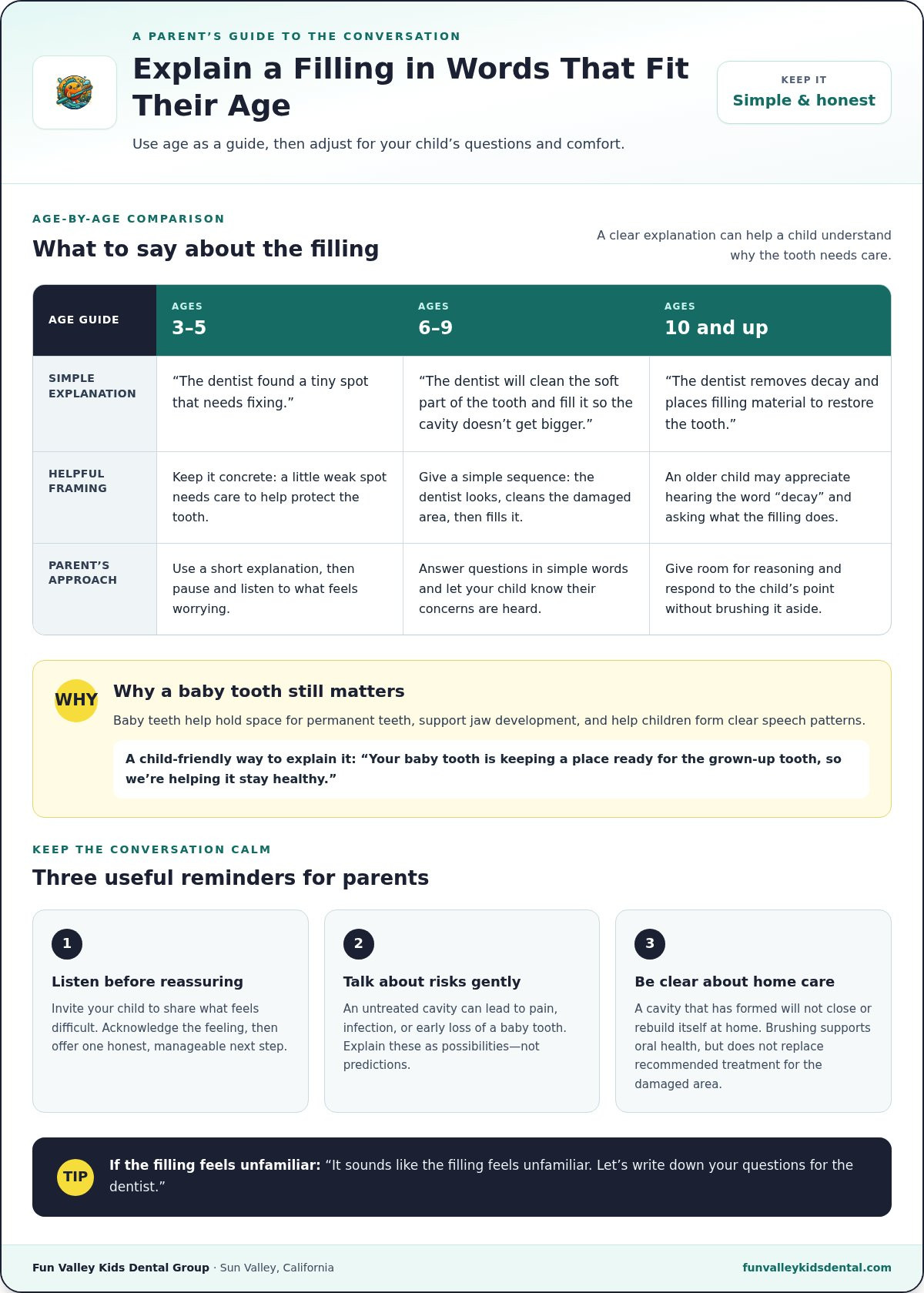
A calm, clear explanation can help your child understand why a filling is recommended. If you’re thinking about convincing your child they need a filling, keep the message simple: the dentist found a spot that needs care, and a filling helps stop the cavity from getting bigger. For ages 3 to 5, describe it as a tiny spot to fix; for ages 6 to 9, explain that the dentist will clean the soft part and fill the tooth; for children 10 and up, you can explain that the dentist removes decay and restores the tooth with filling material. Then pause and listen to what feels worrying to them.
It’s understandable to want your child to feel ready, especially if they’re worried about discomfort, unfamiliar sounds, or not knowing what will happen. A debate or a string of reassurances may not address the concern underneath, so start by listening and answering honestly in words they understand. This guide shares age-appropriate ways to explain a filling, gentle prompts that invite your child to share their feelings, and practical ways to talk through the visit together. You’ll also learn how Fun Valley Kids Dental Group’s child-friendly team can support the conversation when you’re ready for extra guidance.
Table of Contents
1. Age-appropriate explanations for why a child needs a filling
What are age-appropriate ways to prepare a child for a filling? For children ages 3 to 5, explain that the dentist found a tiny spot that needs fixing. For ages 6 to 9, say the dentist will clean out the soft part of the tooth and fill it so the cavity doesn’t get bigger. For children 10 and up, explain that the dentist removes decay and places filling material to restore the tooth.
Use your child’s age as a guide, then adjust for their questions and comfort. A preschooler may understand, “The dentist found a little weak spot, and we’re going to help protect your tooth.” A school-age child may want a simple sequence: the dentist looks, cleans the damaged area, then fills it. An older child may appreciate hearing the word “decay” and asking what the filling does.
Explain why care matters without making the tooth sound frightening. Baby teeth help hold space for permanent teeth, support jaw development, and help children form clear speech patterns. You might say, “Your baby tooth is keeping a place ready for the grown-up tooth, so we’re helping it stay healthy.” This gives your child a concrete reason for treatment without adding stress.
What are the risks of delaying a cavity filling in a child? An untreated cavity can lead to pain, infection, and early loss of a baby tooth, which may affect how permanent teeth come in. Explain these possibilities calmly as reasons to care for the tooth, not as predictions about what will happen to your child.
Can a small cavity in a child heal without a filling? A cavity that has formed in the tooth won’t close or rebuild itself at home. If the dentist recommends a filling, brushing and other home care can support oral health, but they don’t replace treatment for the damaged area.
Take an empathetic approach: name the feeling, then offer one honest, manageable next step. For example, “It sounds like the filling feels unfamiliar. Let’s write down your questions for the dentist.” Avoid promising that nothing will feel strange. Instead, let your child know they can tell you what worries them. A calm tone can make the conversation easier.
If a sibling also needs dental care, explain each child’s needs separately. You could tell one child, “Your brother has a different spot, so his dentist may suggest a different plan.” Invite questions, and don’t compare who is braver or whose tooth is worse. Each child deserves an explanation suited to their age and situation.
As children grow, they may use logic and reasoning to make their case. Give older children room to explain how they see the situation, and respond to their point rather than brushing it aside. If they ask why a sibling’s plan differs, explain that child’s unique needs in words they can understand, then invite questions. This keeps the conversation focused on each child, not comparisons, while giving them a chance to take part.
2. Using trusted people to support conversations
How can a pediatric dentist make a filling less scary for a child? The dentist can explain each step in simple language, pause for questions, and let the child know how to signal discomfort. A familiar parent can stay close and help the child feel heard.
Before the visit, ask your child whom they trust to talk with, such as a parent, grandparent, or another familiar adult. That person can listen while your child names specific worries, like not knowing what the dentist will do. Then share those concerns with the dental team so the explanation addresses the child’s questions without adding more detail than they need.
Some children feel more comfortable when they know what to expect from the room and the people in it. Describe the visit in a few clear steps: meet the dentist, talk about the tooth, and hear an explanation of the care plan. Avoid surprise stories from other people. A sibling’s experience may not match this child’s visit, and comparisons can increase stress.
What pain relief or sedation options are available for children getting fillings? A dentist may use topical numbing gel before local anesthetic, with a few minutes between them. For a child who is very anxious or cannot sit through treatment, the team may discuss nitrous oxide or other calming approaches; the child’s needs, health history, and treatment guide which option is appropriate.
Parents can help by sharing practical details rather than trying to answer every clinical question themselves. For example, tell the dentist, “She’s worried about not knowing what happens next,” or “He wants to know whether he can ask for a pause.” Those observations help the team respond in a way the child can understand.
Peers can offer comfort, too, when their stories stay honest and low-pressure. A cousin might say, “I asked the dentist what the tools did,” rather than promising that every visit feels the same. Let your child decide whether hearing another child’s experience would help. Some children prefer a quiet conversation with a trusted adult instead.
Parents deserve support, too. If you realize your own worry is shaping the conversation, write down your questions before the appointment and ask the dentist to explain the plan. You can then give your child a steady, simple message without pretending to know details you haven’t discussed.
For a child who needs extra reassurance, share their concerns during a pediatric dental conversation. A calm, step-by-step explanation and a trusted adult nearby can help make the visit feel more understandable.
3. Listening to children’s feelings and concerns
Start with one open invitation: “What part of the filling feels difficult to you?” Then give your child time to answer without interrupting. They might say, “I’m worried it will hurt,” or “I don’t know what the dentist will do.” Reflect the concern in your own words: “You’re unsure about what happens next.” This shows you heard them before offering information.
Make room for feelings, even when they seem bigger than the situation to you. Saying “There’s nothing to worry about” can unintentionally close the conversation. Try, “It makes sense to feel unsure about something new.” Then ask gently, “Would you like to tell me more?” Accepting the feeling doesn’t mean agreeing with every fear. It means your child can talk without being rushed or judged.
Choose a calm moment for a one-on-one conversation instead of asking questions while getting ready in a hurry. For example, talk during a quiet walk or while drawing together at the kitchen table. If your child says, “I don’t want to go,” don’t immediately argue. Ask what feels hardest, then listen for the concern behind that first answer.
Some children need time before they can name a worry. Offer a few choices without assuming which one is true: “Are you worried about the sounds, the feeling in your mouth, or not knowing what comes next?” Your child can point, answer, or say none of those fits. If they can’t explain yet, let them know you can return to the conversation later.
After listening, respond to the concern your child actually raised. If they’re worried about asking for help, agree on a signal, such as raising one hand, and discuss it with the dental team. If they fear forgetting their questions, write them together on a note. A specific plan gives your child a way to take part without making them responsible for the treatment decision.
Make room for brief check-ins as the appointment approaches. Your child may mention a new worry after having time to think. Ask, “Has anything else about the visit been on your mind?” Keep your tone steady, and thank them for telling you. When a child sees that sharing concerns leads to careful listening, it can feel easier to start the next conversation.
If your child becomes quiet or upset, pause rather than pressing for an answer. Say, “We can take a break, and I’ll listen when you’re ready.” That small step respects their pace while keeping communication open. You don’t need to resolve every feeling in one conversation. Listening first helps you respond with the support your child is asking for.
4. Communicating in a way a child understands
If you’re trying to convince your child they need a filling, aim for understanding rather than winning an argument. Keep your explanation brief and use words your child already knows. For example, describe the dentist’s recommendation as care for a tooth that needs attention. Pause afterward so your child has time to think before hearing more.
Choose familiar language over technical terms that might create new worries. If your child asks what “decay” means, explain that it describes damage to part of a tooth. If they ask what a filling does, answer that specific question. You don’t need to explain every part of treatment in one conversation.
Some children follow information more easily when it comes in a clear order. Describe only what they need to understand at that moment, such as, “We’ll talk with the dentist, and then we’ll hear the plan.” Avoid adding details your child hasn’t asked for. You can return to their questions as they come up.
Adapt your approach to how your child takes in information. A child who enjoys drawing might sketch a tooth and mark the area you’re discussing. Another child may prefer to hear an explanation or see a simple picture. Use the format that helps your child focus, rather than turning the conversation into a quiz.
Long debates can make a dental conversation feel like a contest. If your child argues against treatment, calmly repeat that the dentist recommended care and explain what you know. Then return to a useful next step, such as writing down a question for the appointment. This keeps your message steady without dismissing your child’s point of view.
Children may understand the same explanation differently as they grow. A younger child might focus on what will happen today, while an older child may want to know why the dentist made a recommendation. Match the detail to their questions, and let them ask for more instead of guessing what they’re ready to hear.
Check what your child understood with a gentle prompt, such as, “What do you think the dentist wants to help with?” If their answer misses a key idea, try a different phrase or a small drawing. This gives you a chance to clear up confusion without making your child feel corrected or tested.
If your child wants more information, invite them to prepare a short list of questions. They might ask, “What will you explain before you begin?” or “How can I tell you I need help?” Bringing their own questions can make the conversation more focused and help them take part in the visit.
5. Finding creative compromises
A useful compromise gives your child a say in preparation without making needed care optional. Keep the filling itself outside the negotiation, then offer choices around the visit. For example, your child can choose which questions to ask first or which familiar toy to bring. This balance respects their feelings while keeping the plan clear.
Offer two acceptable options instead of asking an open-ended question that may feel overwhelming. You might say, “Would you like to talk about the visit before dinner or after your story?” Both choices lead to the same conversation, but your child gets a say in how it begins. Avoid offering an option you can’t honor.
A short transition can help when a child is focused on play. You could say, “We’ll leave in a few minutes. Before we go, do you want to put away the blocks or choose a book for the car?” This gives a clear cue and a small choice without suggesting the dental appointment can be skipped.
Let your child choose a comfort detail that fits the visit. They might select a soft toy to carry or decide which familiar song to hear on the way. Ask the dental team about choices involving the appointment itself. Don’t promise a particular procedure, pause, or outcome before the team discusses it.
Sometimes a child will try to trade one request for another. If they say, “I’ll go if I can stay up late,” acknowledge the offer without turning care into a bargain. You can respond, “I hear that you want extra time tonight. The filling is still part of caring for your tooth, and we can choose a story for afterward.”
Keep limits steady and consequences realistic. If you say, “We’ll put the tablet away after this video,” be prepared to follow through calmly. Don’t threaten a consequence you wouldn’t use, and don’t use shame to gain agreement. A predictable boundary helps your child understand what is a choice and what is already decided.
After agreeing on a compromise, repeat the plan in one sentence. For example: “You’ll bring your toy, and we’ll talk about your questions before the visit.” If your child asks to change the plan, consider whether the request is manageable. Keep the essential care unchanged, and adjust a small detail when it helps your child feel included.
For support with a child’s questions and preparation, schedule a pediatric dental visit to discuss the filling and ways to help your child feel involved.
Fun Valley Kids Dental Group: Pediatric Dental Exams
Fun Valley Kids Dental Group offers pediatric dental exams at its office in Sun Valley, California. If your child has questions about a recommended filling, an exam can give your family a chance to discuss the tooth and understand the next steps. Sharing your child’s concerns during the visit helps the dental team shape explanations around what they want to know.
Families can also ask about dental cleanings, fluoride treatments, and dental sealants as part of preventive care. These services support children’s oral health, while an exam helps assess their individual needs. Your child can bring questions, and you can share what has made the conversation difficult at home.
Contact Fun Valley Kids Dental to arrange a pediatric dental appointment and talk through your child’s questions.
Make the Next Conversation a Shared Step
If you’re still trying to convince your child they need a filling, shift the goal from winning agreement to helping them feel included. Let your child choose a question to bring to the appointment, then make space afterward to talk about how the visit went. Their perspective can guide how you approach future dental conversations, too.
Confidence can grow through small moments of participation: asking a question, sharing a worry, or choosing how to prepare. You don’t need a perfect script. A steady, honest conversation can show your child that their voice matters while adults help guide important care decisions.
If you’d like support with your child’s dental questions, contact Fun Valley Kids Dental Group. Take the next step together, one clear question and one calm conversation at a time.
Frequently Asked Questions
How can I explain to my child why they need a dental filling?
Connect the recommendation to something your child has noticed, such as food catching in a tooth or a spot the dentist pointed out. Keep the explanation truthful and focused on the reason for care. You might say, “The dentist saw something on your tooth that needs attention, and we’ll learn the plan together.” Let your child decide whether to talk more now or write down questions.
How can I help a child with dental anxiety or fear of needles?
Ask what part feels scary: seeing a needle, hearing about it, or not knowing what will happen. That answer helps you avoid guessing at the source of their fear. Don’t introduce new details without warning or promise an experience you can’t predict. Tell the dental team what your child said so the conversation can address their concern before treatment begins.



Comments