


When Should a Child First See an Orthodontist? The Sun Valley Parent’s Guide
- Fun Valley

- May 3
- 13 min read
What if the best time to start your child's smile adventure is while they still have a mouthful of baby teeth and a gap-toothed grin? Many Sun Valley parents ask us when should a child first see an orthodontist, often feeling a bit of a tug-of-war between their regular pediatric checkups and the mystery of orthodontic care. It's natural to feel anxious about the potential cost of braces, which averages between $4,500 and $9,000 in California, or whether your little one will feel comfortable in a new specialist's chair. You're simply looking for the best way to protect that sparkle while keeping the journey stress-free.
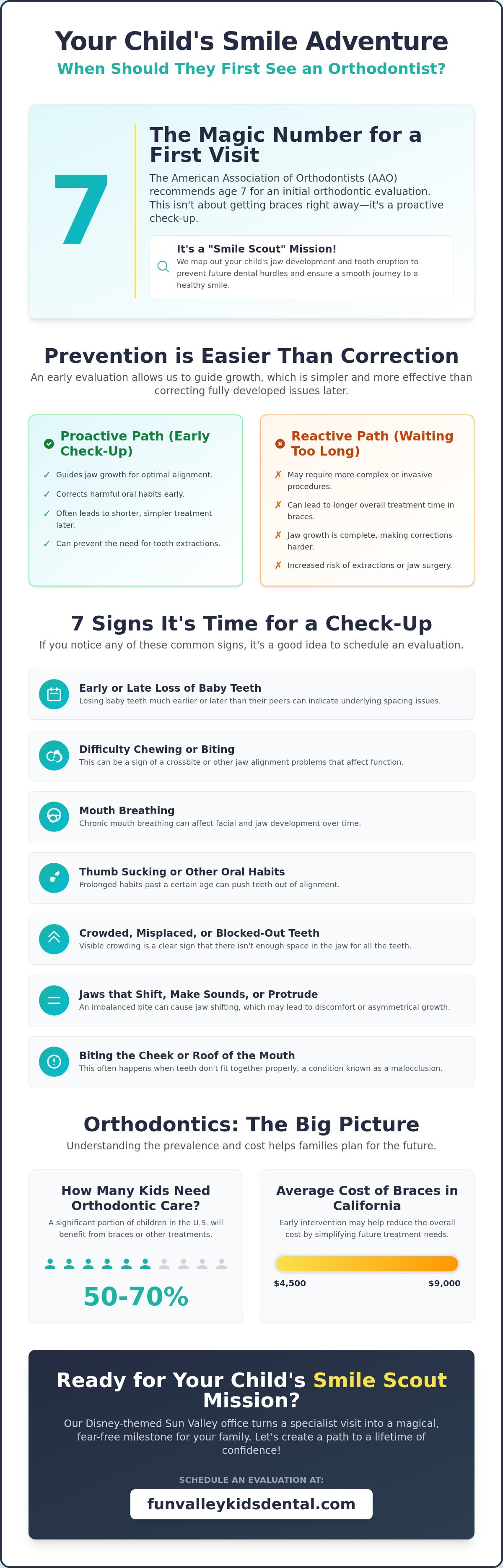
At Fun Valley Kids Dental Group, we're here to guide you through this milestone with a blend of professional expertise and whimsical warmth. You'll discover why the American Association of Orthodontists identifies age 7 as the magic number for a first evaluation. This visit isn't about getting braces right away; it's a Smile Scout mission to map out jaw development and prevent future dental hurdles. We'll preview the red flags to watch for and show you how early intervention creates a smoother, more affordable path to a healthy smile. Let's turn this dental milestone into an exciting step toward a lifetime of confidence.
Key Takeaways
Learn why the American Association of Orthodontists recommends age 7 as the ideal answer to when should a child first see an orthodontist to monitor their growing smile.
Discover how early evaluations allow us to guide jaw growth and create plenty of space for permanent teeth to sparkle in their proper places.
Identify the 7 common red flags, like difficulty chewing or early loss of baby teeth, that signal it's time for a professional "Smile Scout" mission.
See how we transform a standard clinical exam into a fear-free adventure that builds your child's confidence and keeps their dental journey fun.
Find out how our Disney-themed Sun Valley office turns a specialist visit into a magical milestone for your entire family.
Table of Contents The Age 7 Milestone: Why the AAO Recommends an Early Orthodontic Checkup Beyond Straight Teeth: The Hidden Benefits of Early Orthodontic Intervention 7 Red Flags: Signs Your Sun Valley Child Needs an Orthodontist Now Your First Visit to a Kids Orthodontist in 91352: What to Expect Choosing Fun Valley Kids Dental for Your Child’s Orthodontic Journey
The Age 7 Milestone: Why the AAO Recommends an Early Orthodontic Checkup
Seven years old is a magical age for discovery. It's when your child's personality truly begins to shine, and it's also the exact moment experts suggest a "Smile Scout" mission. While you might still be celebrating the loss of that first front tooth, the American Association of Orthodontists (AAO) recommends this as the ideal time for an initial evaluation. The field of Orthodontics focuses on much more than just straight teeth; it's about the harmony of the jaw and how adult teeth find their way home. If you're asking when should a child first see an orthodontist, remember that age seven is the "magic number" for a reason.
At this stage, most children have a charming mix of baby teeth and permanent teeth. This transitional period is the perfect time for an expert to take a peek under the hood. Since approximately 50% to 70% of children in the U.S. will wear braces before they reach adulthood, starting early is simply a smart way to prepare. It's a common misconception that an evaluation means a child will get braces that same day. In fact, many children won't need active treatment for years. Instead, we look closely at the "6-year molars." These sturdy teeth act as anchors, establishing the back bite and giving us a map for how the rest of the smile will align.
The Eruption of Permanent Teeth and Jaw Mapping
When the first adult molars erupt, they provide a blueprint for the future. By age seven, the front incisors have usually started to make their appearance too. These early arrivals reveal a lot about potential crowding or spacing issues before they become complicated. Because a child's jaw is still growing and very adaptable, we can identify if there's enough room for all 32 permanent teeth to fit comfortably. Mapping these patterns now allows us to plan for a healthy, functional bite while the "valley" of the mouth is still changing.
Prevention vs. Correction: Why Earlier is Often Easier
We often call this early phase "interceptive" care. The goal is simple: we want to stop minor dental hurdles from turning into major mountains. By monitoring growth patterns over several years, we can sometimes guide the jaw's development to prevent impacted teeth or severe overbites. This proactive approach can significantly reduce the total time a child spends in braces later in their teens. It's much easier to gently guide a growing smile than it's to correct a fully developed one, making the entire adventure smoother for your little explorer.
Beyond Straight Teeth: The Hidden Benefits of Early Orthodontic Intervention
While many people think of braces as a way to fix a crooked smile, the true magic happens beneath the surface. When you ask when should a child first see an orthodontist, the answer is rooted in the architecture of their face. By seeing a specialist early, we can influence how the upper and lower jaws grow together. This isn't just about looks; it's about creating a functional foundation that lasts a lifetime. The American Association of Orthodontists recommends an evaluation by age 7 to spot these structural opportunities before the jawbones fully harden and settle into place.
One surprising benefit of early care is protecting your child's confidence and safety. Protruding front teeth are significantly more likely to suffer accidental injury during sports or playground adventures. By gently tucking these teeth back into a safer position, we reduce the risk of dental trauma. Additionally, creating enough room for permanent teeth now often means we can avoid the need for permanent tooth extractions later in their teenage years. We prefer to make the "valley" of the mouth bigger rather than removing healthy teeth to find space.
Guiding Jaw Growth and Correcting Crossbites
A narrow upper jaw can cause a crossbite, which often forces a child to shift their lower jaw to one side to chew comfortably. Over time, this uneven growth can lead to permanent facial asymmetry or discomfort in the jaw joints. Using a palatal expander creates a "gentle wideness" in the mouth during a child's peak growth phase. This simple, effective tool makes room for a crowded smile to sparkle and ensures the jaw joints develop in a healthy, balanced way. Correcting alignment now is a gift that protects their oral health for decades to come.
Managing Harmful Oral Habits Early
Habits like thumb-sucking or tongue-thrusting are common childhood milestones, but if they continue past age 5 or 6, they can physically reshape the jaw. This often leads to an "open bite" where the front teeth don't meet even when the mouth is closed. We offer gentle, comfortable solutions to help children move past these habits naturally and without stress. Breaking these patterns early doesn't just save their smile; it also supports clearer speech development and better breathing patterns as they grow. Starting this journey early ensures your child feels at home in the dental chair. If you're ready to explore these benefits, we invite you to visit our Fun Valley Kids Dental Group home in Sun Valley for a friendly consultation.
7 Red Flags: Signs Your Sun Valley Child Needs an Orthodontist Now
You're the expert on your child's daily habits and their beautiful, changing smile. While we've discussed the magic of age seven, you might notice certain signs much earlier. Watching for these cues helps you decide when should a child first see an orthodontist before a small hurdle turns into a major mountain. Most children begin the adventure of losing baby teeth around age 5 or 6. If your little one is losing teeth much earlier than this, or if they're still holding onto baby teeth well into their middle school years, it's a signal that the underlying "map" of their smile needs a professional look.
Keep a close eye on how your child interacts with their favorite foods. If they struggle to bite into a crisp apple or avoid harder snacks because it's uncomfortable, their teeth might not be meeting correctly. You might also notice these common red flags during your daily routine:
Crowded or "blocked out" teeth: Permanent teeth that appear to be stuck or are coming in behind other teeth.
Shifting jaws: Jaws that make clicking sounds or shift to one side when your child opens their mouth.
Proportion: Jaws and teeth that seem too large or too small for the rest of their face.
Persistent habits: Continued finger or thumb sucking past age five.
Physical Red Flags in Your Child’s Smile
Sometimes the signs are easy to spot during a morning tooth-brushing session. "Buck teeth," or protruding front teeth, are more than just a spacing issue. They're actually at a much higher risk for trauma during sports or playground play. You should also look for an underbite, where the lower teeth sit in front of the upper teeth. Another key sign is an "open bite." This happens when the front teeth don't meet at all even when the back teeth are biting down together. Spotting these physical markers early allows us to guide the growth of the jaw while it's still flexible and gentle.
Functional Signs: Chewing, Speaking, and Breathing
Functional signs often show up in how a child breathes or speaks. Many Sun Valley parents are surprised to learn that persistent mouth breathing is a major orthodontic red flag. When a child breathes through their mouth, their tongue doesn't rest against the roof of the mouth. This lack of pressure can lead to a narrow palate and a reshaped jaw over time. Similarly, if your child has a persistent lisp or other speech impediments, it might be linked to the position of their teeth and jaw. If you frequently notice your child accidentally biting their cheek while eating, it's a clear sign that their bite alignment needs a gentle adjustment to keep their smile adventure on track.
Your First Visit to a Kids Orthodontist in 91352: What to Expect
Stepping into a specialist's office shouldn't feel like a chore for you or your little one. At our dental home, we turn the first checkup into a "Smile Adventure" that celebrates your child's growth. When you're deciding when should a child first see an orthodontist, knowing exactly what happens during that first visit can ease any lingering jitters. We start with a warm, energetic welcome and a grand tour of our whimsical space to help everyone feel right at home. It's a chance for your child to see that taking care of their teeth is a fun-first experience.
Our clinical exam is a gentle exploration of your child's teeth, jaw, and facial structure. We use digital X-rays, which act like a set of "super-vision" goggles to see under the surface. This technology is vital because it reveals permanent teeth that are still waiting to make their big debut in the valley of your child's mouth. We then sit down for a personalized discussion about your child’s unique growth map. This ensures you leave with clear guidance on what to expect as their smile develops over the next few years, giving you total confidence in the path ahead.
The "Smile Scout" Assessment
The first consultation is completely non-invasive and designed to be comfortable. We don't use any scary tools or intimidating machines that might cause anxiety. Instead, we perform a "Smile Scout" assessment using high-definition photos and quick digital scans. These images create a baseline for future growth, allowing us to track changes with precision. We love encouraging children to be active participants in their dental health journey. By showing them their own "smile map" on the screen, we turn dental hygiene into an exciting discovery mission rather than a medical mystery.
Understanding Phase One vs. Phase Two Treatment
Not every child needs immediate care, but for some, a two-phase approach is the most effective path. Phase One, often called interceptive care, usually happens for children between ages 7 and 10. This phase focuses on guiding the jaw and making room for adult teeth while the mouth is still growing. After this, we enter a "resting period" where we simply monitor the eruption of the remaining permanent teeth as they grow in naturally. Phase Two typically begins once all adult teeth have arrived, focusing on the final alignment and that perfect, healthy sparkle. This strategic timing ensures the most efficient path to a confident smile. If you're ready to start your family's journey, we'd love to welcome you to our dental home in Sun Valley for a fear-free evaluation.
Choosing Fun Valley Kids Dental for Your Child’s Orthodontic Journey
Finding the right team for your little one makes all the difference in how they view their health for years to come. While we've explored the clinical reasons for when should a child first see an orthodontist, the "where" is just as vital as the "when." Choosing a specialized kids orthodontist 91352 ensures that every part of the experience is tailored to small smiles and big imaginations. Our Disney-themed office in Sun Valley is designed to turn a trip that might feel scary into a magical milestone. From the moment you walk through our doors, your family is greeted with a vibrant energy that says you're safe, you're celebrated, and this is going to be fun.
One of the biggest advantages for busy parents is having your pediatric dentist sun valley ca and your orthodontist working together under one roof. This partnership allows for seamless care where we can monitor cleanings and jaw growth simultaneously. We're committed to fear-free, gentle care for every San Fernando Valley family, ensuring that the transition from baby teeth to a permanent, healthy smile is steady and reassuring. It's about building a foundation of trust that lasts long after the braces come off. By age 7, we can accurately predict how 32 permanent teeth will fit into your child's future smile, and we're here to guide every step of that discovery.
Modern Solutions: Traditional Braces and Invisalign First
Every child's personality is unique, and their treatment should be too. Traditional metal braces remain a fantastic, durable option for our most active explorers. They're time-tested and reliable for correcting even the most complex alignment hurdles. For children who prefer a less noticeable path, we offer Invisalign First. These clear aligners are designed specifically for growing jaws and can be removed for eating and brushing. This flexibility means your child can still enjoy their favorite snacks without worry. Whether your child wants to pick colorful bands for their braces or prefers the "invisible" route, we customize the adventure to fit their lifestyle perfectly.
A "Dental Home" for Sun Valley, Burbank, and Glendale Families
We take pride in being a community hub for families from North Hollywood to Pasadena. When you join the fun valley kids dental group, you aren't just a patient; you're part of our neighborhood family. We've seen how a positive association with oral health at age seven leads to better habits in adulthood. Now that you know when should a child first see an orthodontist, it's time to take that first step. We invite you to book a consultation today and let us show you how easy and exciting a healthy smile can be. Your child's next great adventure starts right here in our valley, and we can't wait to be part of it.
Start Your Child's Magical Smile Adventure Today
Taking the first step toward a healthy, aligned smile is a wonderful gift for your child's future confidence. We've explored how a "Smile Scout" mission at age 7 allows us to guide jaw growth and identify red flags before they become complex hurdles. By choosing a specialized dental home, you're ensuring that these early checkups are filled with wonder rather than worry. Knowing when should a child first see an orthodontist helps you stay ahead of dental roadblocks while keeping the journey lighthearted and fun.
Our practice is led by Dr. Shukan C. Kanuga, a dedicated specialist in pediatric dental growth who understands the unique needs of developing smiles. We proudly serve Sun Valley and the wider San Fernando Valley with gentle, expert care that prioritizes your child's comfort. Our Disney-themed office transforms every visit into a fear-free experience where your child can truly sparkle. We invite you to join our community hub and see why so many local parents trust us with their family's dental milestones. Start Your Child’s Smile Adventure: Book a Consultation Today! We can't wait to welcome you to our valley and celebrate every happy smile together.
Frequently Asked Questions
Does my child need to lose all their baby teeth before seeing an orthodontist?
No, your child definitely doesn't need to lose all their baby teeth before their first checkup. In fact, having a mix of baby and permanent teeth is exactly what we look for during an initial evaluation. This transitional stage allows us to see how the "6-year molars" are anchoring the back bite and how new adult teeth are finding their way into the smile. If you're wondering when should a child first see an orthodontist, the recommended age is 7, even if they still have many baby teeth left.
What is the difference between a pediatric dentist and an orthodontist?
Think of your pediatric dentist as the primary guide for your child's overall oral health, focusing on cleanings, cavities, and gum health. An orthodontist is a specialist who focuses specifically on the alignment of the teeth and the growth of the jaw. While both work together in our dental home, the orthodontist ensures that the "map" of the smile is developing correctly. This partnership ensures that your child's teeth are both healthy and perfectly positioned for a lifetime of confidence.
How much do braces for kids cost in Sun Valley?
The cost of orthodontic care depends on the complexity of your child's unique smile adventure. In 2026, the average cost of traditional metal braces in California ranges from $4,500 to $9,000. Many families use dental insurance to help, as plans often provide a lifetime maximum benefit between $1,000 and $3,000. Some local Sun Valley providers even offer promotional starting prices as low as $99 or free consultations to help you begin the journey without any stress.
Will my child definitely need braces if they see an orthodontist at age 7?
Not at all. An early visit is simply a "Smile Scout" mission to monitor development. Most children who visit us at age 7 don't start treatment right away. Instead, we often enter a "watch and wait" period where we check in every 6 to 12 months to see how the permanent teeth are erupting. This proactive monitoring ensures that if treatment does become necessary, we can start it at the most effective and gentle moment possible.
What is Invisalign First and is it right for my 8-year-old?
Invisalign First is a system of clear aligners designed specifically for children who still have a mix of baby and adult teeth. It's a fantastic option for Phase One treatment because it's comfortable and removable for eating and brushing. We typically recommend it for children ages 6 to 10 to help widen a narrow arch or make room for crowded teeth. It's a great choice for active kids who want a nearly invisible way to guide their growing smile.
Can early orthodontic treatment prevent my child from needing jaw surgery later?
Yes, early intervention can often prevent the need for more invasive procedures in the future. Because a child's jawbones are still flexible and growing, we can use gentle appliances to guide their development. Correcting a severe crossbite or an underbite now can fix structural issues that would otherwise require surgical correction once the jaw stops growing in the late teens. This proactive approach makes the entire dental journey much smoother and more comfortable for your child.
How long does a typical Phase One treatment last?
Phase One, or interceptive treatment, usually lasts between 12 and 18 months. This short, focused phase addresses specific structural goals, such as widening the jaw or creating space for "blocked out" adult teeth. After this phase is complete, your child will have a resting period where we simply monitor the remaining permanent teeth as they arrive. This strategic timing often makes Phase Two, which happens in the teenage years, much faster and more straightforward.
What happens if my child still sucks their thumb at age 7?
If thumb-sucking continues past age 5 or 6, it can begin to reshape the jaw and cause the front teeth to tilt forward. This often leads to an "open bite" where the teeth don't meet correctly. When you're deciding when should a child first see an orthodontist, persistent habits are a major sign to book a visit. We offer gentle, comfortable appliances that help children break these habits naturally, protecting their jaw development and ensuring their smile stays on the right track.


Comments