


Cleaning a Palatal Expander: A Daily Guide for Parents

When food catches around the wires and brushing feels awkward, it’s understandable to wonder how to clean a palatal expander without irritating your child’s mouth or damaging the appliance. Gentle, steady care matters more than scrubbing hard or using a complicated lineup of tools.
With practice, you and your child can make appliance care part of the morning and bedtime routine. This guide explains how to rinse and brush around the expander, which tools may help, and what to avoid unless your child’s orthodontic team recommends it.
We’ll also cover what to do about stubborn food, discomfort, or a change in the appliance. Every expander and child is different, so follow the care instructions for your child’s device. Fun Valley Kids Dental Group provides orthodontic care at its Sun Valley office for families in nearby Pacoima, Arleta, Panorama City, North Hollywood, Burbank, and Sylmar.
Table of Contents
Why cleaning a palatal expander matters for your child’s smile
A palatal expander is an orthodontic appliance that sits against the roof of the mouth and helps guide changes in the upper jaw. Designs vary, but bands and connecting parts can create small spaces where food and plaque collect. A general overview of the palatal expander can help families understand the appliance’s purpose and range of designs.
Cleaning is part of your child’s everyday oral hygiene. Gently brush accessible teeth and appliance surfaces, but don’t turn a key, adjust the device, or try to remove it as part of cleaning. Any activation or adjustment should follow the orthodontist’s directions. This distinction keeps daily care straightforward: clean the reachable areas, and handle adjustments only as instructed.
Where food and plaque can collect around an expander
Food may lodge near the bands around the teeth, beneath or beside connecting wires, or where the appliance sits close to the palate. Plaque, a soft film that forms on teeth, can also gather around less-visible edges. A missed crumb isn’t automatically a health problem, but regular, gentle cleaning helps keep the area fresh and makes it easier to notice anything that needs attention.
Use a mirror and good bathroom lighting to check for missed spots. Invite your child to look from different angles while you help, especially if they’re still learning to guide a toothbrush around the appliance. The expander’s design affects which areas are reachable, so follow the cleaning instructions for your child’s device.
Why the orthodontist’s instructions come first
Expander designs and care directions differ. Follow the instructions for your child’s specific appliance, including guidance about cleaning tools or areas that need special care. If you’re unsure whether a part is safe to brush, pause rather than pressing, pulling, or experimenting. Your child’s orthodontic team can explain how to care for that device.
When learning how to clean a palatal expander, keep to one principle: clean the areas identified in the instructions, and don’t try to change the appliance’s position or function. If a step is difficult, describe the spot or concern to the orthodontic team so they can guide you based on your child’s appliance.
For a wider look at children’s orthodontic care, the guide “Kids Orthodontist in 91352” offers broader context. Fun Valley Kids Dental Group provides orthodontic evaluations and treatment planning at its Sun Valley, California office, with recommendations based on each child’s clinical needs.
How to clean a palatal expander: a gentle daily routine
A steady routine helps your child care for their teeth and reachable appliance surfaces without making cleaning feel like a big production. Follow the instructions for your child’s device and take each step slowly. Practice can help your child feel more comfortable at the sink.
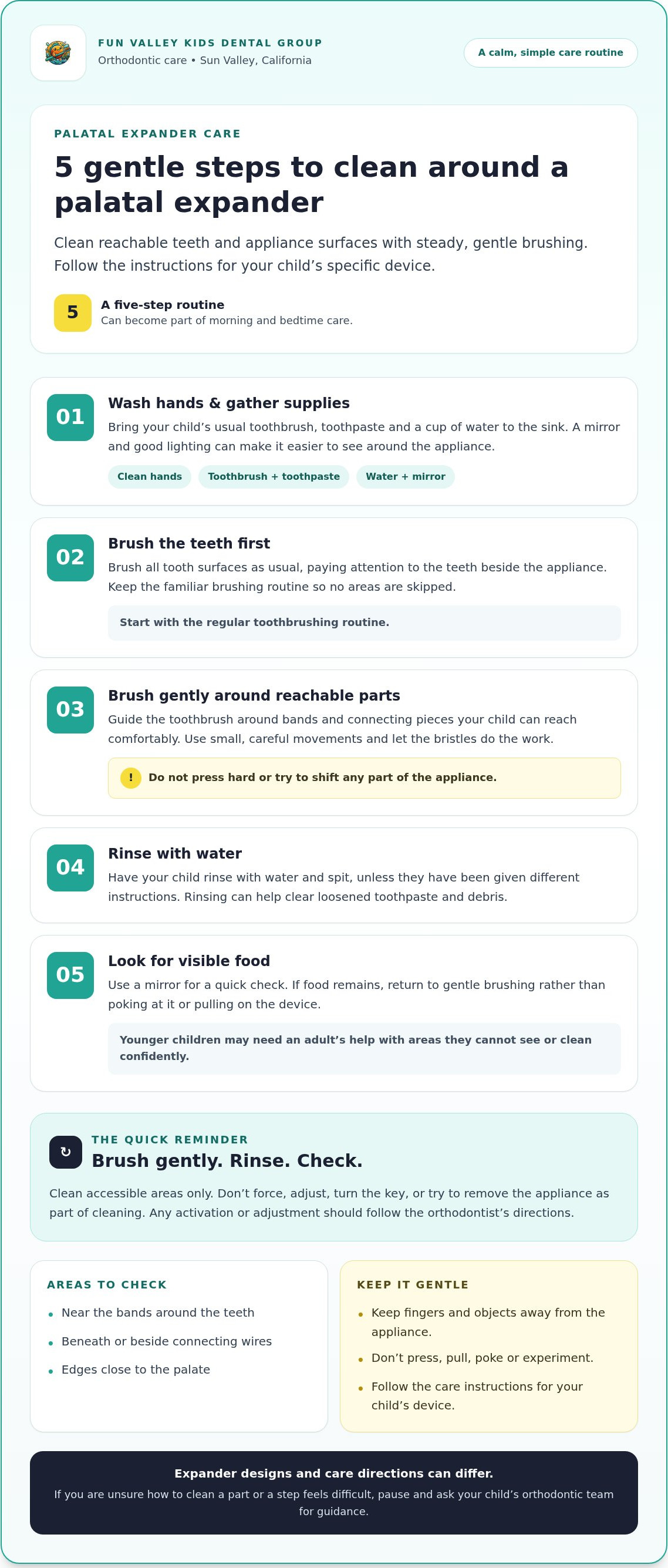
Wash hands and gather supplies. Start with clean hands, then bring your child’s usual toothbrush, toothpaste, and a cup of water to the sink. A mirror and good lighting can make it easier to see around the appliance.
Brush the teeth first. Help your child brush all tooth surfaces as usual, paying attention to the teeth beside the appliance. Keep the familiar toothbrushing routine so no areas are skipped.
Move gently around accessible parts. Guide the toothbrush around bands and connecting pieces your child can reach comfortably. Use small, careful movements and let the bristles do the work. Don’t press hard or try to shift any part of the appliance.
Rinse after brushing. Have your child rinse with water and spit, unless they’ve been given different instructions. Rinsing can help clear away loosened toothpaste and debris.
Take a quick look. Use the mirror to check for visible food around the appliance. If something remains, return to gentle brushing rather than poking at it or pulling on the device.
A simple rule to remember: brush gently, rinse, and check. Don’t force or adjust the appliance.
Brushing around the bands and connecting parts
Go slowly around the bands and connecting parts that are easy to reach, as well as the nearby teeth. Younger children may need an adult’s help with areas they can’t see or clean confidently. You don’t need to add a special brush, toothpaste, or technique unless the orthodontist recommends one for your child.
Rinsing and checking after meals
After meals, a water rinse may help wash away loose food, unless your child has different instructions. Invite your child to look in a mirror, but keep fingers and objects away from the appliance. For broader prevention ideas, the article “How to Prevent Cavities in Children” offers related guidance on caring for a child’s smile.
Patience is part of learning how to clean a palatal expander. If a step feels awkward or you’re unsure how to follow the care instructions, pause and get guidance from the orthodontic team instead of experimenting. Fun Valley Kids Dental Group can also help with questions about your child’s orthodontic care. Contact Fun Valley Kids Dental Group for support.
Which cleaning tools are gentle, and what should your child avoid?
Choose tools that help your child clean accessible areas without pressing, scraping, or tugging at the appliance. More force doesn’t mean a cleaner result. Keep the routine simple and follow the instructions for your child’s expander rather than copying a sibling’s or friend’s routine. Appliance designs and care directions can differ.
Toothbrushes and other tools for everyday care
A toothbrush is the main tool for cleaning nearby teeth and reachable appliance surfaces. Move carefully around the bands and connecting parts without pushing the brush underneath anything or moving the device. If your child has trouble reaching a spot, help them rather than encouraging harder scrubbing.
Other tools may be appropriate for some children, but let the orthodontic team guide that choice. A tool that works for another child may not suit your child’s appliance or instructions. If you’re unsure whether a tool is suitable, set it aside and ask the orthodontic team before using it.
Cleaning methods that can disturb the appliance
Sharp objects such as toothpicks, pins, or fingernails aren’t cleaning tools for an expander. Scraping can hurt your child’s mouth, and pulling on a band or wire may disturb the appliance. Don’t try to turn a key or make an adjustment while cleaning. Cleaning and activating the appliance are separate tasks.
Avoid chemical soaks and homemade cleaning mixtures unless the orthodontic team has specifically advised them. A solution that seems convenient may not match the care instructions for your child’s device. The goal isn’t to scrub every surface until it feels polished. Clean gently using familiar, approved steps.
When deciding how to clean a palatal expander, choose tools that make gentle care easier, not tools that invite extra pressure. If a method feels awkward, causes discomfort, or seems to require pushing against an appliance part, stop and ask the orthodontic team for direction. Pausing is better than experimenting with a tool or technique that might not suit the device.
Managing Trapped Food and Cleaning Discomfort
A crumb near an expander can be frustrating, but visible food debris is different from a change in the appliance or ongoing discomfort. If rinsing doesn’t clear food, follow your child’s care instructions and try gentle brushing. Don’t press harder or tug at the device.
When debris does not come away easily
Pause, have your child rinse with water if their instructions allow, then gently brush the accessible area again. If your child can’t see or reach the spot comfortably, help rather than asking them to poke around. Don’t use a sharp object or push bristles forcefully against a band or connecting part.
Some areas may be difficult to reach because of the appliance’s design. Follow the directions for your child rather than trying a new tool or cleaning method. If food remains trapped despite gentle brushing, or you’re unsure what to do next, contact the orthodontic team for guidance. The goal is careful care, not reaching every spot by force.
When discomfort or appliance damage needs attention
Take a different approach if the appliance seems loose or damaged, looks different from before, or causes discomfort that persists or feels unexpected. Persistent discomfort or a changed appliance warrants guidance from the orthodontic team. Describe what you’ve noticed and follow their directions. Don’t try to diagnose the cause by appearance alone.
Keep cleaning separate from orthodontic adjustments. Don’t bend a wire, pull on a band, glue a loose part, or try to repair the appliance at home. If cleaning itself causes discomfort, stop the step that is bothering your child and ask the orthodontic team how to proceed. Don’t turn or adjust the expander during brushing unless you’ve received specific instructions to do so.
It may help to note when the concern began, what your child feels, and whether the appliance looks different. These details can help you explain the situation when you contact the orthodontic team, but they don’t replace professional guidance. For questions about your child’s orthodontic care, contact Fun Valley Kids Dental Group in Sun Valley, California.
Make expander cleaning a calm routine, and know where to get support
A routine is easier to keep when it has a familiar place in the day. Pair appliance care with your child’s morning and bedtime habits so it feels like one small part of getting ready, not a new task to remember. Keep the mood relaxed. Your child is learning a skill, and confidence can grow with practice.
Help your child take part without pressure
Show one area at a time, then let your child try while you stay nearby. Younger children may need more hands-on help; older children can take on more as they become comfortable. Use a short cue, such as “brush gently, rinse, and check,” and praise careful effort. If your child seems unsure, slow down and demonstrate again rather than rushing or making the routine feel like a test.
A simple reminder by the sink can help your child remember the steps. Keep it encouraging and matter-of-fact, and avoid describing the appliance or its care in a way that might sound frightening. For broader information about children’s dental care, see the guide “Pediatric Dentist in Sun Valley, CA.”
When an orthodontic conversation may help
If your child repeatedly struggles with the routine or you notice a concern about the appliance, make a note to discuss it with the orthodontic team. For example, jot down which part of the routine is difficult or what your child says feels uncomfortable. A clear example can make it easier to explain your question and understand the guidance you receive.
At home, aim for steady practice, not perfection. Let your child take part at a comfortable pace, offer help where needed, and celebrate small steps toward greater independence. Fun Valley Kids Dental Group provides orthodontic care in Sun Valley, California, for children and teens. Helping your child feel calm and capable is a meaningful step in their care journey.
Build confidence with each small step
Your child doesn’t have to master appliance care all at once. Let them take on one part of the routine at a time while you offer support and follow the orthodontist’s instructions. If cleaning keeps feeling difficult, or you’re unsure whether a change needs attention, write down what you’ve noticed so you can explain it clearly during an orthodontic conversation.
Learning how to clean a palatal expander is also a chance to help your child build confidence in caring for their smile. Keep the routine calm, celebrate careful effort, and remember that asking questions is part of good care. Dr. Haykani provides orthodontic care, and Fun Valley Kids Dental Group offers orthodontic evaluations and treatment planning for children and teens based on their individual clinical needs.
To discuss your child’s orthodontic care, contact Fun Valley Kids Dental Group in Sun Valley.
Frequently Asked Questions
Can my child eat normally with a palatal expander?
Your child may need to adjust food choices according to their orthodontist’s guidance while wearing an expander. Hard, sticky, or chewy foods, such as popcorn, nuts, taffy, and caramel, can be difficult to manage around the appliance or may affect it. If food gets caught, don’t let your child try to dislodge it with a sharp object. Follow the orthodontic team’s guidance about foods that suit your child’s appliance.
Can a water flosser clean a palatal expander?
A water flosser may help flush loose debris, but use one only if your child’s orthodontic team recommends it for their appliance and explains how to use it. Don’t aim a stream forcefully at the expander or assume a tool that suits another child is right for yours. Until you have appliance-specific guidance, follow the cleaning steps provided by your orthodontist.
Is it normal for a palatal expander to affect speech at first?
A temporary lisp or other speech change can happen while a child gets used to an expander. Give your child time to practice speaking at a comfortable pace, such as reading a favorite book aloud together. If speech changes persist, worsen, or worry your child, contact the orthodontic team for advice rather than trying to adjust the appliance.
Should my child remove a palatal expander before cleaning it?
Don’t remove an expander unless the orthodontist has specifically explained that your child’s appliance is removable and shown you how to handle it. Many expanders are fixed in place, and pulling at one can disturb it. For routine care, follow the instructions for the appliance as fitted. If you’re unsure whether it should come out, pause and contact the orthodontic team.
Can my child use mouthwash with a palatal expander?
Use mouthwash only if it’s appropriate for your child and consistent with the orthodontist’s instructions. Mouthwash doesn’t replace brushing, and your child should use it only as directed on its label and by their care team. If you’re considering a new rinse, ask the orthodontic team whether it fits your child’s routine, especially if your child has trouble rinsing and spitting reliably.
How often should a palatal expander be cleaned?
Include appliance care in your child’s regular daily oral hygiene, following the orthodontist’s instructions for their specific device. A predictable morning and bedtime routine can help prevent cleaning from being forgotten during busy days. If your child misses a routine, resume the usual care at the next opportunity instead of scrubbing extra hard. Ask the orthodontic team if you’re unsure how often a particular step is needed.
What should I do if my child swallows a small piece of food near the expander?
If your child swallowed food and is breathing and swallowing comfortably, don’t try to reach into their mouth to retrieve it. Keep an eye on how they’re feeling and contact a healthcare professional if you’re concerned. If your child is choking, struggling to breathe, or may have swallowed a piece of the appliance rather than food, seek urgent medical help right away.



Comments