


Dental Sealants for Kids in Burbank: A Parent's Guide

Updated: Oct 7
What if the right time for a sealant depends less on your child’s birthday and more on the teeth that need protection? It’s natural to wonder which teeth may benefit, what the visit involves, and how sealants fit alongside fluoride and brushing. For parents exploring dental sealants for kids Burbank, the best starting point is an individual dental exam, not a one-size-fits-all age rule.
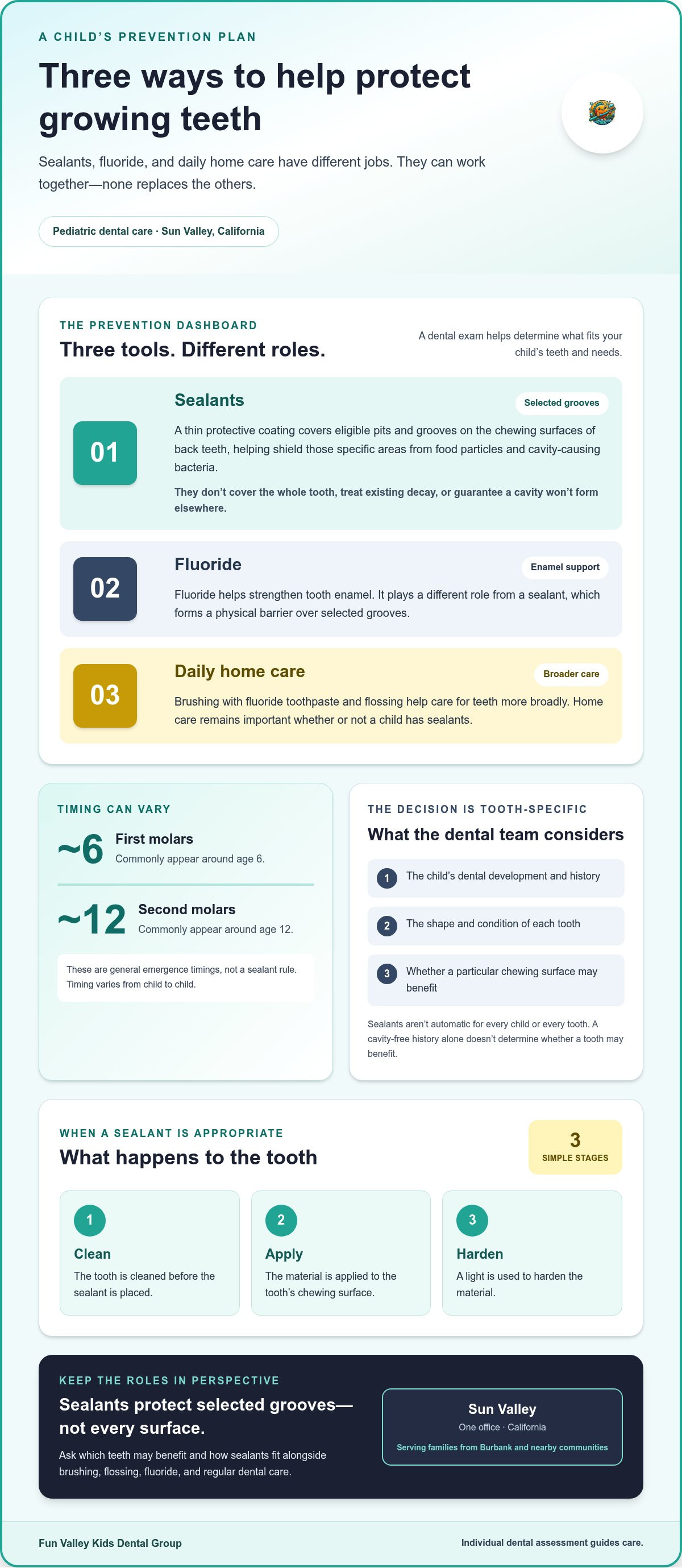
Fun Valley Kids Dental Group has one office in Sun Valley, California, and serves families from Burbank and nearby communities. During a pediatric dental exam, the dental team can consider your child’s tooth development, the shape and condition of their back teeth, and their individual needs when discussing sealants. When a sealant is appropriate, the tooth is cleaned, the material is applied to its chewing surface, and a light is used to harden it. This guide explains what sealants can and can’t protect, how they differ from fluoride and daily oral care, and what to expect when discussing preventive options at your child’s visit.
Table of Contents
Dental Sealants for Kids in Burbank: What They Protect
A dental sealant is a thin protective coating placed on selected tooth surfaces to help shield them from food particles and cavity-causing bacteria. For children, sealants are most often considered for the chewing surfaces of back teeth, especially the molars. These surfaces help grind food, but their small pits and grooves can be difficult to clean thoroughly with a toothbrush.
Grooves vary from child to child. Some are deeper or narrower, creating areas where plaque and food debris may collect even with careful brushing. A sealant covers eligible grooves with a smooth barrier, helping protect those specific areas. It doesn’t cover the whole tooth, treat existing decay, or guarantee that a cavity won’t form elsewhere. The Dental Sealant Wikipedia overview also describes sealants as coatings used to protect susceptible tooth surfaces.
Which tooth surfaces can dental sealants protect?
Sealants are generally placed on the chewing surfaces of back teeth, where natural grooves can make plaque harder to remove. They aren’t usually applied to every surface or every tooth. During an exam, a pediatric dental professional looks at each tooth’s condition and shape, as well as the child’s dental development, to determine whether a particular surface may benefit.
For example, one molar may have pronounced grooves while another has a different shape or needs separate care. A sealant recommendation is specific to the tooth, not an automatic step for every child. For families considering dental sealants for kids Burbank, an individual assessment helps clarify which areas, if any, are appropriate to protect.
How do sealants fit into a child’s prevention plan?
Think of sealants as one part of a broader prevention plan. They protect selected chewing surfaces, while daily brushing with fluoride toothpaste and flossing help care for teeth more broadly. Professional exams and cleanings allow the dental team to monitor changes and offer guidance suited to the child’s needs.
Fluoride and sealants have different roles. Fluoride helps strengthen tooth enamel, while a sealant forms a physical barrier over grooves on selected teeth. A child may benefit from both as part of preventive care; one doesn’t replace the other. Neither makes home care or dental visits unnecessary. Parents can explore practical routines in this guide to preventing cavities in children.
Sealants cover selected grooves on back teeth, but they can’t guarantee that every tooth will stay cavity-free. At an exam, ask which surfaces may benefit and how sealants fit alongside your child’s everyday brushing, flossing, and preventive care.
Who May Benefit from Dental Sealants? A Burbank Parent’s Guide
Sealants aren’t an automatic milestone or a treatment every child needs. A pediatric dental professional considers a child’s dental development, history, and the condition of individual teeth before making a recommendation. A cavity-free history doesn’t settle the question on its own; the shape and condition of each tooth still matter.
A child’s sealant candidacy is determined by examining their teeth and considering their individual dental needs. Parents can help by sharing relevant details, such as previous cavities, dental treatment, or concerns about a newly emerged molar. That context makes the discussion specific to the child instead of relying on a birthday or general rule.
When should parents ask about sealants on permanent molars?
Permanent molars are often part of a sealant conversation as they emerge. First molars commonly appear around age 6, and second molars around age 12, though timing varies from child to child. If you notice a new back tooth, mention it at an exam. The dental professional can assess its condition and discuss whether a sealant is appropriate. The American Dental Association’s sealant guidance also discusses their use on molars.
Can sealants be considered for primary teeth?
A clinician may consider a sealant for a primary molar when the child’s circumstances and the tooth’s condition make it worth discussing. That doesn’t mean all baby teeth need sealants. The recommendation follows an examination and consideration of the child’s clinical needs.
If you have a concern about a baby molar or your child has a history of cavities, bring it up during the visit. The dentist can explain whether that tooth may benefit from a sealant or whether another approach better fits the situation.
To make the conversation useful, ask which specific teeth the dentist is considering, what features informed the recommendation, and what care to continue at home. These questions help clarify the reasoning without requiring you to decide in advance. An exam is an opportunity to understand the options and discuss what feels appropriate for your child.
Fun Valley Kids Dental Group provides pediatric dental exams and sealants at its Sun Valley office. If you’d like to discuss your child’s preventive care, arrange a pediatric dental exam and bring your questions along.
Sealants, Fluoride, and Brushing: Comparing Prevention for Burbank Kids
Preventive care works best as a combination of helpful habits and professional guidance, not a contest where one option replaces the others. Sealants protect selected tooth surfaces; fluoride and home care play different roles. A checkup with no cavities is encouraging, but it doesn’t mean prevention no longer matters. A child’s teeth and needs can change as they grow, so their care plan may change too.
How are sealants different from fluoride?
Sealants cover selected tooth surfaces, while fluoride helps strengthen enamel. They support prevention in different ways, so one isn’t a universal substitute for the other. A child’s dental professional can consider tooth condition, development, and cavity history when discussing which approaches may be useful. Sealants add a barrier to selected grooves; fluoride supports enamel, and neither guarantees a cavity-free future.
Do sealants replace brushing, flossing, or dental exams?
No. Sealants don’t clean teeth, reach every surface, or take the place of daily oral care and professional exams. Help your child build age-appropriate brushing and flossing habits, with support suited to their abilities. A sealant can be one part of the picture, while home care reaches beyond the coated areas.
A cavity-free exam is welcome, but it isn’t a reason to put prevention on pause. Regular visits let the dental team monitor new teeth, changing surfaces, and habits that may affect oral health. Your child’s needs may shift as their mouth develops, so recommendations can be revisited rather than treated as a permanent, one-time decision.
Use the comparison as a starting point for your family’s next prevention conversation. Note which routines are working well and where your child needs support, such as remembering to brush carefully or flossing with help. Those details can help turn general prevention advice into habits your child practices every day. The Sun Valley pediatric dentist guide offers additional context on children’s ongoing dental care.
What to Expect at a Child’s Dental Sealant Visit Near Burbank
A sealant visit starts with an examination, not an assumption that treatment is needed. The dental team assesses your child’s teeth and considers their development and clinical needs. If a sealant may be suitable, the team explains the recommendation and the steps involved before proceeding. Parents can ask questions, and children can hear what to expect in simple, reassuring language.
Assessment: The dental professional examines the teeth and identifies any surfaces that may be candidates.
Discussion: You can talk through the recommendation, your child’s needs, and any concerns.
Application, if appropriate: The selected tooth is prepared and the sealant is placed.
Follow-up guidance: The team explains how to care for your child’s teeth and what to keep in mind at future visits.
How is a sealant generally placed?
If a tooth is suitable, the clinician cleans its surface and keeps it dry so the sealant can be applied. A mild solution may be used to prepare the enamel, then the liquid coating is placed in the tooth’s grooves. A special light can harden the material. The process doesn’t involve drilling into the tooth. Your child’s dentist can describe each step in calm, simple language as the visit unfolds.
The process may be unfamiliar to a child, so you can describe it as a careful tooth-protection step rather than a big procedure. Avoid promising exactly how it will feel or how long it will take; children respond differently, and the visit depends on their needs. If your child is nervous, let the dental team know so they can guide the conversation in a reassuring way.
What should parents expect after the visit?
Follow the dental team’s individual aftercare instructions, since guidance can depend on your child’s situation. Continue age-appropriate brushing and flossing, along with routine dental visits. Sealants don’t replace those everyday habits or checkups.
At future visits, ask how the sealed tooth is doing and raise any questions you’ve noticed at home. Regular exams give the dental professional an opportunity to monitor your child’s teeth and offer guidance as their mouth develops. If your child mentions a change or you have a concern, make a note to bring up at the next appointment.
Families considering dental sealants for kids Burbank can discuss the process during a pediatric dental exam. Fun Valley Kids Dental Group provides pediatric exams and sealants at its Sun Valley office, serving families in Burbank and nearby communities. Schedule a pediatric dental visit to talk through your child’s preventive care with the team.
Finding Pediatric Dental Sealant Care for Your Burbank Child
A dental exam is a chance to look at your child’s teeth together and talk through preventive options, including whether sealants may suit particular teeth. You don’t need to arrive with a decision already made. A little preparation can help you share useful context and leave with a clearer understanding of the next steps.
Questions to bring to a child’s dental exam
Jot down your questions before the visit, especially if you’ve noticed a new molar or have concerns about your child’s cavity history. You might ask:
Which tooth surfaces, if any, may benefit from sealants based on today’s examination?
How would sealants fit alongside fluoride and my child’s brushing and flossing routine?
What follow-up guidance should we keep in mind for my child?
These prompts invite a conversation about your child’s actual teeth rather than a general recommendation. If your child has had cavities or other dental treatment, share that history. You can also mention any worries your child has about dental visits so the team can help make the appointment more welcoming.
Before the exam, it may help to gather a few details:
Your child’s dental history, including previous cavities or treatment.
Any changes or concerns you’ve noticed, such as a newly erupted back tooth.
Questions about preventive care, including sealants, fluoride, and home routines.
You don’t need to have every answer. Even a brief note on your phone can help you remember what matters most at the appointment.
Plan preventive dental care near Burbank
Fun Valley Kids Dental Group provides pediatric dental exams and dental sealants for children. The practice’s physical office is in Sun Valley, California, and serves families in Burbank and nearby communities, including Los Angeles, Tujunga, Sunland, Glendale, Hollywood, Pacoima, Sylmar, Pasadena, and North Hollywood, as well as the wider San Fernando Valley. During an exam, the dental team can assess your child’s teeth and discuss whether sealants are appropriate for their individual needs.
Think of the visit as a chance to map out next steps together, not a commitment to a particular treatment. You can ask for an explanation of any recommendation, talk through how it fits into your child’s wider preventive care, and raise concerns before deciding what feels right for your family.
If you’re ready to talk about preventive care for your child, explore pediatric dental care at Fun Valley Kids Dental Group and arrange an exam at the Sun Valley office. A clear, child-focused conversation can help your family feel more prepared for the road ahead.
Make Your Child’s Next Dental Visit a Conversation
Preventive care doesn’t need to feel like a puzzle you have to solve alone. Your child’s next visit can be a chance to share what you’ve noticed, ask questions, and understand which options fit their teeth and stage of development. Bring a short list of concerns, or simply start with one question: “What should we focus on next?”
For families exploring dental sealants for kids Burbank, an open conversation can turn uncertainty into a clear, child-specific plan. Sealants are one part of preventive care, and the right choices depend on an individual evaluation. You don’t need to arrive with every decision made. Take the next step at a pace that feels comfortable for your family.
Explore pediatric dental care at Fun Valley Kids Dental Group and schedule your child’s next visit at the Sun Valley office.
Frequently Asked Questions
What are dental sealants for kids?
Dental sealants are thin coatings placed on selected tooth surfaces to help protect them from decay. A pediatric dentist may discuss them for a child’s back teeth after checking the grooves and overall tooth condition. They’re one preventive option, not a repair for every dental concern. If a tooth already has a cavity or another issue, the dentist will assess what care it needs rather than relying on a sealant alone.
At what age should a child get dental sealants?
There isn’t one age that fits every child. Parents often discuss sealants as permanent molars emerge, commonly around age 6 for the first molars and around age 12 for the second, though timing varies. The tooth’s eruption and condition matter more than a birthday. If you notice a new back tooth, mention it at your child’s next exam so the dentist can assess it.
Can children get sealants on baby teeth?
Yes, a dentist may consider sealants for certain primary molars, depending on the child’s needs and the tooth’s condition. Baby teeth differ in how long they remain and what care they may need, so the decision should follow an examination. If your child has had cavities in primary teeth or you’re concerned about a particular molar, share that history during the visit and ask what options make sense.
Are dental sealants safe for children?
Dental sealants are used as a preventive option for children, and the dentist can explain the material and address a parent’s specific safety concerns. The American Dental Association reports that BPA exposure from dental materials, including sealants, is minimal and not considered a health concern based on current evidence. Share relevant health history or sensitivities before treatment so the dental team can consider your child’s individual circumstances.
Do dental sealants hurt when they are applied?
Sealant placement is generally considered a comfortable process and usually doesn’t involve drilling or numbing. The dental professional cleans and prepares the tooth, then places the coating on its surface. Each child experiences a dental visit differently, so no particular sensation can be guaranteed. If your child feels unsure, tell the team beforehand; a simple explanation of each step can help the visit feel more familiar and manageable.
How long do dental sealants last on a child’s teeth?
Sealants can protect teeth for several years, but how long they remain intact varies by tooth and individual circumstances. They can wear or become damaged, so the dentist checks their condition during regular exams and can discuss whether follow-up is needed. At home, keep up your child’s usual brushing and flossing routine. If you notice a change in a sealed tooth, bring it up at the next visit.
Do dental sealants mean my child will not get cavities?
No. Sealants reduce exposure to decay on the surfaces they cover, but they can’t promise that a child won’t develop cavities. Decay can affect other areas, and prevention still includes daily brushing, flossing, appropriate fluoride care, and regular dental exams. If your child has a cavity-free visit, that’s encouraging; keep following the preventive guidance that fits their teeth and habits as they grow.
Where can Burbank families discuss dental sealants for kids?
Burbank families can discuss dental sealants for kids at Fun Valley Kids Dental Group, whose physical office is in Sun Valley, California. The practice serves infants, children, and teenagers, and offers pediatric dental exams and sealants as part of preventive care. During an exam, parents can share their child’s dental history and ask which, if any, teeth may benefit. Recommendations depend on the individual child’s examination and clinical needs.


Great guide for parents! Dental sealants can be a helpful part of children’s preventive care, and explaining how they work alongside fluoride and daily brushing makes the topic easier to understand. Regular checkups and individualized recommendations are important for maintaining healthy smiles. A knowledgeable Pediatric Dentist in Carrollton can also help families understand suitable preventive options for their children.