


Kid Friendly Dentist: Choose Care That Eases Dental Fear

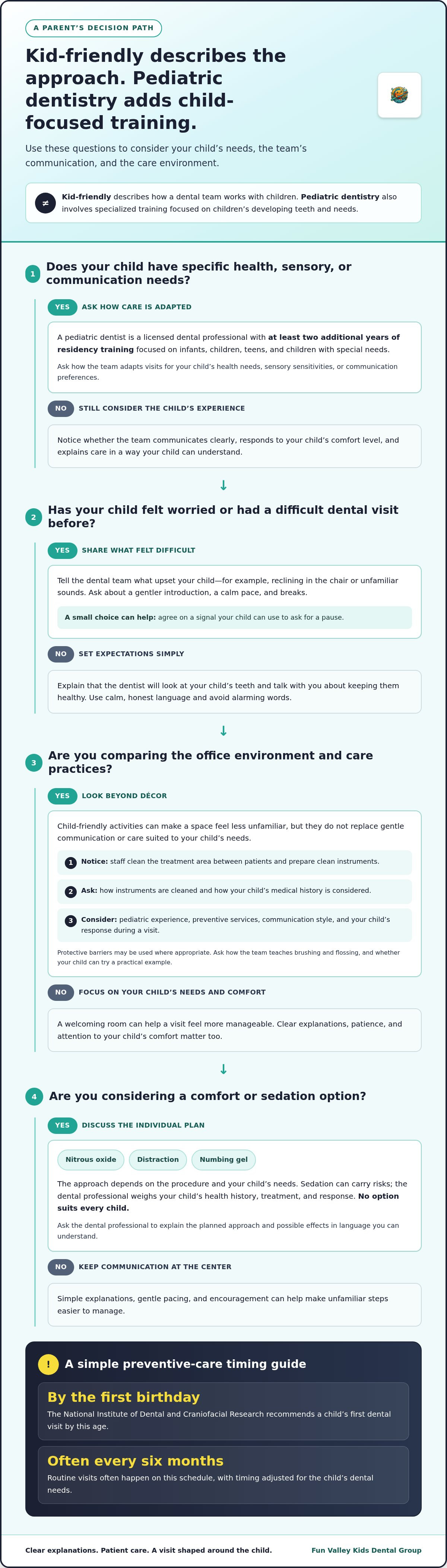
A playful waiting room can help, but it isn’t what makes a dentist kid-friendly on its own. What makes a dentist kid-friendly is how the team communicates, responds to a child’s comfort level, and makes care easier to understand. A pediatric dentist also has specialized training focused on children’s developing teeth and needs.
It’s understandable to want a clear distinction when choosing dental care for your child. A welcoming, patient approach can make appointments feel less intimidating, while pediatric care focuses on children’s developing teeth and specific needs. The right fit depends on the care your child needs and how comfortable they feel with the team and surroundings.
This article explains how a kid-friendly dentist differs from a pediatric dentist and what to look for in the office, communication, and appointment experience. You’ll also learn how simple explanations, a calm pace, and child-friendly activities can help ease dental fears and make visits feel more manageable for the whole family.
Table of Contents
How is a Kid Friendly Dentist Different From a Pediatric Dentist?
A kid-friendly approach describes how a dental team works with children; pediatric dentistry also involves specialized training. Before appointments, look for clear explanations, patience, and care adapted to your child’s needs.
Comfort Before Appointments
Preparation means helping children understand what will happen before they enter the treatment room. Tell your child they’ll meet the dental team and have their teeth checked or cleaned. Avoid alarming words, and invite them to share what worries them. A familiar comfort item, such as a favorite toy, can give a shy child something reassuring to hold while waiting.
These small steps help children know what to expect without promising that every moment will feel easy. For example, explain that the dentist will look at their teeth and talk with you about keeping them healthy. A child with previous dental anxiety may benefit from hearing the plan calmly before appointment day.
Child-Friendly Spaces and Activities
A child-friendly space uses its surroundings to make a dental visit feel less unfamiliar. Toys, colorful rooms, or entertainment in the treatment room can give children something enjoyable to focus on while they wait. A welcoming first impression can make entering the office feel more manageable for a nervous child.
Notice how the team introduces the space, too. A child might explore the play area before an appointment or watch a show during a cleaning. These activities can support comfort, but they don’t replace gentle communication or care suited to the child’s age and needs.
Pediatric Training, Safety, and Finding a Dentist
A pediatric dentist is a licensed dental professional with at least two additional years of residency training focused on infants, children, teens, and children with special needs. Ask how the team adapts visits for your child’s health needs, sensory sensitivities, or communication preferences. That conversation helps you understand whether the approach fits your family.
For safety and infection control, notice whether staff clean the treatment area between patients, use protective barriers where appropriate, and prepare clean instruments for care. You can also ask how instruments are cleaned and how the team considers your child’s medical history. These specific observations are more useful than judging a practice by its décor alone.
Children may receive nitrous oxide sedation, distraction, or numbing gel, depending on the procedure and their needs. Sedation can carry risks, so the dental professional weighs the child’s health history, treatment, and response; no option suits every child. A pediatric dentist should explain the planned approach and possible effects in language you can understand.
When comparing nearby dentists, consider pediatric experience, care for special health needs, communication style, preventive services, and your child’s response during a visit. Ask how the team teaches brushing and flossing, then notice whether the guidance includes a practical example your child can try at home.
Managing dental fear and previous bad experiences
The National Institute of Dental and Craniofacial Research recommends a child’s first dental visit by the first birthday. Routine visits often happen every six months, with timing adjusted for dental needs.
Building Trust Through Positive Visits
Trust grows when each dental visit feels predictable, respectful, and shaped around the child’s concerns. If your child remembers a difficult cleaning, acknowledge that memory without dismissing it or promising nothing uncomfortable will happen. Instead, tell the dental team what upset your child, such as reclining in the chair or unfamiliar sounds, so they can plan a gentler introduction.
After the appointment, name one brave action your child took, such as opening wide or asking a question. Specific praise recognizes effort without judging feelings. A favorite story or calm activity afterward can also help make the visit a manageable family experience.
Preparing for a Child’s First Visit
Preparation means helping a child become familiar with the people and steps involved before dental care begins. Ask whether your child can meet the dental team or see the waiting area before the appointment. For a nervous child, knowing who will greet them and where they can sit may make the visit feel less mysterious.
Choose a time when your child is rested, and describe the visit in simple, honest language. For example, say the dentist will look at their teeth and talk with you about keeping them healthy. Avoid using dental visits as a threat or sharing frightening details from an adult’s experience.
Regular preventive care gives children a chance to get familiar with checkups before a problem needs attention. A dental team can show a child how to brush, explain why daily cleaning matters, and help caregivers build an oral-health routine at home. For example, brushing together can turn the lesson into a shared habit rather than a reminder repeated from across the room.
Keep the routine steady, but tell the dental team if fear returns or a past experience still affects your child. Notes about specific worries can help the team adjust explanations, pace, or breaks during an appointment. Small choices, such as agreeing on a signal for a pause, can help a child feel heard and involved.
If your child is due for preventive care, learn what a pediatric dental exam can include and how it supports ongoing oral health.
Communication and anxiety-reducing techniques
Clear, child-friendly explanations make dental care easier to understand. A pediatric dentist can use calm words, demonstrations, and pauses to show children what comes next. Explaining each step in words children understand is part of what makes a dentist kid-friendly.
Simple, Reassuring Words
Simple, reassuring language describes dental care without adding frightening details. For example, say, “The dentist will count your teeth,” instead of describing an examination with unfamiliar terms. Short phrases help children focus on one idea at a time and leave room for questions.
Children also benefit from honest, brief answers. If a child asks whether a cleaning will feel strange, describe the toothbrush’s gentle buzzing rather than promising they won’t feel anything. Avoid words like “shot” and “hurt,” which may lead a child to imagine a frightening experience before the visit begins.
A dentist can check a child’s understanding by inviting them to explain a step in their own words. For example, ask, “What will the little mirror help me see?” This gives the team a chance to clear up confusion before moving forward. Listening carefully to the answer, rather than rushing to the next step, also makes a dentist more kid-friendly.
Parents can reinforce this approach at home. Before an appointment, describe one familiar moment, such as sitting in the chair or opening wide. If a cavity needs attention, explain that the dentist will talk with the family about caring for the tooth. Avoid guessing how treatment will feel or making promises about the appointment.
Explaining Each Step Beforehand
Tell-show-do is a communication approach: explain a step, show what it involves, then perform it. This lets children see and understand each part before it happens.
For a cleaning, the dentist might say, “I’ll show you the little mirror.” Next, they can let the child look at the mirror before using it to check the teeth. Then they can begin, pausing if the child needs time. This sequence turns unfamiliar equipment into something the child has already seen.
A dental professional can demonstrate a suction tool by showing how it makes a soft sound, then explaining its purpose in simple terms. The child can also raise a hand to ask for a break. These options help children take part without needing to know every clinical detail.
Tell-show-do works best when the explanation matches the child’s age, attention, and comfort. A preschooler may need short phrases and one tool at a time; an older child may want to know how a cleaning removes plaque. The dentist can adjust the pace and check understanding before continuing. Each clear step helps the child follow the visit with less uncertainty.
Parent presence during appointments
Parents can support a child during dental care by helping them prepare, then following the dental team’s lead during the appointment. A parent’s role may change with the child’s age, confidence, and needs. A toddler may want a familiar hand nearby, while an older child may prefer answering questions independently.
Before the appointment, tell the dental team what helps your child feel secure. For example, explain that your child likes to know before someone touches their mouth or needs a moment to settle into the chair. Share any previous difficult experience, too. These details help the team plan how to welcome your child and communicate during the visit.
According to the American Academy of Pediatric Dentistry, parents of older children are encouraged to stay in the waiting room during dental visits. Time with the dental team can help an older child practise speaking up, asking questions, and following instructions. That growing independence can make it easier for them to take part in conversations about their oral health.
For younger children, a calm parent nearby can provide familiar support during a first checkup or cleaning. Sit where your child can see you, keep your voice relaxed, and let the dental professional guide the examination. If your child looks to you before opening their mouth, a gentle nod can encourage them without adding extra instructions.
Too much conversation from several people at once can make a dental visit confusing. For example, if the dentist is explaining a mirror, let your child listen before adding another explanation. If your child becomes upset, tell the team what you notice, such as tense shoulders or turning away. The team can pause and explain the next step.
Parents can also help by setting a simple signal before the appointment. Agree that raising a hand means your child wants the team to pause and talk. This gives children a clear way to communicate during a cleaning or examination instead of feeling they must silently endure a confusing moment.
Afterward, ask one specific question, such as, “What did you learn about your teeth?” Listen without correcting every detail. If your child mentions a worry, note it for the next visit. This shared routine helps children build confidence while keeping parents involved in their dental care.
Tell-show-do and positive reinforcement
Children can feel more involved when dental care follows a clear, predictable pattern. Demonstrations and specific praise help make unfamiliar steps easier to understand and take part in.
Demonstrating Before Treatment
Showing a child what a dental tool does lets them see it before it’s used. For example, the dentist might show a small mirror and explain that it helps look at teeth. A child can watch the mirror move in the dentist’s hand before it comes near their mouth. This can make the equipment feel less mysterious.
Demonstrations can also make a routine cleaning easier to follow. The dentist might show the toothbrush, let the child hear its sound, and then begin gently. Children can ask questions or request a pause between steps. These moments give the child time to understand what’s happening instead of being surprised by the next movement.
Parents can support the same idea at home without pretending to perform dental treatment. Before a visit, take turns counting teeth with a toothbrush in front of a mirror. If a child wants to know what happens at an appointment, describe simple steps honestly, such as sitting in the chair and meeting the dentist.
Encouraging Cooperation With Praise
Positive reinforcement means noticing a child’s specific effort and acknowledging it warmly. It matters because praise can help children recognize the actions they managed, even if they still felt nervous.
Instead of saying only, “Good job,” try, “You held still while the dentist checked your back teeth.” This connects praise to an action the child can remember. The dental team can also recognize asking a question, opening wide, or using a pause signal. Each child’s progress may look different.
Praise should be honest and pressure-free. A child who needs a break hasn’t failed; telling the team what feels difficult is useful communication. Avoid comparing siblings or promising a reward for being “brave,” since children may hear that as pressure to hide worry. A calm, specific compliment supports participation without asking children to ignore their feelings.
After an appointment, parents can ask what felt easiest and what felt unfamiliar. If a child mentions the cleaning brush, for example, the family can remember that detail for the next visit. A pleasant shared activity afterward can celebrate cooperation without making sweets the reward. This keeps encouragement focused on the child’s effort and the value of regular care.
Help your child prepare for a visit by scheduling a pediatric dental exam and sharing their questions with the dental team.
Fun Valley Kids Dental Group: Pediatric Dental Exams
Fun Valley Kids Dental Group provides pediatric dental exams in its child-friendly office in Sun Valley, California. Families can visit for a child’s checkup, preventive care, or support in making dental visits feel more manageable.
An exam gives the dental team a chance to assess your child’s teeth and discuss oral care with you. Depending on your child’s needs, care may also include a cleaning, fluoride treatment, or dental sealants. These visits help families understand their child’s dental health and build familiar care routines.
If you’re ready to plan a visit, contact Fun Valley Kids Dental Group or visit funvalleykidsdental.com.
Make the Next Visit a Shared Step
Understanding what makes a dentist kid-friendly can help you choose care that respects your child’s pace and questions. At home, keep the conversation open after each appointment. Ask your child what they’d like the dental team to know next time, then share that perspective together. This small step helps your child take part in their care as confidence develops.
For families ready to plan a visit, Fun Valley Kids Dental Group provides pediatric dental exams and cleanings, along with fluoride treatments. These services give parents and children a chance to discuss preventive care and the child’s dental needs. The team can help you understand the next steps for your child’s appointment.
Contact Fun Valley Kids Dental Group to take the next step toward a more comfortable dental experience for your child.
Frequently Asked Questions
Can I stay with my child during the appointment?
A parent may stay with their child depending on age, appointment, and clinical needs. Before the visit, tell the dental team whether your child prefers you nearby or feels ready to go in independently. Agree on how you’ll support them without answering every question for them. This lets the child build confidence while knowing you’re available.
How is a pediatric dentist different from a family dentist for children?
A pediatric dentist focuses on children, while a family dentist may care for patients across age groups. That distinction can shape how appointments, preventive guidance, and conversations are tailored to a child’s development. Families who want one office for adults and children may prefer a family practice; those seeking care centered on children may choose a pediatric practice.
What features make a dental office welcoming and comfortable for kids?
Look for a space that feels organized and easy for a child to understand, from check-in to the treatment room. A clear route, a place for a caregiver to sit, and a calm transition between waiting and care can make the visit less confusing. Notice whether the team explains where to go and what happens next, rather than leaving a child to guess.
How do dentists help children feel less anxious during dental visits?
A dentist can learn what specifically worries a child, then tailor the visit around that concern. For example, if the sound of equipment is unsettling, the team may use a distraction or allow a short pause before continuing. Slow breathing together can also help a child settle. Sharing the trigger ahead of time gives the team a practical starting point.
What child-friendly behavior and communication should dentists use?
Child-friendly communication treats a young patient as a participant, not simply as someone adults discuss around. A dentist can speak directly to the child, invite questions, and offer a manageable choice, such as whether to sit up before discussing the next step. The team should respect a child’s response and avoid teasing, comparisons, or pressure to act “brave.”



Comments