


Role-Playing a Dentist Visit: Play Scenarios for Kids

What if a pretend dental visit could help your child feel more prepared for a real one? Role-playing a dentist visit at home gives children a gentle way to practice what a visit might involve, from greeting the dental team to opening wide for a quick look. It can also turn everyday play into a chance to explore empathy and healthy oral care.
It’s natural to want your child to feel comfortable with new people and unfamiliar routines. Play can’t guarantee a worry-free appointment, but it gives you a warm, low-pressure way to talk through what may happen and let your child try different roles at their own pace.
In this guide, you’ll find simple pretend-play ideas, index-card scenarios to adapt for your family, and child-friendly resources to support the activity. Acting out a visit can encourage children to consider how others feel, practice conversation, and become more familiar with brushing and dental care.
Table of Contents
Dentist role-play resources for children
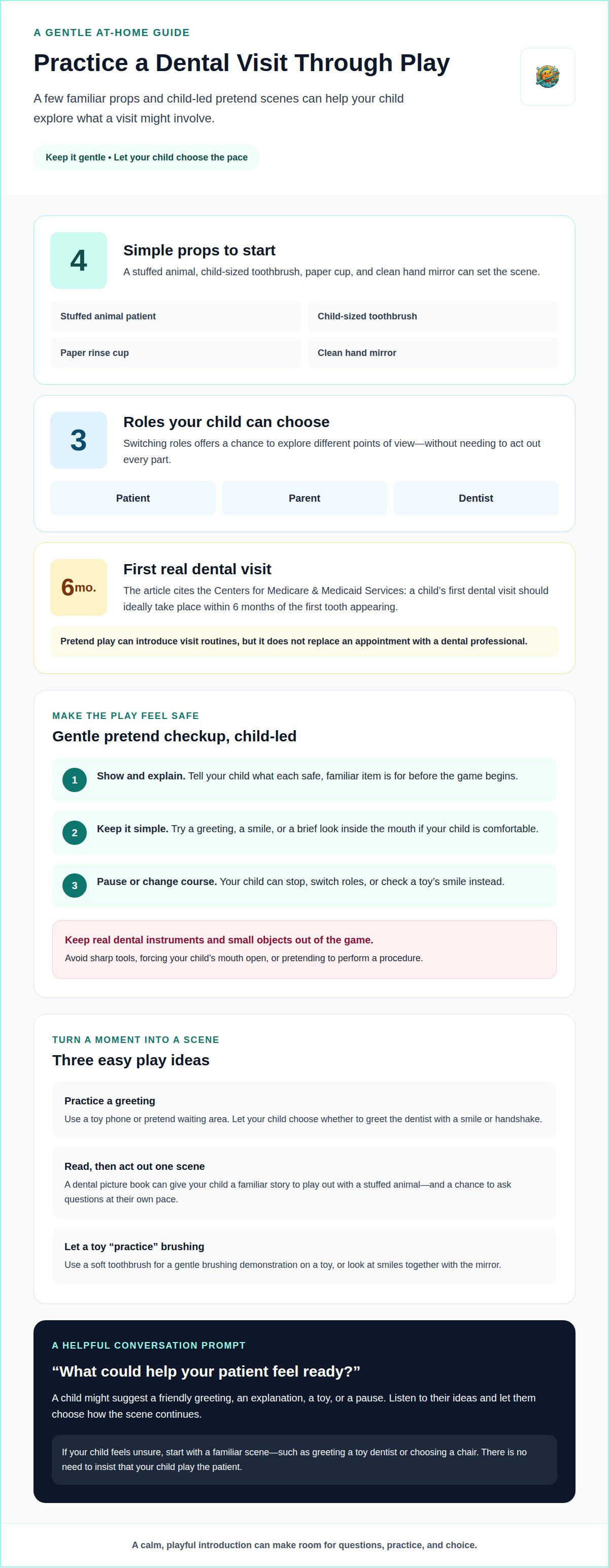
A few familiar objects can turn a corner of your living room into a pretend dental office. For role-playing a dentist visit at home, gather a stuffed animal, a child-sized toothbrush, a paper cup, and a clean hand mirror. Let your child choose the dentist’s name and arrange the items before the game begins.
Safe tools: Use a soft toothbrush, a clean mirror held by an adult, and toys made for children. A stuffed animal can be the patient, while a paper cup becomes a rinse cup. Keep real dental instruments and small objects out of the game, especially anything your child might put in their mouth.
What to avoid: Don’t use sharp tools, force your child’s mouth open, or pretend to perform a procedure. Keep play gentle, and let your child pause or change roles. If they turn away from the mirror, for example, switch to checking a toy’s smile instead.
First real visit: According to the Centers for Medicare & Medicaid Services, a child’s first dental visit should ideally take place within 6 months of the first tooth appearing. Pretend play can introduce visit routines, but it doesn’t replace an appointment with a dental professional.
Choose resources that match your child’s interests. Picture books about dental visits offer characters and simple scenes to act out. A toy phone can stand in for greeting the office, while a chair becomes the waiting area. Keep each scene short, and let your child choose whether to play the patient, parent, or dentist.
Situation: Your child wonders what happens during a checkup. Action: Read a dental picture book together, then invite your child to act out one scene with a stuffed animal. Result: Your child can practice the story’s sequence and ask questions at their own pace.
Build a resource basket with a few clear choices instead of a crowded collection. Before play, show your child each item and explain its pretend purpose. A simple routine might include:
A toothbrush for a gentle brushing demonstration on a toy.
A hand mirror for looking at smiles together.
A paper card for drawing a pretend appointment reminder.
Situation: Your child enjoys drawing more than acting. Action: Invite them to sketch a dental office, then point out the chair, mirror, and friendly greeting in the picture. Result: Drawing gives your child another way to explore the visit and share what they imagine, without pressure to perform.
Role-play can help children develop communication and language skills by expressing how the person they are playing would feel or act in different situations. Parents can role-play greeting the dentist with their child, including a handshake or a smile. Practicing eye contact and balanced back-and-forth conversation during role-play can help children learn how to interact with new people. Keep the greeting playful, and let your child choose whether to take part.
If your child is comfortable, they can lie back and open their mouth while you take a brief look. Explain why a dentist looks inside and what they’re checking. Let your child pause or stop at any time. You can also use a toy phone to act out different kinds of calls and practice conversations about situations that don’t happen every day at the dental office.
Empathy through pretend play
To help your child feel less unsure about a dental visit, let them lead a gentle pretend scene. Offer the patient role, then switch places so your child can explore what a dentist might feel and do. Keep the game calm, and pause whenever your child wants to talk.
Role-play invites children to imagine another person’s thoughts and feelings. A child playing dentist might notice that a stuffed animal looks nervous. Ask, “What could help your patient feel ready?” Your child might suggest a friendly greeting, a clear explanation, or a chance to choose a toy.
Situation: A teddy bear hides behind a cushion when the pretend checkup begins. Action: Let your child ask the bear what feels uncomfortable, then offer choices such as sitting up or holding a toy. Result: Your child practices listening and responding to another character’s feelings.
Use simple prompts to encourage conversation without turning play into a quiz. Try, “What might the patient be thinking?” or “How could the dentist explain the mirror?” Give your child time to answer. They can use words, gestures, or a drawing to show what the character needs.
Switch roles during the same scene. Your child can be the patient first, then become the dentist, parent, or waiting-room helper. Each role offers a different point of view. As the patient, they can practice saying, “Please tell me what happens next.” As the dentist, they can practice kindly explaining a pretend step.
Situation: Your child says the toy patient doesn’t want to open its mouth. Action: Ask what the toy might need, then let your child offer reassurance or a pause. Result: The scene becomes practice in noticing reluctance and respecting someone’s response, rather than simply finishing the pretend checkup.
Role-play can also build communication and language skills. A child might describe a character’s feelings with words like “curious,” “worried,” or “ready.” Model a short exchange: “The bear looks nervous.” “Let’s explain the mirror first.” This links an emotion with a helpful response.
If your child feels uneasy, start with a familiar, simple scene. They might greet a toy dentist, choose a chair, or ask one question. Don’t insist that they play the patient. Letting your child choose the pace and role gives them room to explore without acting out every part.
Notice specific caring actions instead of praising only the finished scene. Say, “You asked the bear what it wanted,” or “You explained before looking.” These comments name the empathy your child practiced. Next time you play, invite them to use the same listening and clear communication with another character.
Preparing role-playing scenarios on index cards
Index cards make pretend visits easy to start, pause, and change. Write one clear situation on each 3” x 5” card, then let your child pick a scene. Keep the wording simple, such as “You arrive for a checkup” or “The patient has a question.” A single prompt gives the game a direction without deciding every line for your child.
Prepare the cards before inviting your child to play. Choose familiar moments and leave room for your child’s ideas. A small set can cover different parts of a visit without making the activity feel like a test.
Arrival: “You walk into the office. How do you say hello?”
Questions: “The dentist asks what you want to know. What would you ask?”
Taking turns: “The patient has something to say. How can the dentist listen?”
Pause: “The patient wants a break. What could they say?”
For a first-visit scene, include a prompt about concerns and hopes. Ask, “What are you wondering about?” and “What would you like to learn today?” These questions let your child shape the scene around their thoughts. They also give the pretend dentist practice listening before explaining what comes next.
Situation: Your child picks the arrival card but doesn’t know what to say. Action: Offer two sample greetings, such as “Hello” or “I’m here for my checkup,” then let them choose one or invent another. Result: The scene begins with words your child feels comfortable trying.
Write one action on each card. “Meet the dentist, sit down, ask a question, and get checked” asks a child to manage too much at once. Split it into separate moments. Your child can draw a small picture beside each prompt, such as a doorway for arriving or a speech bubble for asking a question.
Situation: A card says, “The patient feels unsure.” Action: Invite your child to choose what the character needs, such as an explanation, a pause, or a parent nearby. Result: The card becomes a flexible scene, not a script with one right answer.
Sort finished cards into “start,” “talk,” and “pause” piles. Let your child choose one card from each pile or skip any prompt they don’t want. After playing, ask which scene they’d change. Update the wording together so the next round follows your child’s questions and imagination.
These cards can also help parents and children practice different parts of a pretend dental visit. Write each situation on a 3” x 5” index card, keeping the prompt focused on what your child might want to ask or say. Take turns playing the dentist and the patient, then adjust the scene to explore different ways to make the visit feel clear and comfortable. Keep the card as a starting point rather than a script, so your child can respond in their own words.
For a first-visit role-play, ask your child about their concerns and hopes for the appointment. Let them choose what to share while you practice listening and responding. After the scene, talk about whether the questions made room for both concerns and hopes. Revise the card together if another prompt would help guide the next round.
Teaching oral hygiene through role-play
Give brushing and dental care a story, not a lecture. In a pretend “smile mission,” your child can help a toy get ready for bed, notice which teeth need attention, and explain each step. Keep the language simple and connect the game to your family’s usual routine.
Use a stuffed animal as the patient and let your child narrate. Perhaps the toy forgets to brush before bed. Your child can explain what happens next, demonstrate gentle brushing on the toy, and decide how the character can remember tomorrow. This turns an everyday task into a chance to practice explaining and remembering.
Offer different roles as the story unfolds. Your child might be the coach, the toy might be learning, and you can play someone who asks questions. Try prompts like, “What should the bear do before bed?” or “How can we help the bear remember?” Let your child answer in their own words.
Situation: A toy says brushing feels like a chore. Action: Let your child invent a short song or choose a pretend mission, such as finding every tooth in the toy’s smile. Result: Your child practices describing a routine in a playful, memorable way.
Keep the actions gentle, and use a child’s toothbrush only as intended. The game can focus on explaining the routine instead of brushing a toy’s mouth. Try a simple sequence together:
Choose a character who needs help with a bedtime routine.
Ask your child to explain what the character should do.
Invite the character to repeat the steps in the child’s own words.
Children may also wonder about dental X-rays and cleanings. Explain an X-ray as a picture that helps the dental team look at teeth, and describe a cleaning as care that helps clean them. Use calm, plain language, answer your child’s specific question, and don’t pretend to perform either procedure at home.
Situation: Your child asks why a dentist takes an X-ray. Action: Explain that it creates a picture of the teeth, then invite your child to draw a pretend picture of a toy’s smile. Result: Your child can connect an unfamiliar word with a simple idea and ask follow-up questions.
For a cleaning scene, your child can play the dentist explaining what will happen while a toy listens. Focus on communication, not on imitating instruments or dental procedures. A clear explanation gives your child a chance to practice asking questions and hearing what a dental visit may involve.
Finish by asking your child to teach the toy a helpful routine or explain a new dental word. Their answer can show which ideas felt clear and which need another simple explanation. Repeat the story another day with a different character, so oral care stays familiar without making play feel like a lesson.
How to role-play a dentist visit at home with a child
Choose a quiet moment and invite your child to create a pretend visit with you. A stuffed animal can be the patient while you play the dentist or receptionist. Let your child choose the roles, arrange a chair, and decide when the scene begins. Having a say can help the activity feel like play, not a rehearsal they must get right.
Start with a welcome. Greet your child with a smile or pretend handshake, then say, “Hello, I’m glad you’re here.” Let your child answer as the patient, or switch roles so they can offer the greeting. Keep the exchange natural. A simple hello and a name are enough to begin.
Situation: Your child isn’t sure what to say at the pretend office. Action: Offer a choice: wave, smile, or say hello. Result: Your child can practice an opening in a comfortable way, without memorizing a script.
Next, use a picture book about a dental visit. Read one scene, then invite your child to act it out. They might play the patient while you play a parent, or make a toy the dentist. Pause after each part and ask what the character might say next. This keeps the story connected to your child’s ideas.
For a gentle look inside the mouth, your child can lie back on a comfortable surface and open wide. Explain that a dentist looks at teeth to see how they’re doing. If your child wants, use a clean hand mirror so they can see their own smile. Stop if they feel uncomfortable. Keep this pretend check brief, and never force their mouth open.
Situation: Your child asks why the dentist looks at their teeth. Action: Explain the reason in simple words, then let your child pretend to examine a toy’s smile. Result: Your child can connect the action with a clear explanation while staying in charge of the game.
Try this simple sequence, adapting it to your child’s interests:
Choose who greets the patient and how they say hello.
Act out the patient sitting comfortably and asking a question.
Pretend to look at a toy’s smile, explaining each action first.
Finish with a kind goodbye and let your child describe the visit.
If your child changes the story, follow their lead. A pretend dentist might answer questions first, or the toy patient might ask for a pause. Those changes let your child practice speaking up and hearing a response. For support beyond home play, schedule a pediatric dental visit and help your child take the next step with a real dental team.
Fun Valley Kids Dental Group
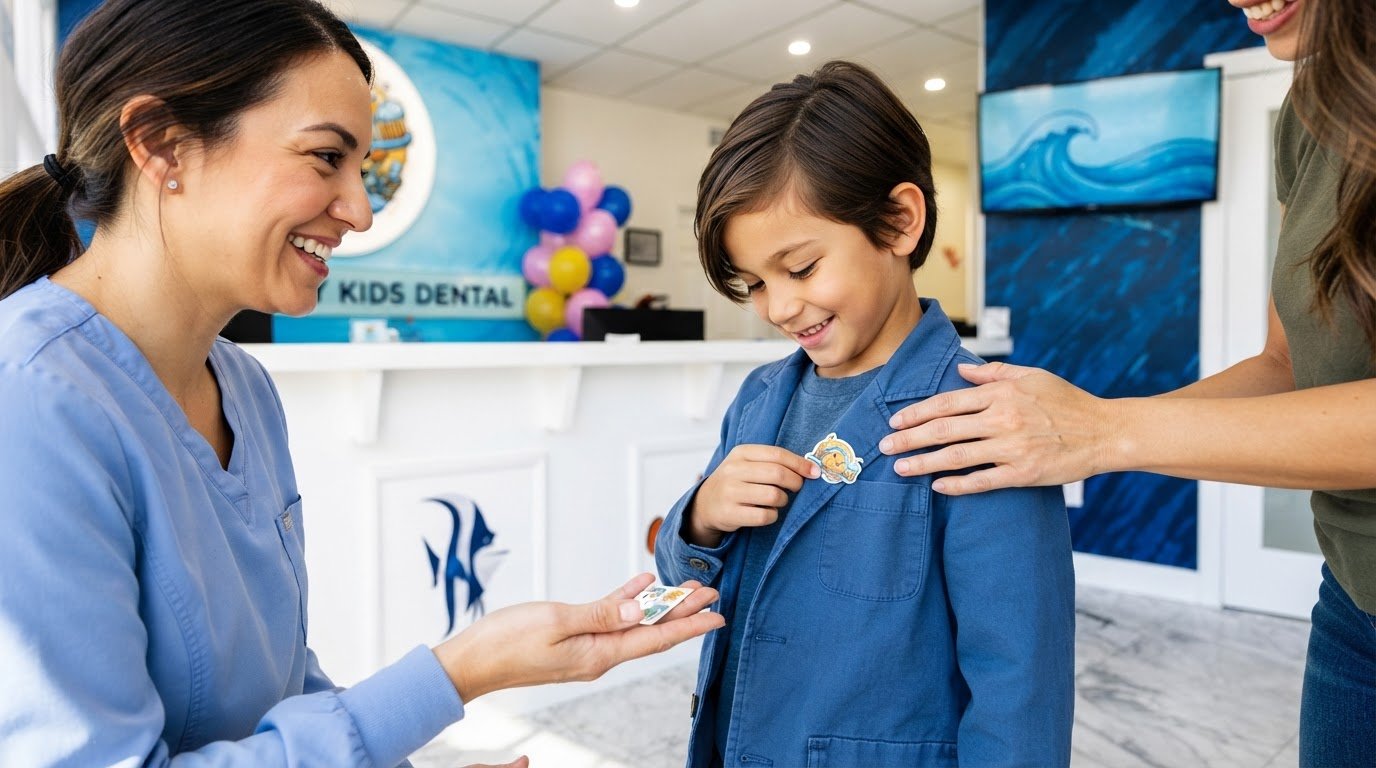
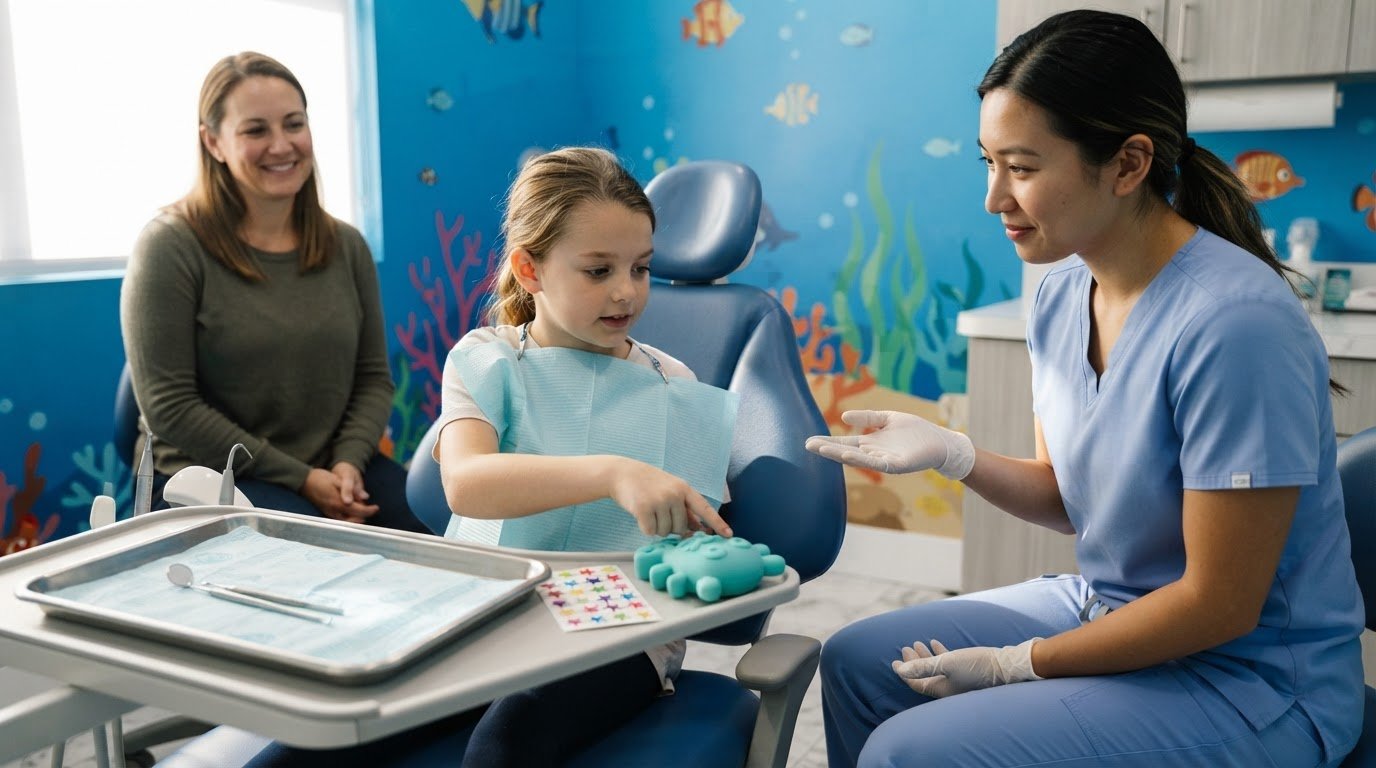
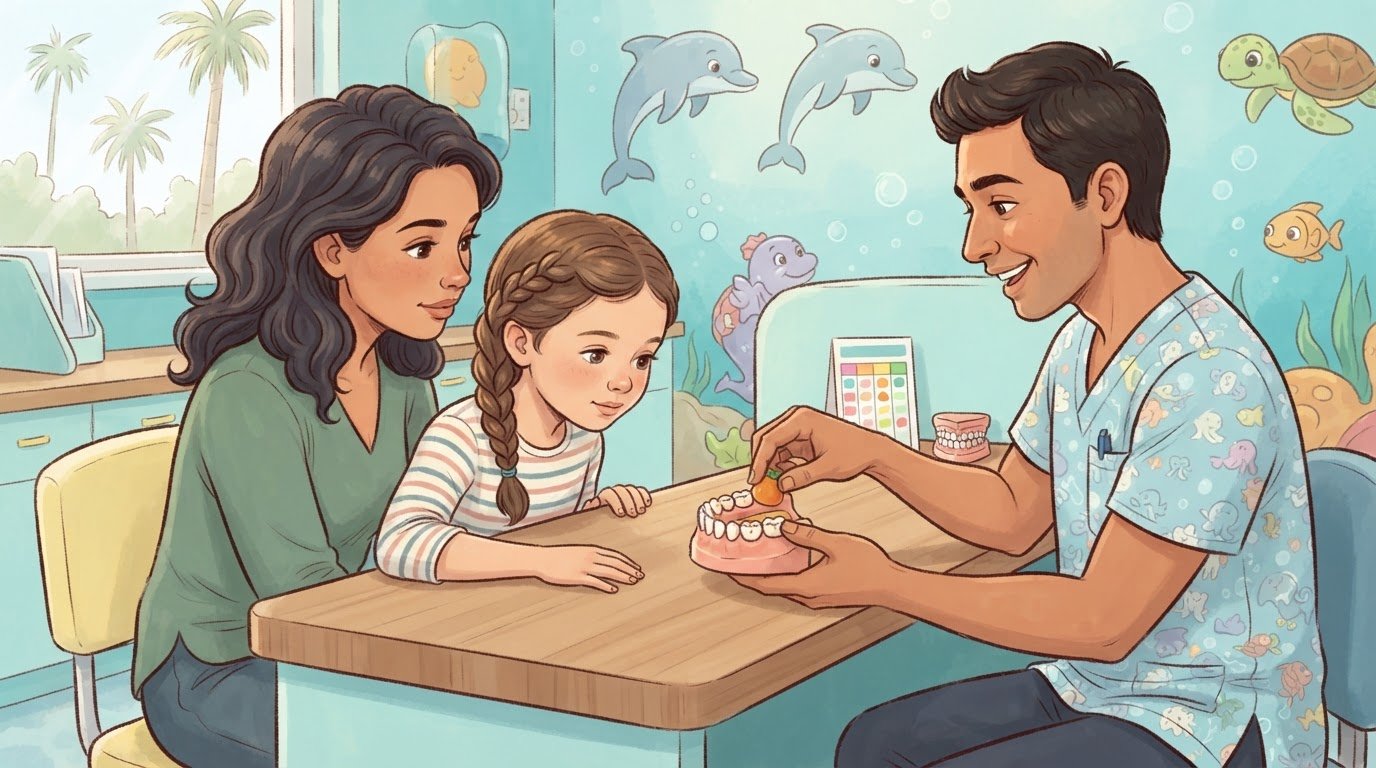
Fun Valley Kids Dental Group, located in Sun Valley, California, helps families move from pretend practice to a real dental visit. Pediatric Dental Exams give children a chance to become familiar with dental care, while parents can ask questions about their child’s oral health. Kids Teeth Cleaning supports preventive care as your child grows. Before the appointment, talk with your child about what they may experience and share any questions or concerns with the dental team. Fun Valley Kids Dental Group welcomes families from Sun Valley, Pacoima, Arleta, Panorama City, North Hollywood, Burbank, and Sylmar.
At home, keep using familiar words from your pretend game, such as “checkup” or “cleaning.” Then contact Fun Valley Kids Dental Group in Sun Valley to schedule a pediatric dental appointment for your child.
Carry the Confidence Into the Next Visit
Let your child choose one part of the pretend game to carry into a real appointment, such as asking a question or greeting the dental team. That familiar starting point gives them a choice while leaving room for the visit to unfold naturally. If role-playing a dentist visit at home brings up a worry, listen without rushing to solve it, then share the concern with the dental team.
Play is a gentle beginning, not a test your child needs to pass. Keep the invitation open, follow your child’s pace, and make the next step together when your family feels ready. For a real pediatric dental visit, contact Fun Valley Kids Dental Group. Your child can keep exploring healthy smiles one calm step at a time.
Comments