


White Fillings for Baby Teeth in San Fernando Valley

What if a baby tooth that’s destined to fall out still needs care today? A cavity can affect a child’s comfort and the tooth’s condition in the meantime, so the decision isn’t based on appearance alone. Families exploring white fillings for baby teeth San Fernando Valley care can start by learning what the tooth needs and how a dentist evaluates it.
It’s natural to wonder whether a filling is necessary, what treatment may involve, and how your child might handle the visit. A tooth-colored filling may be an option, but the dentist’s recommendation depends on the cavity’s size and depth, the remaining tooth structure, and your child’s individual needs. In some cases, another treatment may be more appropriate.
This guide explains what a white filling is intended to address, what a child’s dental evaluation can involve, and how a dentist weighs filling treatment against other options. You’ll also find practical ways to prepare your child for a visit. Fun Valley Kids Dental Group provides pediatric dental care at its child-friendly office in Sun Valley, California, serving families across the San Fernando Valley.
Table of Contents
What Are White Fillings for Baby Teeth, and What Do They Treat?
How a Pediatric Dentist Decides Whether a Baby Tooth Needs a Filling
White Filling or White Crown? Understanding Possible Care for a Baby Tooth
Preparing Your Child for a White Filling Visit in Sun Valley
Pediatric White Fillings at Fun Valley Kids Dental Group in Sun Valley
What Are White Fillings for Baby Teeth, and What Do They Treat?
A baby tooth is temporary, but a cavity in it can still deserve attention. Decay can progress, affect the tooth’s comfort, and make eating difficult. A dentist can examine the tooth and explain whether treatment or monitoring is appropriate. The right choice depends on the findings, not simply on the fact that the tooth will eventually fall out.
A white filling is a tooth-colored restoration used to repair an area of a baby tooth affected by decay or damage. It restores the affected part of the tooth when a dentist determines that a filling is suitable. This is a useful starting point, but it doesn’t mean every cavity should be treated with a filling.
Baby teeth support everyday functions as children grow, so parents shouldn’t assume a suspected cavity can wait until the tooth loosens. An examination helps the dentist assess the tooth and discuss suitable care. For families looking into white fillings for baby teeth San Fernando Valley care, an individual dental evaluation is the first step toward a recommendation tailored to the child.
How a cavity can affect a primary tooth
Tooth decay develops when acids produced by mouth bacteria weaken the tooth. A child may have sensitivity or discomfort as the affected area changes, but a cavity doesn’t always cause an obvious symptom. A dark spot or a complaint while eating can be a reason to arrange an exam. Appearance alone can’t show how far decay has progressed.
Early childhood caries describes tooth decay in young children and discusses treatment options such as fillings and crowns. A dentist assesses the specific tooth before recommending care. The treatment may vary with the extent of decay and the tooth’s condition, so not every cavity calls for the same solution.
What “white filling” means in a child’s dental visit
“White filling” and “tooth-colored filling” refer to a restoration designed to blend with the tooth’s natural appearance. During treatment, the dentist repairs the affected area rather than covering the entire tooth. The exact steps depend on the child’s tooth and treatment plan, so parents can ask the dental team to explain the visit in simple, reassuring terms.
A crown is different: it covers more of the tooth, while a filling repairs an affected area. These options aren’t interchangeable, and a white crown isn’t automatically needed just because a baby tooth has decay. Fun Valley Kids Dental Group provides tooth-colored fillings and cavity treatment at its child-friendly office in Sun Valley, California. The dentist’s examination helps determine which care may suit the tooth.
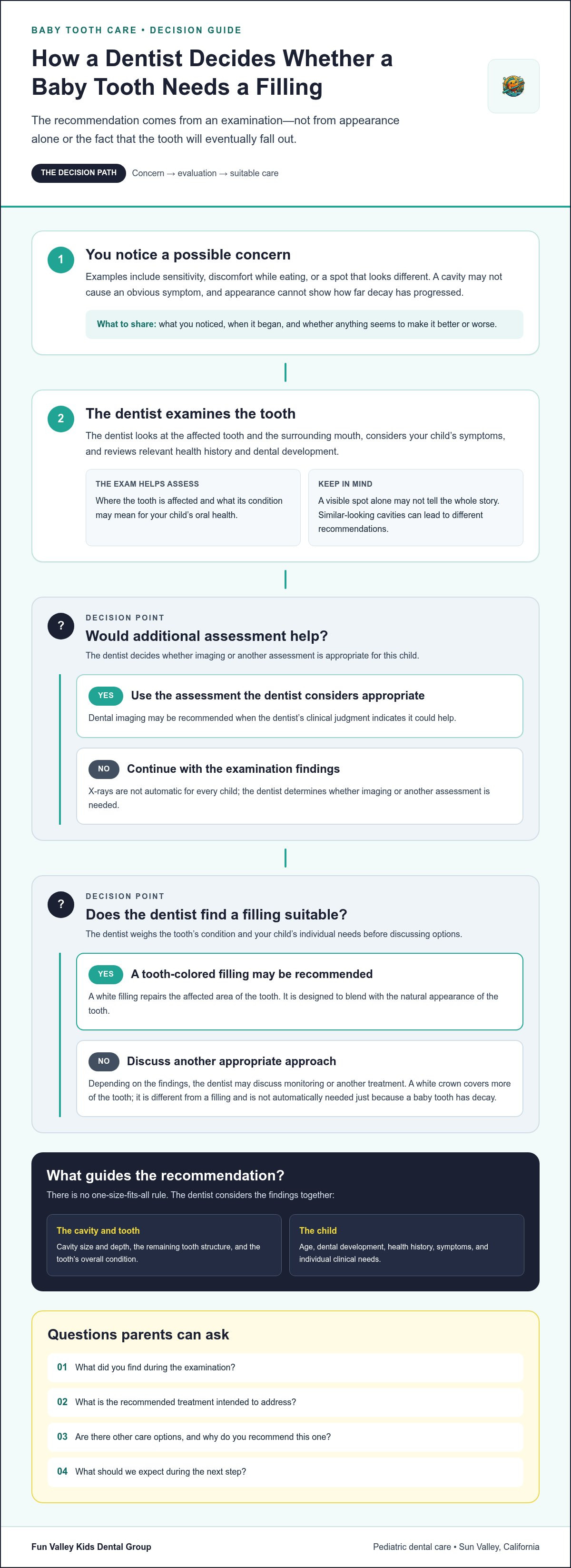
How a Pediatric Dentist Decides Whether a Baby Tooth Needs a Filling
A filling recommendation starts with your child, not a one-size-fits-all rule. The dentist asks what you’ve noticed, examines the tooth, and uses the findings to discuss possible next steps. A baby tooth’s age and development matter, but they’re only part of the picture. Your child’s health history and the tooth’s specific condition also help shape the plan.
The visit generally follows a clear path:
Discuss your concerns. Share what you’ve observed, such as sensitivity, discomfort while eating, or a spot that looks different. Mention when you first noticed it and whether anything seems to make it better or worse.
Examine the tooth. The dentist looks at the affected tooth and the surrounding mouth. They may recommend additional assessment, such as dental imaging, when their clinical judgment indicates it could help.
Assess the findings. The dentist considers the tooth’s condition alongside your child’s age, dental development, health history, and individual clinical needs.
Explain the options. The dentist discusses what the findings suggest, what a proposed treatment is meant to address, and whether another approach may be appropriate.
What the dental examination helps the dentist understand
An exam helps the dentist see where the tooth is affected and consider how it fits into your child’s overall oral health. A visible spot alone may not tell the whole story. The dentist considers what they observe alongside your child’s symptoms and relevant history before discussing care. X-rays aren’t automatic for every child; the dentist decides whether imaging or another assessment is appropriate.
Recommendations may differ even when two children appear to have similar cavities. The affected area, the tooth’s condition, and the child’s stage of dental development all matter. That’s why an examination is more useful than trying to choose treatment based on a photograph or someone else’s experience.
Questions parents can discuss during the appointment
Your observations are valuable, even if your child has no clear symptoms. Tell the dental team about discomfort, changes you’ve noticed, relevant health history, and anything that might make the visit feel difficult for your child. You can also ask:
What did you find during the examination?
Are there other care options, and why do you recommend this one?
What should we expect during the next step?
Every treatment recommendation should reflect the individual child’s examination, development, health history, and clinical needs. If you’re considering white fillings for baby teeth San Fernando Valley care, these questions can help you understand the reasoning behind the plan and take part in the conversation. Families can learn about pediatric dental care in Sun Valley at Fun Valley Kids Dental Group.
White Filling or White Crown? Understanding Possible Care for a Baby Tooth
A baby tooth is temporary, but that fact alone doesn’t determine whether it needs a filling, a crown, or another approach. The dentist considers the tooth’s condition and your child’s individual needs before discussing treatment. Two children with cavities may receive different recommendations because each tooth and clinical situation is unique.
A tooth-colored filling and a white crown are distinct forms of restorative care. A filling repairs an affected part of a tooth. A crown covers the tooth. Neither option is automatically right for every child, and “white” describes appearance, not a reason to choose one treatment over another.
When a filling may be discussed
After examining your child’s tooth, the dentist may discuss a filling as one way to treat an area affected by decay. The recommendation depends on the examination and the child’s clinical needs, rather than a rule based only on the fact that the tooth is a baby tooth. Ask what the filling is intended to address and what its limitations may be in your child’s situation.
It can help to ask the dentist to explain the plan in everyday language. For example, you might ask which part of the tooth needs attention and why a filling is being considered. This gives you a clearer picture of the recommendation without assuming that a filling is suitable for every cavity.
When the dentist may discuss a crown instead
A crown is another restorative option that may be discussed in some clinical situations. Because it covers the tooth rather than repairing only an affected area, it serves a different purpose from a filling. The dentist can explain why a crown may be considered, what the examination showed, and how the proposed care fits your child’s needs. A crown isn’t automatically preferable simply because a tooth has decay.
If the dentist presents more than one option, invite them to compare what each is intended to do for your child. You can ask why one approach is recommended, whether another is appropriate, and what to expect from the next step. The goal is to understand the reasoning, not to select treatment based on appearance alone.
Parents seeking white fillings for baby teeth San Fernando Valley care can discuss fillings and crowns as part of an individualized dental evaluation. Fun Valley Kids Dental Group provides tooth-colored fillings and pediatric tooth-colored crowns at its Sun Valley office. For a fuller explanation of the crown option, look for the practice’s guide to pediatric dental crowns.
Preparing Your Child for a White Filling Visit in Sun Valley
A little preparation can help a dental visit feel more familiar. You don’t need to explain every detail of treatment. Keep the conversation calm, honest, and suited to your child’s age, then leave room for questions. The goal isn’t to promise that nothing will feel uncomfortable. Instead, show your child that you’ll listen and the dental team will help them understand what’s happening.
Simple ways to help a child feel ready
Use short, reassuring words, such as, “The dentist will look at your tooth and explain how we can help it.” Avoid frightening descriptions or using the visit as a threat. If your child shares a worry, acknowledge it: “I hear that you feel nervous. We can talk about that together.” Simple, honest explanations can help children feel included without overwhelming them.
Children may respond to different kinds of preparation. Some want a brief explanation close to the appointment; others feel better hearing about the visit earlier. Follow your child’s cues, and don’t pressure them to act excited or brave. Remind them that asking questions is okay and that you’ll be there to support them.
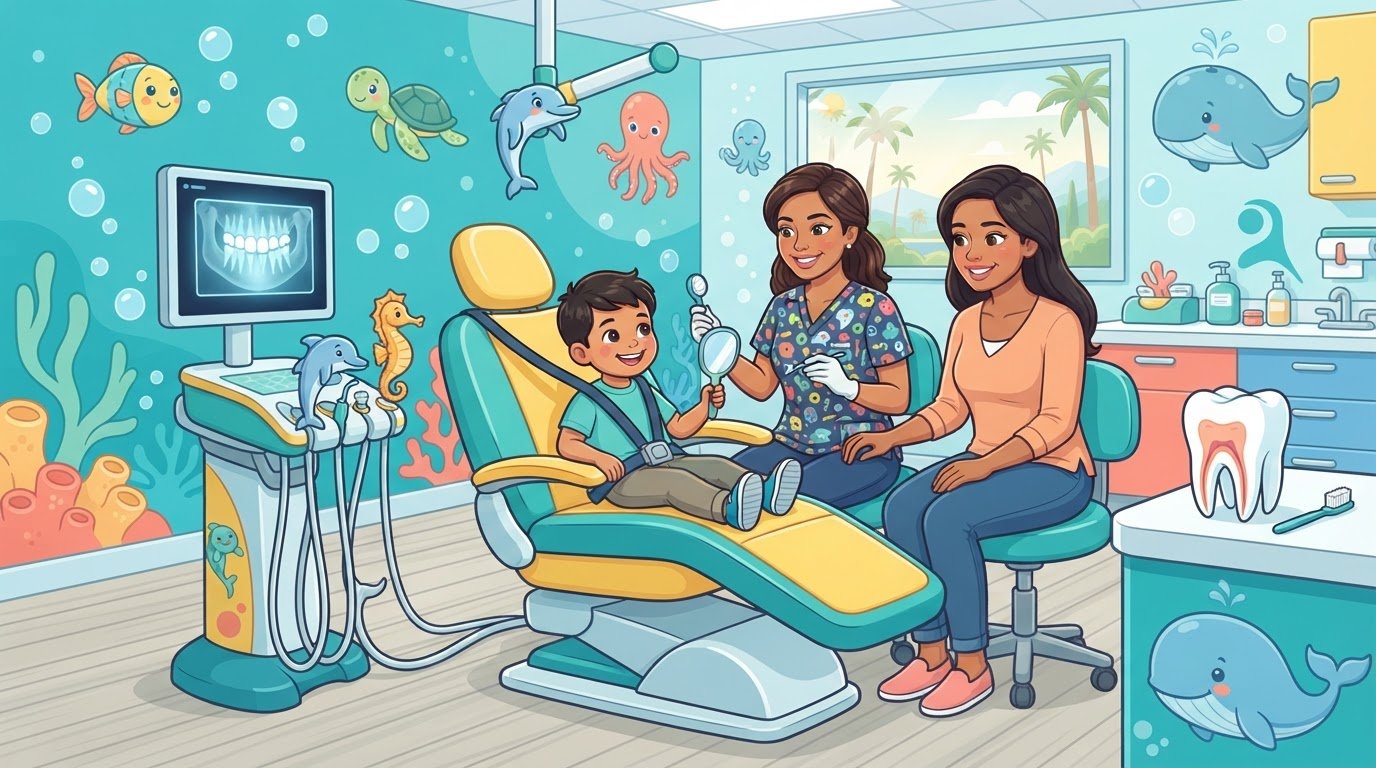
Fun Valley Kids Dental Group’s office in Sun Valley, California, is designed for children and families. A child-friendly setting can make the visit feel more welcoming, while the dental team can guide your family through the appointment in clear, age-appropriate language.
What to share with the dental team
Before the visit, gather details that could help the team understand your child’s needs. Share relevant health history, current concerns, and previous dental experiences, including anything that made an earlier visit easier or harder. You can also mention how your child usually communicates when worried or uncomfortable. These details give the team useful context for planning care.
Bring your questions, too. You might ask how the visit will be explained to your child, what the recommended care involves, and how your child can signal if they need a pause. If you have concerns about comfort, raise them before treatment begins. Any comfort measures or sedation approach must be considered individually, based on your child’s needs, health history, treatment, and professional evaluation.
Families exploring white fillings for baby teeth San Fernando Valley care can make the appointment a shared step: you bring what you know about your child, and the dental team explains the care plan. A pediatric appointment at Fun Valley Kids Dental Group gives you an opportunity to discuss your child’s tooth and prepare for the visit. Schedule a pediatric dental appointment in Sun Valley.
Pediatric White Fillings at Fun Valley Kids Dental Group in Sun Valley
For families considering a filling for a baby tooth, knowing where care takes place can make the next step clearer. Fun Valley Kids Dental Group’s physical office is in Sun Valley, California. The practice provides pediatric tooth-colored fillings and cavity treatment, with recommendations based on each child’s dental examination and individual clinical needs.
Families from nearby communities, including Pacoima, Arleta, Panorama City, North Hollywood, Burbank, and Sylmar, may also be served at the Sun Valley office. These are areas served by the practice, not separate office locations. If you’re weighing care for your child’s tooth, an appointment gives the dental team a chance to assess the concern and discuss an appropriate plan with you.
A child-focused setting for restorative dental care
A dental visit can feel like a big adventure for a young child. Fun Valley Kids Dental Group’s office is designed for children and families, providing a child-friendly environment for pediatric care. Dr. Mel is the pediatric dentist at the practice and has more than 20 years of experience caring for children. The team can explain the examination findings and the options being considered, keeping the conversation centered on your child’s needs.
Each child’s situation is different. The dentist considers the tooth’s condition and the child’s clinical needs before recommending care. A filling is discussed when it fits the individual evaluation, rather than assumed based only on a parent’s concern or the tooth’s appearance. Parents can bring questions and talk through the purpose of the recommended treatment during the visit.
Next steps for San Fernando Valley parents
If you notice a change in your child’s tooth or suspect a cavity, arrange an examination rather than trying to judge the tooth at home. Before the appointment, make a note of what you’ve seen and any concerns your child has mentioned. This gives you a helpful starting point for the conversation and helps the team understand what brought you in.
Families can also explore guidance on preventing cavities and choosing a pediatric dentist in Sun Valley as they plan ongoing care. When you’re ready to discuss a baby tooth, Fun Valley Kids Dental Group welcomes your family to its Sun Valley office. Schedule a pediatric dental appointment in Sun Valley.
Take the Next Step Toward Your Child’s Dental Care
A dental appointment can be the start of a practical plan, not just a decision about one tooth. Bring your questions, share what you’ve noticed, and give your child space to take the visit one step at a time. Understanding the reason for a recommendation can help you feel more confident about the plan and support healthy routines after the appointment.
If you’re considering white fillings for baby teeth San Fernando Valley families can discuss their child’s needs with a pediatric dental team. An examination can help clarify what’s happening and what care may be appropriate. You don’t have to figure it all out before the appointment. Start with the concern that brought you here, and let the conversation guide the next step.
Schedule a pediatric dental appointment in Sun Valley and take a calm, informed step toward your child’s care. You and your child can approach the visit together, one small step at a time.
Frequently Asked Questions
Do baby teeth need fillings if they eventually fall out?
Yes, a baby tooth can need professional attention even though it will eventually fall out. If you notice a dark spot, food catching in one area, or your child avoiding chewing on one side, arrange an examination rather than deciding at home that treatment can wait. A dentist can explain whether care is recommended and why. Ask what the options are, including whether monitoring is appropriate.
Can a white filling come loose from a baby tooth?
Yes, a filling can sometimes become damaged or come loose. If you see a missing or chipped area, or your child says the tooth feels different or uncomfortable, contact the dentist for guidance. Avoid trying to repair it yourself or probing the area. The dental team can examine the tooth and advise what to do next based on its current condition.
How long does a white filling last in a baby tooth?
There isn’t one lifespan that applies to every filling or every baby tooth. How a restoration performs can depend on the tooth’s condition, the restoration itself, and your child’s individual circumstances. Rather than relying on a general time estimate, ask the dentist what changes to watch for, such as a new chip or discomfort. Keep recommended follow-up visits so the tooth can be checked.
Can my child eat right after getting a white filling?
The right time to eat depends on the care provided and your child’s situation, so there isn’t a universal rule for every visit. Follow the instructions the dental team gives you. If your child says eating feels uncomfortable, or you’re unsure whether a particular food is appropriate, contact the practice for guidance. Having a familiar, easy-to-manage snack ready for later can help you follow the team’s directions.
Will my child need a shot for a white filling?
Not every child’s treatment plan is the same, so the dentist can’t promise in advance that an injection or another comfort approach will or won’t be needed. The plan depends on your child, the tooth, and the treatment. Share your child’s worries before care begins, and ask the dental team to describe the steps in calm, child-friendly language. Knowing what to expect can help your child feel included.
Does dental insurance cover white fillings for baby teeth?
Coverage and out-of-pocket costs vary with the plan, eligibility, and recommended care. Fun Valley Kids Dental Group accepts Medi-Cal/Denti-Cal and PPO dental insurance, but coverage for a particular filling isn’t guaranteed. For white fillings for baby teeth San Fernando Valley families are considering, verify benefits with both the insurer and the office before treatment. Ask about the expected patient responsibility so you can plan with clearer information.


Comments