


Baby Root Canal in Tujunga: What Parents Should Know

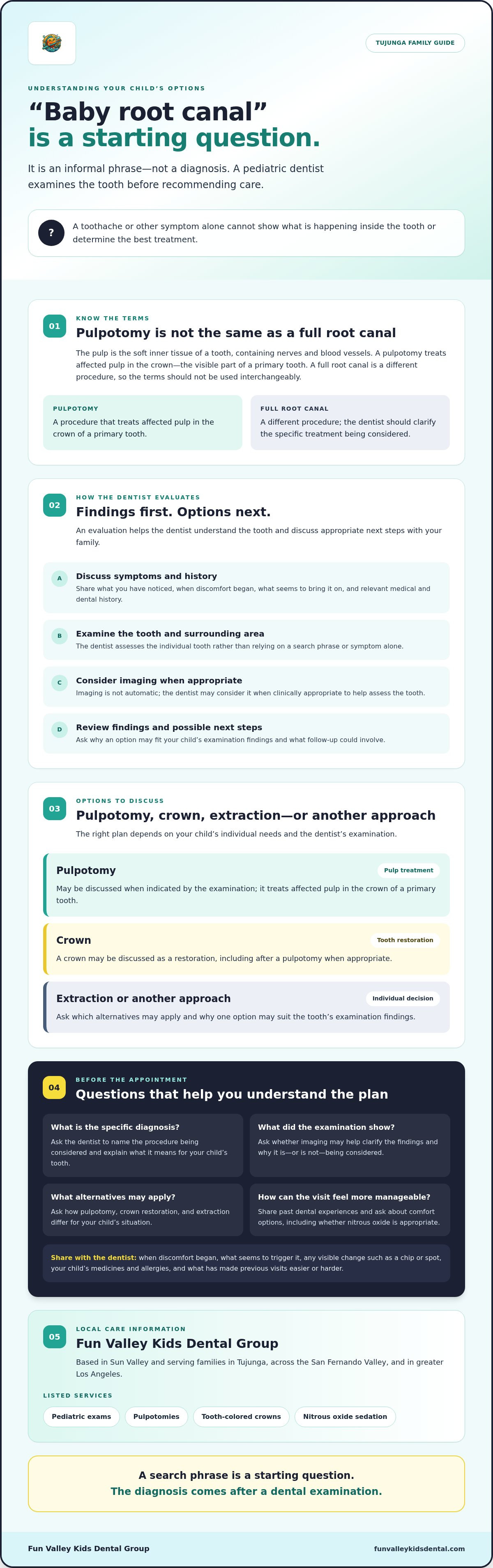
What if “baby root canal” is only the beginning of the conversation, not a diagnosis? If you’re searching for a baby root canal Tujunga, it’s understandable to wonder whether your child’s tooth can be saved, what treatment may involve, and how to make the visit feel less scary. The phrase is often used for a pulpotomy, but a dentist needs to examine the tooth before recommending care.
Your child’s comfort matters, and so does understanding the options. A pediatric dentist can assess the tooth and explain whether a pulpotomy, crown, extraction, or another approach may be appropriate. The right plan depends on your child’s individual needs, so symptoms alone can’t determine which treatment is best.
This article explains what a pulpotomy may involve, how a pediatric dentist evaluates a baby tooth, and what to ask about comfort, treatment choices, and next steps. Fun Valley Kids Dental Group is based in Sun Valley and serves families in Tujunga, as well as communities across the San Fernando Valley and greater Los Angeles area. Clear answers can help make the next step more manageable for your child and your family.
Table of Contents
What Does “Baby Root Canal” Mean for a Child in Tujunga?
“Baby root canal” is a phrase parents may use when a child has a problem deep inside a baby tooth. It isn’t a diagnosis or the name of one specific treatment. If you’re searching for a baby root canal Tujunga, the next step is an examination so a pediatric dentist can identify what’s happening and explain which procedure, if any, may be appropriate.
Inside each tooth is pulp, the soft inner tissue that contains nerves and blood vessels. Think of it as the tooth’s living center. Primary teeth help children chew and speak, and they help guide developing teeth into position. A dentist considers the individual tooth and your child’s needs when discussing care.
Is a pulpotomy the same as a baby root canal?
Not exactly. A pulpotomy treats affected pulp in the crown, or visible part, of a primary tooth. A full root canal is a different procedure, so the terms shouldn’t be used interchangeably. The dentist determines the actual treatment after examining the tooth. For a general overview of the procedure, see Pulpotomy.
A parent’s search phrase is a starting question, not a diagnosis. The diagnosis comes after a dental examination. Even if a pulpotomy is discussed, the dentist needs to assess the specific tooth before recommending it.
Why might a baby tooth need pulp treatment?
Deep decay or an injury may lead a dentist to check whether the pulp is affected. A toothache alone, however, doesn’t show what’s happening inside or mean pulp treatment is automatically needed. A pediatric dentist can examine the tooth, explain the findings, and discuss suitable options with you.
If you’re wondering how to reduce the chance of future decay, explore the guide to preventing cavities in children. The focus here is understanding the concern, not diagnosing it at home. Share what you’ve noticed and ask what the examination shows before deciding on a care plan.
How a Pediatric Dentist Evaluates a Possible Baby Root Canal
An evaluation helps the dentist understand the tooth and gives your family a basis for discussing options. Instead of jumping straight to a procedure, the dentist gathers details, examines the tooth, explains the findings, and reviews possible next steps with you.
The visit may include:
A conversation about your child’s symptoms and dental history.
An examination of the tooth and surrounding area.
An explanation of the findings and whether imaging may help clarify them.
A review of appropriate options, which may include a pulpotomy and restoration if indicated.
Imaging isn’t automatic. The dentist may consider it when clinically appropriate to help assess the tooth. The American Academy of Pediatric Dentistry’s guideline on pulp therapy offers professional guidance on evaluating and treating pulp conditions in children. A recommendation for your child still depends on the examination and individual findings.
What should parents tell the dentist before the examination?
Tell the dentist when you first noticed discomfort, what seems to bring it on, and whether you’ve seen a change such as a chip or visible spot. Share your child’s medical history, medicines, allergies, and previous dental experiences, including anything that made a past visit easier or harder. You don’t need to identify the problem yourself. Your observations help the dentist ask useful questions and assess the tooth.
What may happen during the treatment discussion?
The dentist should explain the examination findings in language you and your child can understand, then describe possible next steps and why they may be considered. If the tooth’s condition makes it appropriate, the discussion may include a pulpotomy and a restoration, such as a crown. Ask which alternatives may apply and what follow-up could involve. A baby root canal Tujunga search can help you prepare, but it can’t determine the right treatment for an individual tooth.
Treatment recommendations follow an individual examination, not a keyword or symptom alone. If you’re preparing for your child’s visit, review pediatric dental exam information from Fun Valley Kids Dental Group, based in Sun Valley and serving Tujunga families.
Pulpotomy, Crown, or Extraction: How Are Options Compared?
These terms describe different parts of a care plan. A pulpotomy treats affected pulp in a primary tooth. A crown is a restoration that covers and rebuilds the tooth when recommended by the dentist. Extraction means removing the tooth. The dentist considers the examination findings, the tooth’s condition, and your child’s needs before discussing which option may fit.
When might a pediatric dentist discuss a pulpotomy and crown?
If the dentist finds pulp treatment may be suitable, a pulpotomy could be part of the plan. The tooth may then need a restoration to rebuild or cover it. Fun Valley Kids Dental Group lists pulpotomies and pediatric tooth-colored crowns among its services, but that doesn’t mean a crown is right for every child or tooth. Ask how the proposed restoration relates to the examination findings. The American Academy of Pediatric Dentistry guidelines provide professional guidance on pulp therapy in children.
When might extraction enter the conversation?
Preserving a baby tooth can matter, but extraction may be discussed if the dentist determines the tooth can’t or shouldn’t be preserved. There isn’t a one-size-fits-all rule based only on a child’s age or expected tooth-loss timeline. Ask why removal is an option, what alternatives may apply, and whether follow-up care should be planned.
If you’re comparing choices after a baby root canal Tujunga search, remember that “keep the tooth at all costs” and “remove it quickly” are both assumptions, not treatment plans. Ask the dentist to walk you through the findings and explain the benefits and considerations of each relevant option for your child.
Questions Tujunga Parents Can Ask Before Their Child’s Appointment
A few thoughtful questions can turn a dental conversation from a mystery into a clear plan. You don’t need to arrive with a diagnosis. Bring your observations, ask what the examination showed, and take the time you need to understand the choices before deciding how to proceed.
What did the examination show? Ask what the dentist found and how those findings relate to your child’s symptoms.
What is the recommended procedure called? Ask what part of the tooth it addresses and why it may be appropriate.
Are there other options? Ask the dentist to explain relevant alternatives and their considerations.
Will the tooth need a restoration? Ask what may be placed afterward and how to care for it at home.
What should we watch for after the visit? Ask which changes or symptoms should prompt you to contact the dental team, and what follow-up is recommended.
What should I ask about the recommended treatment?
Clear explanations can help you understand the plan. If a pulpotomy is recommended, ask what the dentist found and which part of the tooth the treatment addresses. Find out whether a restoration, such as a crown, may follow and what care instructions apply. Before you leave, make sure you know whom to contact if you have questions or notice a change in your child’s condition.
How can I help my child feel prepared?
Keep your explanation simple and reassuring. You might say, “The dentist will look at your tooth and tell us how to help it.” Avoid frightening details, but don’t promise that nothing will feel uncomfortable. Ask the care team how they explain treatment to children and what comfort supports may be suitable. If you’re considering nitrous oxide, ask whether it may be appropriate for your child and what to know beforehand. Fun Valley Kids Dental Group lists nitrous oxide sedation among its pediatric services, but suitability is a conversation for the care team.
For more background, explore information about pediatric sedation dentistry in Sun Valley and pediatric dental care in Sun Valley. If you’re searching for a baby root canal Tujunga families can discuss with a pediatric team, preparing questions can help you take part in the conversation. Contact Fun Valley Kids Dental Group to ask about your child’s examination.
Pediatric Baby Root Canal Care Near Tujunga: Your Next Step
If you’re searching for a baby root canal Tujunga families can discuss with a pediatric dentist, start with an individual examination. Fun Valley Kids Dental Group is based in Sun Valley and serves children and families in Tujunga. An examination can help clarify what’s happening with your child’s tooth and whether further care should be considered.
What pediatric services can Tujunga families ask about?
Fun Valley Kids Dental Group lists pediatric dental examinations, pulpotomies, pediatric tooth-colored crowns, and nitrous oxide sedation among its services. A pulpotomy may be discussed if the examination indicates it could be appropriate. A tooth-colored crown may be considered as a restoration, depending on the tooth and the dentist’s assessment. These services aren’t automatic recommendations. The dentist determines whether a treatment fits the findings and your child’s needs.
Contact Fun Valley Kids Dental Group to discuss your child’s needs and ask about appointment options.
How can parents take the next step?
When you contact the Sun Valley practice, describe what you’ve noticed, such as when discomfort began or whether you see a change in the tooth. Ask whether an examination is the right next step and what information to bring. There’s no need to decide in advance whether your child needs a pulpotomy, a crown, or another option. The dentist can explain the findings and discuss care suited to the individual tooth.
If your child feels uneasy about dental care, mention that too. Ask what comfort supports may be available and whether nitrous oxide may be appropriate for your child. Fun Valley Kids Dental Group lists nitrous oxide sedation for pediatric care, but the care team can discuss suitability based on your child’s needs. A calm conversation is a helpful first step as you plan what comes next.
Take the Next Step With Confidence
“Baby root canal” is a starting phrase, not a diagnosis. A pediatric dentist examines the individual tooth, explains the findings, and discusses which options may fit your child. A pulpotomy, a crown, and extraction each serve different purposes, so it’s reasonable to ask why a particular approach is being considered and what follow-up may involve.
If you’re looking for baby root canal Tujunga care, Fun Valley Kids Dental Group is based in Sun Valley and serves Tujunga families. The pediatric practice lists pulpotomies, pediatric tooth-colored crowns, and nitrous oxide sedation among its services. Your child’s dentist can explain whether a service is appropriate and discuss comfort needs with you.
Bring your questions and share what you’ve noticed. Fun Valley Kids Dental Group serves families across Los Angeles, including Sun Valley, Tujunga, Sunland, Sunland, Glendale, Burbank, Hollywood, Pacoima, Sylmar, the San Fernando Valley, Pasadena, and North Hollywood. Contact Fun Valley Kids Dental Group to discuss your child’s dental needs and take the next step with a pediatric dental team.
Frequently Asked Questions
Is a baby root canal the same as a pulpotomy?
Not exactly. “Baby root canal” is an informal phrase, while pulpotomy names a specific treatment for affected pulp in a primary tooth. It addresses pulp in the crown, the visible part of the tooth, and isn’t interchangeable with a full root canal. A pediatric dentist examines the tooth and explains the procedure being considered, if treatment is needed.
Can a baby tooth need a root canal if it will eventually fall out?
Yes, a baby tooth may still need dental care even though it won’t last forever. Primary teeth help children chew and speak, and they guide developing teeth. Whether pulp treatment or another option makes sense depends on the tooth’s condition and your child’s needs. A dentist can explain whether preserving the tooth is appropriate rather than relying on its eventual loss alone.
How does a pediatric dentist decide whether a child needs a pulpotomy?
A dentist makes that decision after an individual examination, not from a symptom or search phrase alone. They’ll discuss what you’ve noticed, examine the tooth, explain their findings, and review relevant options. Imaging may be considered when clinically appropriate. Ask what the examination showed, why a pulpotomy is being recommended, and whether other choices may suit your child’s situation.
What happens during a pulpotomy for a primary tooth?
A pulpotomy treats affected pulp in the crown of a primary tooth. In simple terms, the dentist addresses the unhealthy soft tissue in the visible part while leaving pulp in the roots. The exact approach depends on the tooth and the dentist’s findings. Ask your child’s dentist to describe the steps in age-appropriate language and explain what restoration or follow-up may be recommended.
Does a child need a crown after a pulpotomy?
Not every child automatically needs a crown after a pulpotomy. The dentist evaluates the tooth and recommends a restoration based on its condition and treatment needs. A crown may be discussed to cover and rebuild the tooth, but the choice is individual. Fun Valley Kids Dental Group offers pediatric tooth-colored crowns; your child’s dentist can explain whether one is suitable in this case.
Is nitrous oxide an option for a child having pulp treatment?
Nitrous oxide may be an option to discuss with your child’s dental team. Fun Valley Kids Dental Group lists nitrous oxide sedation for pediatric care, but whether it’s appropriate depends on the child and planned care. Ask about comfort supports, how the team will explain the visit, and what you should know before treatment. The care team can address your child’s specific needs.
Can Tujunga families get pediatric pulpotomy care in Sun Valley?
Yes. Fun Valley Kids Dental Group is based in Sun Valley and serves families in Tujunga. The practice lists pediatric dental exams and pulpotomies, as well as pediatric tooth-colored crowns and nitrous oxide sedation. If you’re searching for baby root canal Tujunga care, contact the practice to discuss your child’s needs and ask whether an examination is the right next step.



Comments