


Best Toothpaste for Toddlers: A Parent's Guide

The toothpaste your toddler likes best isn’t automatically the one that best protects their teeth. If you’re comparing fluoride and fluoride-free labels, wondering about swallowing, or facing a shelf full of flavors and claims, choosing the best toothpaste for toddlers can feel like a bigger puzzle than brushing itself.
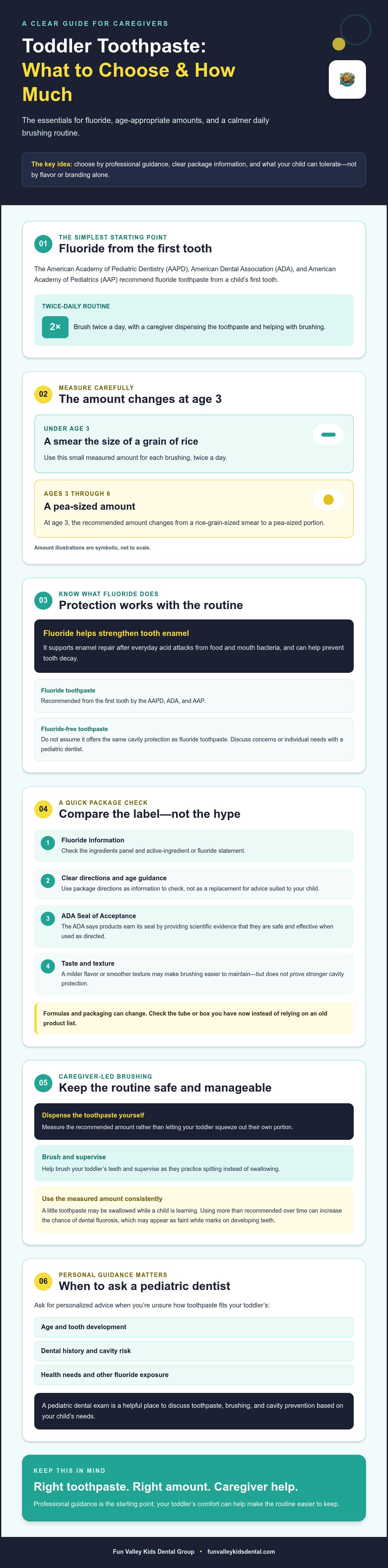
Your questions make sense: you want to protect tiny teeth without using too much or turning brushing into a nightly standoff. The good news is that clear guidance can make the choice simpler. The American Academy of Pediatric Dentistry, American Dental Association, and American Academy of Pediatrics recommend fluoride toothpaste from the first tooth, using a smear the size of a grain of rice for children under 3, twice a day.
In this guide, we’ll compare the features worth checking, explain fluoride and age-appropriate amounts, and share ways to make brushing more comfortable for your child. You’ll also learn when a pediatric dentist can help tailor advice to your toddler’s needs, so your family can build a confident, cavity-conscious brushing routine.
Table of Contents
What Makes a Toothpaste a Good Choice for Toddlers?
A toddler toothpaste is an age-appropriate toothpaste chosen for a young child’s needs and used with a caregiver’s help. It isn’t a special cure-all: cavity protection also depends on regular brushing, the right amount of toothpaste, and guidance suited to the child. The American Academy of Pediatric Dentistry (AAPD), American Dental Association (ADA), and American Academy of Pediatrics (AAP) recommend fluoride toothpaste from the first tooth, with a rice-grain-sized smear for children under 3, twice a day.
That guidance gives families a useful starting point, not a reason to choose by cartoon, flavor, or bold packaging claims alone. The best toothpaste for toddlers is one that fits professional guidance and your child’s routine. Flavor and texture can help a toddler accept brushing, but they don’t determine how well a toothpaste protects against cavities.
Which age range does toddler toothpaste guidance cover?
In this guide, “toddler” refers to children under age 3. At age 3, professional guidance changes the recommended toothpaste amount to a pea-sized portion for children through age 6. Tooth eruption and a child’s individual dental risk can also shape questions about starting or adjusting a routine. A package’s age label is useful to check, but it can’t replace advice from a pediatric dentist who knows your child’s needs.
What should parents compare on the label?
Start with the ingredients panel and any active-ingredient or fluoride statement on the packaging. Check whether the toothpaste contains fluoride, then look for clear directions and relevant acceptance information, such as the ADA Seal of Acceptance. The ADA says products earn its seal by providing scientific evidence that they’re safe and effective when used as directed. Current guidance from the ADA and AAPD can help you interpret the label. Formulas and packaging may change, so check the tube or box in your hand rather than relying on an old product list.
Next, consider your child’s experience. A strong flavor or a texture your toddler dislikes can make brushing harder to maintain. A milder taste or smoother feel may suit them better, but treat those as cooperation factors, not proof of cavity protection. For background on common toothpaste ingredients and fluoride’s role, see what is in toothpaste. If you’re unsure how a label fits your child’s age, dental history, or fluoride exposure, bring the question to a pediatric dental exam.
Fluoride in Toddler Toothpaste: What Parents Need to Know
Fluoride helps strengthen tooth enamel and support its repair after everyday acid attacks from food and mouth bacteria. It can help prevent tooth decay, but it works best as part of a routine that includes caregiver-led brushing and a carefully measured amount. Questions about fluoride are understandable, especially while toddlers are still learning not to swallow toothpaste.
Should toddlers use fluoride toothpaste?
Yes. The American Academy of Pediatric Dentistry (AAPD), American Dental Association (ADA), and American Academy of Pediatrics (AAP) recommend fluoride toothpaste from the first tooth. A child’s age, cavity risk, and other fluoride exposure can guide individual advice. These organizations’ guidance, verified as current in October 2026, recommends brushing twice daily with a rice-grain-sized smear for children under 3 and a pea-sized amount for children ages 3 to 6.
Fluoride-free products may appeal to families, but don’t assume they offer the same cavity protection as fluoride toothpaste. If you’re weighing options because of your child’s health history or concerns about fluoride exposure, a pediatric dentist can help you consider the full picture rather than relying on a product label alone.
How much fluoride toothpaste should a toddler use?
For children under 3, use a smear about the size of a grain of rice. This small amount gives caregivers a clear measure and helps limit how much toothpaste a young child may swallow. Once a child turns 3, guidance changes to a pea-sized amount. Dispense it yourself, brush your toddler’s teeth, and supervise so they can practice spitting rather than swallowing.
Swallowing a little toothpaste during the learning years can happen. The key is not to let a toddler squeeze out their own portion or treat toothpaste like a snack. Using more than recommended over time can increase the chance of dental fluorosis, which may appear as faint white marks on developing teeth. Measuring the amount helps reduce that risk while supporting daily cavity prevention.
If you’re unsure how your toddler’s brushing routine fits with their dental history or other fluoride sources, bring your questions to a pediatric dental exam. Families can discuss individual guidance with Fun Valley Kids Dental Group during a pediatric dental exam.
How to Compare Toddler Toothpaste Options Without Chasing a Brand
A long list of “top picks” can become outdated as formulas and packaging change. Instead, compare the toothpaste in front of you against a few practical questions. No single brand or flavor suits every toddler, and this guide doesn’t endorse a particular product. The goal is to find an option that fits current dental guidance and helps your child take part in brushing.
Fluoride toothpaste or fluoride-free toothpaste?
Fluoride toothpaste helps strengthen enamel and prevent tooth decay, which is why current ADA and AAPD guidance recommends it for young children. Families may still have questions about swallowing, overall fluoride exposure, or a child’s health needs. Those concerns deserve a thoughtful conversation, not a guess based on a marketing claim. Fluoride-free toothpaste doesn’t provide the same fluoride-based cavity protection, so don’t assume the two options are interchangeable, particularly if your child has had cavities or may be at higher risk. A pediatric dentist can help weigh personal circumstances and prevention needs.
Do flavor, texture, and acceptance make a difference?
They can make the brushing routine easier to maintain. If your toddler rejects a strong flavor or an unfamiliar texture, you might try another child-tolerated option while keeping the active ingredient and label directions in view. A pleasant taste may help with cooperation, but it isn’t evidence of better cavity protection. For more ideas to support a healthy routine, explore this guide to preventing cavities in children.
Use this checklist to narrow the choices, then confirm the package still matches your child’s needs. If your toddler’s cavity risk is elevated or you’re unsure about fluoride, bring the label and your questions to a pediatric dental visit.
How to Use Toddler Toothpaste Safely in a Daily Routine
Choosing the best toothpaste for toddlers is only part of the picture. A steady, caregiver-led routine helps your child get the intended amount while building comfortable brushing habits. Keep the focus on measuring and supervising toothpaste use; your child’s dentist can offer personalized advice on brushing technique if needed.
What does safe caregiver supervision look like?
Make toothpaste an adult-managed part of the routine. This simple sequence can help:
Get ready: Keep the tube out of your toddler’s reach and bring it out when it’s time to brush.
Measure: Dispense the age-appropriate amount yourself. Current guidance recommends a rice-grain-sized smear for children under 3 and a pea-sized amount for children ages 3 to 6.
Stay alongside: Supervise brushing and help your child practice spitting instead of swallowing. Don’t leave them alone with the tube or let them dispense their own toothpaste.
Put it away: Cap the tube and store it where your child can’t reach it.
A little accidental swallowing can happen as toddlers learn. If it seems to happen often, or you’re unsure how to manage it, check in with a pediatric dentist for calm, practical guidance. The goal is to use a small, measured amount and help your child learn at their own pace.
How can parents make a new toothpaste easier to accept?
Try one reasonable flavor change at a time so you can tell how your child responds. Keep the routine predictable, use a calm voice, and praise cooperation, even if brushing isn’t perfect. A familiar song or letting your toddler choose between two suitable options can make the moment feel more like a small adventure than a standoff. Acceptance may take practice, so don’t expect a new flavor to solve every brushing challenge right away.
If a taste or texture continues to bother your child, or brushing remains a struggle, ask a pediatric dentist about options that fit their needs. You can also review this guide to preventing cavities in children for more routine ideas.
For help with toothpaste questions or your child’s prevention plan, schedule a pediatric dental exam with Fun Valley Kids Dental Group.
When to Ask a Pediatric Dentist About Your Toddler’s Toothpaste
General guidance is a helpful starting point, but your child’s history and daily fluoride exposure can make toothpaste questions more specific. Ask a pediatric dentist if your toddler has had cavities, you’ve noticed enamel concerns, or you’re unsure how their age and development affect their brushing routine. A visit can help you sort through the details instead of guessing from product labels.
Which child-specific factors can change the recommendation?
Before the conversation, note any previous cavities or concerns about the appearance of your child’s teeth. Share their age and developmental stage, including whether they can spit reliably or tend to swallow toothpaste. Mention fluoride supplements, your drinking-water source, and any other fluoride exposure. These details help the dentist consider your child’s circumstances; this article can’t diagnose cavity risk or prescribe an individual toothpaste routine.
If your toddler has a special health need or you’re uncertain about fluoride, bring that up too. You can take the toothpaste package or a clear photo of its label, which makes it easier to discuss ingredients and directions together. Asking questions isn’t overreacting. It’s a practical way to find a comfortable path for your family.
How can a Sun Valley pediatric dental visit help?
A pediatric dental exam gives you time to ask what toothpaste may fit your child’s age, dental history, and fluoride exposure. Fun Valley Kids Dental Group provides pediatric exams and fluoride treatments for children. A professional fluoride treatment is a separate preventive service, not a replacement for toothpaste or daily brushing; a dentist can explain whether it may be appropriate for your child.
For a broader look at care for children in the area, explore this Sun Valley pediatric dentist guide. Fun Valley Kids Dental Group is in Sun Valley and serves families from Los Angeles, Tujunga, Sunland, Glendale, Burbank, Hollywood, Pacoima, Sylmar, the San Fernando Valley, Pasadena, and North Hollywood. The best toothpaste for toddlers is not necessarily a particular brand. It’s a choice that aligns with professional guidance and your child’s needs. If questions remain, contact the practice or bring them to your child’s next pediatric dental exam. A little guidance can make the next step feel clearer and calmer.
Take the Next Step Toward Confident Brushing
Choosing the best toothpaste for toddlers doesn’t have to mean finding a perfect flavor or a universally winning brand. Focus on current professional guidance, clear label information, and a toothpaste your child can accept as part of a caregiver-supervised routine. Use the age-appropriate amount, and ask for personalized advice if your child has had cavities, special health needs, or questions about fluoride exposure.
Every child’s smile has its own path. A pediatric dental exam is a chance to talk through toothpaste choices and prevention questions with a professional. Fun Valley Kids Dental Group offers pediatric exams and preventive care for children and families in Sun Valley and nearby communities.
Talk with our pediatric dental team about your toddler’s smile, and take the next step with a little more confidence. You’re building healthy habits together, one small brush at a time.
Frequently Asked Questions
What is the best toothpaste for toddlers?
The best toothpaste for toddlers is an age-appropriate fluoride toothpaste that follows current dental guidance and suits your child’s routine. The ADA and AAPD recommend fluoride toothpaste from the first tooth, used with caregiver supervision. Compare the active ingredients and directions on the current package, then consider whether your toddler accepts its flavor and texture. No single brand or flavor is best for every child, and a pediatric dentist can help with individual concerns.
How much toothpaste should I use for my toddler?
For children younger than 3, use a smear about the size of a grain of rice; for ages 3 through 6, use a pea-sized amount. The ADA, AAPD, and AAP recommend brushing twice daily with these age-based amounts. An adult should dispense the toothpaste and supervise brushing, especially while a child is learning to spit. A small, measured portion helps limit unnecessary swallowing while keeping the routine simple.
Is fluoride toothpaste safe if my toddler swallows a little?
Accidentally swallowing a small amount can happen as toddlers learn to brush, so stay calm and focus on prevention. Dispense only the recommended amount, supervise brushing, and encourage your child to spit when able. Repeatedly swallowing more than the age-appropriate amount can increase the risk of dental fluorosis, which may cause faint white marks on developing teeth. If swallowing happens often or worries you, ask a pediatric dentist for guidance.
Can toddlers use adult toothpaste?
Don’t choose toothpaste just because it’s labeled for adults. Check its active ingredients, fluoride information, and directions, and ask a pediatric dentist if you’re unsure whether it suits your toddler. Adult products may have a taste or texture your child finds difficult to tolerate, and the amount still needs to follow the child’s age-based guidance. A child-friendly package doesn’t replace checking the label or supervising use.
Is fluoride-free toothpaste effective for toddlers?
Fluoride-free toothpaste can help clean teeth, but it doesn’t provide fluoride’s specific cavity-protection role. The ADA and AAPD recommend fluoride toothpaste from the first tooth, so don’t assume fluoride-free products are interchangeable for preventing decay. If you’re considering one because of swallowing concerns, health needs, or other fluoride exposure, discuss your reasons with a pediatric dentist. They can help you weigh your toddler’s dental history and individual circumstances.
When should I ask a pediatric dentist about my toddler’s toothpaste?
Ask for personalized advice if your toddler has had cavities, you notice possible enamel concerns, your child has special health needs, or you’re unsure about fluoride exposure. Mention supplements and your drinking-water source, too. A pediatric dental exam is a good place to review toothpaste and prevention questions. Fun Valley Kids Dental Group offers pediatric exams and fluoride treatments for children in Sun Valley and nearby San Fernando Valley communities.


Comments