


Effects of Pacifier Use on Teeth: When Changes Can Begin

Pacifier-related changes can begin as early as age 2, and prolonged use may affect tooth alignment, the bite, and the shape of the palate. The effects of pacifier use on teeth depend in part on how often and how long a child sucks, not simply on whether they use a pacifier.
It’s understandable to wonder whether a familiar comfort habit could cause lasting changes. The reassuring news is that dental changes linked to pacifier use may improve when the habit ends before age 3, though each child’s development is different.
Learn which changes to watch for, why the duration and intensity of pacifier use matter, and how to gently reduce the habit. We’ll also explain when a dental exam can help you understand your child’s bite and choose a calm next step.
Table of Contents
Open bite
An open bite is a type of malocclusion, or a mismatch in how the teeth meet. Prolonged pacifier use may be associated with changes in how the teeth meet.
Recognizing these patterns can help you tell when your child’s bite may need attention. Both the type of change and how long the habit continues matter.
Pacifier-Related Bite Misalignment
Pacifier-related bite misalignment occurs when repeated sucking pressure affects how a child’s teeth or jaws line up. The American Dental Association notes that pacifier use can begin affecting teeth as early as age 2.
With an open bite, the upper and lower front teeth don’t touch when a child bites down. A crossbite is a different mismatch, in which upper and lower teeth meet unevenly. Prolonged pacifier use has also been associated with an overbite.
These patterns can look different from child to child. For example, a gap between the front teeth when the back teeth are together may suggest an open bite. An open bite can sometimes affect swallowing or speech, so discuss changes during a dental exam.
Dental Risks of Orthodontic-Style Pacifiers
Orthodontic-style pacifiers have a different shape, but studies haven’t conclusively shown that they reduce the risk of dental misalignment compared with conventional pacifiers.
A pacifier’s label or shape alone doesn’t prove that it prevents an open bite, crossbite, or overbite. What matters is the child’s ongoing sucking habit, including how often and how long the pacifier is in their mouth.
Pacifiers can comfort babies and support their sucking reflex. They can also reduce the risk of sudden infant death syndrome during infancy. These benefits don’t rule out possible dental effects from prolonged use, so consider your child’s stage and habit.
Correction After Pacifier Use Stops
Yes, pacifier-related alignment changes can sometimes improve naturally after a child stops using the pacifier before age 3. The teeth and bite may have an opportunity to adjust as the habit ends.
Changes don’t resolve in the same way for every child. The type and extent of the bite change, as well as the child’s dental development, affect what happens next. An open bite, for example, may follow a different course from a crossbite.
A pediatric dental exam can track changes in bite and tooth position. Mention a visible gap between the front teeth, uneven tooth contact, or difficulty closing the mouth comfortably. A dental professional can assess the pattern and explain whether observation or further evaluation is appropriate.
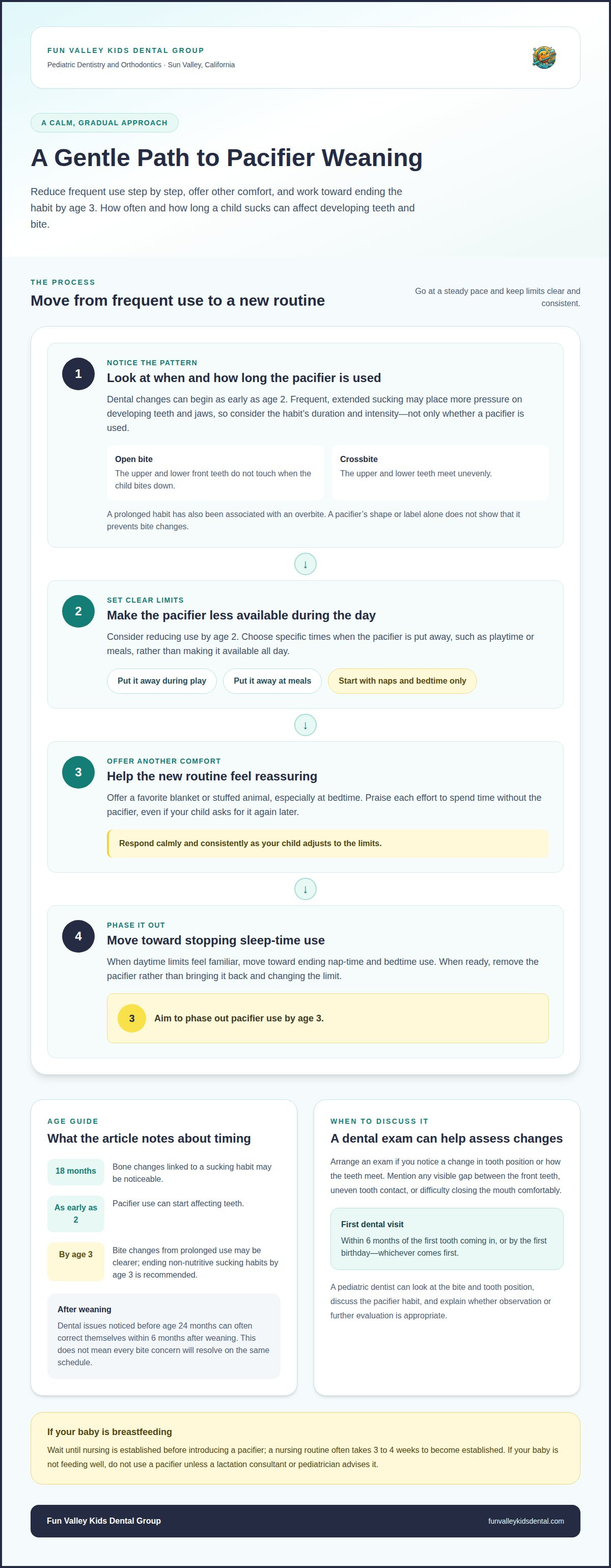
Gradually weaning a child from a pacifier
Weaning can be a gradual shift from frequent sucking to using a pacifier only at sleep times, then stopping. Consider reducing use by age 2, and aim to phase it out by age 3 to help limit dental issues.
If your baby is breastfeeding, wait until nursing is established before introducing a pacifier. A nursing routine often takes 3 to 4 weeks to become established. If your baby isn’t feeding well, don’t use a pacifier unless a lactation consultant or pediatrician advises it.
Take a steady, gentle approach instead of making the pacifier available all day. Set clear limits first: reserve it for naps and bedtime, then remove it as your child adjusts. Offer a favorite blanket or stuffed animal for comfort, praise efforts to spend time without the pacifier, and respond calmly and consistently.
Choose specific times when the pacifier is put away, such as playtime or meals.
Offer another comfort item during the transition, especially at bedtime.
Notice and praise each effort, even if your child asks for the pacifier again later.
When ready, remove the pacifier rather than bringing it back and changing the limit.
For children who rely on a pacifier to settle, beginning with daytime limits can make the change feel more manageable. Then, when the new routine feels familiar, move toward ending nap-time and bedtime use. Dental issues noticed before age 24 months can often correct themselves within 6 months after weaning. That possibility makes early, consistent changes useful, though it doesn’t mean every bite concern will resolve on the same schedule.
When should a child see a pediatric dentist about pacifier use or changes to their teeth? Arrange an exam if you notice a change in tooth position or how the teeth meet. A child should have their first dental visit within six months of their first tooth coming in or by their first birthday, whichever comes first.
At that visit, a pediatric dentist can look at your child’s teeth and bite, discuss the pacifier habit, and suggest a practical next step. A healthy weaning plan should fit the child’s age, comfort needs, and daily routine. If a child is approaching age 3 and still uses a pacifier often, raising the habit during a dental exam can help you plan a gradual transition.
At What Age Does a Pacifier Affect Teeth?
Pacifier use can start affecting teeth as early as age 2, according to the American Dental Association. Bone changes linked to a sucking habit may be noticeable by 18 months, while prolonged use can make bite changes clearer by age 3.
For infants, sucking is a normal reflex, but ongoing pressure can influence developing teeth and jaws. A child’s front teeth may move forward, or the bite may change as the upper and lower teeth meet. The American Academy of Pediatric Dentistry recommends ending non-nutritive sucking habits by age 3, giving teeth time to reposition before permanent teeth appear.
Pacifiers and thumb sucking can both affect tooth alignment, but they are different habits. Thumb sucking tends to put more pressure on developing teeth and the jaw. Pacifier use is generally easier to stop, and the American Academy of Pediatrics recommends pacifiers over thumb sucking for that reason. Either habit can become a concern if it continues for a long time.
A 2001 study reported malocclusion in nearly 71 percent of children who continued pacifier use or thumb sucking past age 4. In that study, signs were reported in 36 percent of children who stopped between ages 3 and 4, and 14 percent of children who stopped by age 24 months. These figures describe the study groups, not a prediction for an individual child.
To encourage weaning, start with one clear change and stick with it:
Limit pacifier use to naps and bedtime before phasing it out.
Offer a favorite blanket or stuffed animal as another comfort during the transition.
Use praise or a small reward to celebrate pacifier-free moments.
For thumb sucking, notice when it happens, such as during quiet time, and offer another soothing activity.
Dental changes can improve naturally after a child stops, especially when the habit ends by age 2 to 4. That doesn’t mean every change will resolve on its own; the type of bite concern and the child’s dental development matter. A pediatric dental exam can help track tooth position and jaw growth.
How can pacifier use affect a baby’s teeth and jaw development? Prolonged sucking can put pressure on developing teeth and jaws, potentially changing alignment or the bite. The duration and intensity of the habit help determine its effects.
Effects of pacifier-use duration and intensity
Dental changes depend not only on a child’s age but also on how often and intensely they suck. A child who uses a pacifier throughout the day has a different pattern from one who uses it only for sleep. Research has found a relationship between daily pacifier-use hours and the degree of dental malocclusion, meaning the teeth or bite don’t align typically.
Duration means how long the habit continues as a child develops. Intensity refers to the pressure and frequency of sucking. These factors work together: repeated pressure increases ongoing exposure for the teeth and jaws. There’s no single number of daily hours that predicts a particular child’s alignment, so the overall pattern matters more than a simple timer.
Consider two babies with different routines. One may use a pacifier during play, quiet time, and sleep; another may use it only to settle at bedtime. The first has more daily exposure, while the second has a more limited habit. Noting when your child uses a pacifier can be more helpful than focusing only on whether they use one.
Frequent, prolonged sucking can be associated with orthodontic changes, including an open bite, overbite, or crossbite. An open bite means the front teeth don’t meet when the child bites down. A crossbite means the upper and lower teeth meet unevenly. Alignment changes vary, so the daily pattern offers useful context, not a diagnosis.
Speech concerns also deserve a measured look. Evidence linking pacifier use to speech-development problems or delays is limited. Several hours of daily use may be associated with atypical speech errors, but there isn’t strong evidence that pacifiers cause speech problems. If you’re concerned about your child’s speech, describe both the concern and the pacifier routine during a dental visit.
A simple routine record can make the habit easier to discuss:
Note whether use happens during waking hours, naps, bedtime, or across several parts of the day.
Observe whether the child sucks actively or holds the pacifier without sucking.
Track changes in the routine as you limit use to sleep times and begin weaning.
This record helps a pediatric dental professional consider how often and intensely the habit occurs alongside your child’s bite and tooth position. A visible alignment change, such as front teeth that no longer meet, adds useful context. The goal isn’t to track every minute, but to notice patterns and make a steady plan to reduce prolonged exposure.
Effects of prolonged pacifier use on teeth and palate
Prolonged pacifier use can affect more than how a child’s teeth meet. Repeated pressure may influence tooth alignment and the developing palate, or roof of the mouth. Effects depend on the habit’s duration and intensity, so consider the pattern alongside any visible changes. The effects of pacifier use on teeth can vary from child to child.
One possible change is forward tipping of the upper front teeth. The teeth may also meet differently when a child bites, including an open bite or crossbite. An open bite leaves a gap between the front teeth when the back teeth meet; a crossbite occurs when upper and lower teeth meet unevenly.
Prolonged sucking may also change the shape of the palate. Ongoing pressure may contribute to a narrower or higher palate and affect the space and position of developing teeth. A child’s jaw growth and bite develop together, so changes in one area may occur alongside changes in another. These are possible effects, not changes every child will experience.
Pacifier use beyond age four is associated with a greater chance of dental alignment changes and changes in palate shape. However, studies have not found a significant association with malocclusion of permanent teeth when pacifier use stops before those teeth erupt. When the habit ends, the child’s dental development, and how persistent the habit has been can all help explain why outcomes differ.
You can watch for specific changes without trying to diagnose your child’s palate at home. Notice whether the upper front teeth seem to protrude, whether the front teeth touch during a bite, or whether the upper and lower teeth meet unevenly. A pediatric dental exam can assess tooth position and bite as they develop, giving you a clearer way to discuss the effects of pacifier use on teeth and the palate.
Pacifiers can reduce the risk of sudden infant death syndrome during infancy, while prolonged use can raise dental concerns. These considerations apply to different stages and needs. The American Academy of Pediatric Dentistry recommends ending non-nutritive sucking habits by age three, giving teeth time to reposition before permanent teeth appear. The aim is to balance infant comfort with healthy oral development as a child grows.
Orthodontic treatment may be needed if tooth or jaw discrepancies persist, but prolonged pacifier use alone doesn’t mean treatment is necessary. A dental professional evaluates the child’s bite, tooth position, palate, and development together. An assessment can help distinguish a change that is improving after the habit ends from one that needs closer attention.
Fun Valley Kids Dental Group
Fun Valley Kids Dental Group can help parents track a child’s dental development and discuss pacifier-related changes during a pediatric dental exam. If you notice a gap between the front teeth, an uneven bite, or continued pacifier use, an exam can give you a clearer picture of your child’s teeth and growth.
During the visit, the dental team can assess tooth position and oral health, then discuss practical next steps with you. Regular dental care also gives families a place to raise questions as a child’s habits and teeth change. Fun Valley Kids Dental Group provides pediatric dental care in Sun Valley, serving families in Pacoima, Arleta, Panorama City, North Hollywood, Burbank, and Sylmar.
Contact Fun Valley Kids Dental Group to arrange a pediatric dental appointment and talk through your child’s pacifier habit.
Make the Next Dental Visit a Fresh Start
Understanding the effects of pacifier use on teeth can help you bring focused questions to your child’s next visit. Describe what you’ve noticed about the habit and your child’s bite, then ask what to watch as their teeth develop. A clear conversation can turn uncertainty into a practical plan that suits your child’s needs and comfort.
Fun Valley Kids Dental Group offers pediatric dental exams to assess oral health, along with dental cleanings and fluoride treatments as part of preventive care. These visits give families a chance to discuss concerns and support healthy routines as children grow.
For a friendly next step, contact Fun Valley Kids Dental Group to arrange a visit. You can bring your questions, and your child can take the next step toward feeling comfortable with dental care.
Frequently Asked Questions
When should you stop using a pacifier?
Aim to wean your child from the pacifier by age 3. Start by setting limits around when it’s used, such as keeping it for sleep rather than offering it throughout the day. If your child is nearing age 3 and still depends on it often, bring the habit up at a dental visit. A gradual plan can help make the change easier to manage.
When is it time to say goodbye to the pacifier?
It’s time to plan the transition when pacifier use continues beyond age 2, especially if your child uses it during much of the day. A visible change in the way the teeth meet is another reason to discuss weaning and dental development. You can begin with one consistent boundary, such as putting the pacifier away during play, then build toward stopping altogether.
Is a round nipple bad for the teeth?
A round pacifier nipple hasn’t been shown to be harmful by itself, but its shape doesn’t guarantee protection from dental changes. Studies haven’t conclusively shown that orthodontic-style pacifiers reduce malocclusion risk compared with conventional ones. Focus on the overall habit: how often and intensely your child sucks, and how long the habit continues. If you’re concerned, have a pediatric dentist assess your child’s bite.
What are buck teeth?
“Buck teeth” is a common phrase for upper front teeth that stick out or angle forward. Prolonged sucking habits may contribute to protruding upper front teeth, but appearance alone doesn’t show what caused the position. Notice whether your child can close their lips comfortably and whether the front teeth meet during a bite. These observations can help a dentist assess tooth position and bite development.
What are the dental effects of a pacifier?
Prolonged pacifier use can be associated with changes in tooth alignment and the way the upper and lower teeth fit together. Examples include an open bite, where the front teeth don’t meet, or a crossbite, where the teeth meet unevenly. The palate’s shape may also change. The pattern varies, so a dental exam can help distinguish a developing change from a normal variation.
At what age does pacifier use begin to affect dental development?
Dental effects may begin as early as age 2, while changes to the jawbone linked with sucking habits may be noticeable by 18 months. These ages aren’t a deadline when changes suddenly appear; children’s habits and development differ. For example, frequent daytime sucking creates a different exposure pattern from occasional use at bedtime. An exam can provide a view of your child’s teeth as they develop.
How long and how often can a baby use a pacifier without affecting teeth?
There’s no single daily-use duration that guarantees a baby’s teeth won’t be affected. The relationship depends on factors such as how often the pacifier is used, sucking intensity, and when the habit ends. A practical approach is to avoid making it available throughout waking hours and gradually reserve it for sleep. If you notice a change in tooth position, discuss the pattern during a dental visit.
Does pacifier use cause different dental effects than thumb sucking?
Both habits can affect tooth position and the bite, but thumb sucking tends to put more pressure on developing teeth and jaws. Pacifier use is generally easier for parents to limit because the pacifier can be put away, while a thumb is always accessible. The American Academy of Pediatrics recommends pacifier use over thumb sucking because the habit is usually easier to stop.

Comments