


Hollywood First Dental Visit for Your Toddler: What to Expect

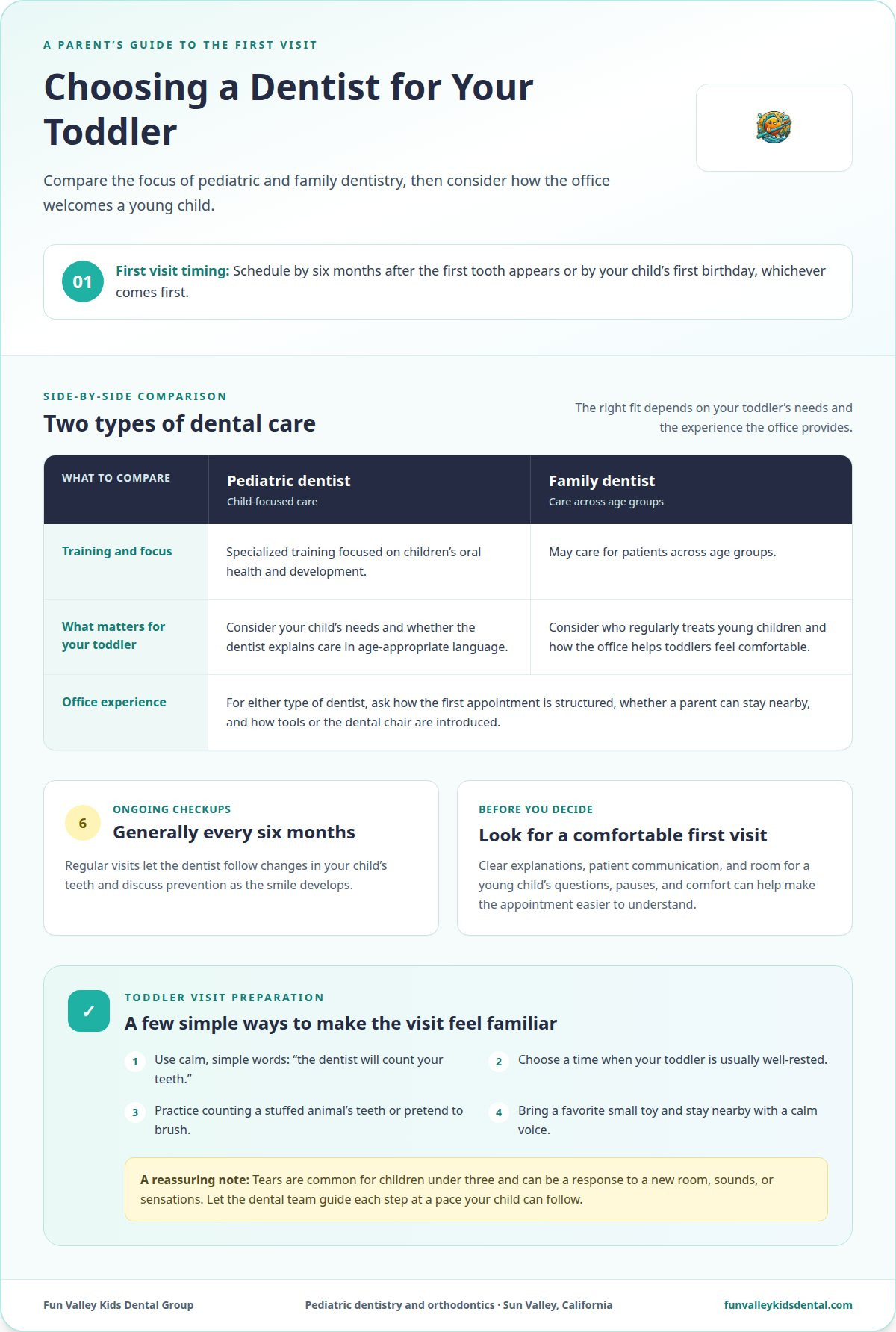
For families seeking a Hollywood first time dentist visit for toddler care, schedule your appointment at Fun Valley Kids Dental Group in Sun Valley within six months of the first tooth coming in or by the first birthday, whichever comes first. Starting early lets the dentist check your child’s oral health and helps your toddler become familiar with dental care. Pediatric dentists receive specialized training to care for children.
It’s natural to wonder whether a pediatric dentist or a family dentist is the better fit, and what your toddler will experience during that first appointment. Look for care that helps your child feel comfortable while giving you clear guidance for their growing smile. This guide covers when to book, how to prepare, what to consider when choosing a dentist, and what may happen during an exam. With a little preparation and a gentle, child-centered approach, the first visit can be a positive start to healthy dental habits.
Key Takeaways
Schedule the first dental visit by your child’s first birthday or within six months of the first tooth appearing, whichever comes first.
Help your toddler feel ready with calm, positive language and an appointment timed for when they’re well-rested.
Compare pediatric and family dentists by considering your child’s needs, the dentist’s training, and how comfortable your toddler feels.
Expect the oral exam to focus on your child’s teeth and oral development; X-rays aren’t usually needed until around age five or six unless there’s a concern.
Plan for a first appointment of about 30 minutes, with the exact experience shaped by your child’s needs.
Table of Contents
How can I prepare my child for the first dental appointment?
Start with a simple plan: describe the visit calmly, choose a well-rested time, and bring your toddler’s comfort item. Coverage depends on your insurance plan and the services provided, such as an exam, cleaning, or fluoride treatment. If you’re traveling from Hollywood, plan for the drive to the practice in Sun Valley.
Preparing a Toddler for the Visit
Practice at home with a stuffed animal: count its teeth, pretend to brush, then let your toddler take a turn. Use a short picture book or simple explanation to preview the appointment. You can also plan a fun activity afterward, such as a playground visit, so the day has a cheerful next stop.
Before leaving, pack a favorite small toy and share relevant details about your child’s eating habits, brushing routine, or thumb sucking. Plan the drive and arrival around your toddler’s usual nap so the appointment is easier to manage. A familiar routine can help the visit feel like one more stop in the day.
Reducing Dental Anxiety
Use friendly, accurate words such as “the dentist will count your teeth” or “you’ll sit in the chair.” The American Dental Association advises avoiding words such as “hurt” and “shot,” which can create worry before anything happens. Let your toddler ask questions, answer simply, and avoid promising that every part will feel a certain way.
Stay nearby and model a relaxed expression while the dental team explains each step. If your child cries, remember that this is common for children under three. It can be a response to a new room, sounds, or sensations. A calm voice and steady presence give your toddler a familiar source of comfort.
Preparation also supports cavity prevention. Brush with fluoride toothpaste as part of your child’s daily routine, and ask the dentist how eating and drinking habits may affect teeth. Dental sealants are protective coatings placed on the chewing surfaces of some back teeth; the dentist considers a child’s teeth and cavity risk when discussing them. Routine dental visits help prevent problems and catch them early, according to the Centers for Medicare & Medicaid Services.
Thumb sucking can be soothing, but it matters as teeth and jaws develop. If it continues past age three or four, it may need extra attention. Mention the habit at the appointment, including when it occurs, so the dentist can consider your toddler’s dental development and discuss supportive next steps without scolding or shaming.
When should I schedule my child’s first visit to the dentist?
Schedule the first dental visit by six months after the first tooth erupts or by the first birthday, whichever comes first. After that initial appointment, children generally need dental checkups every six months. These visits give the dentist a chance to follow changes in your child’s teeth and discuss prevention as the smile develops.
Starting early matters even when your toddler’s teeth look healthy. According to the U.S. Government Publishing Office, children who delay dental visits are more likely to need care for an oral health problem or emergency. A checkup can help identify concerns before they become harder to manage. It also gives you a chance to discuss daily habits, including brushing, eating, and drinks that may affect teeth.
For a North Hollywood family, location is one practical part of scheduling. Consider the drive, your child’s nap routine, and whether the appointment time leaves room for a calm arrival. A well-rested toddler may find it easier to meet the dental team and explore an unfamiliar environment. Choose a time that fits your child’s usual rhythm rather than squeezing the visit between tiring activities.
A pediatric dentist has specialized training focused on children’s oral health and development. This focus can help the dentist assess a child’s teeth and explain care in age-appropriate language. When choosing between a pediatric dentist and a family dentist, consider who regularly treats young children and how the office helps toddlers feel comfortable. A welcoming environment and patient communication can make the first visit easier to understand.
Before the appointment, tell your child what will happen in simple steps: “We’ll meet the dentist, sit in the chair, and look at your teeth.” Keep the explanation brief and calm. If your toddler is curious, practice opening wide at home or let them watch you brush. These small examples make the visit less mysterious without asking your child to predict how they’ll feel.
Dental anxiety can show up as clinging, silence, or tears. Children under three may cry during a dental visit; that reaction can reflect a new setting rather than a problem with the care. Stay close, use a calm voice, and let the dental team guide each step at a pace your child can follow. Avoid turning the appointment into a test of bravery.
Keep the six-month checkup rhythm on your family calendar, and note questions about cavities, drinks, or tooth development before each visit. If you’re arranging a first appointment, you can schedule a pediatric dental visit as an early step toward ongoing care.
Choosing a pediatric or family dentist
When choosing care for your toddler, compare a pediatric dentist with a family dentist by considering your child’s needs and the office experience. Pediatric dentists focus on children, while family dentists may care for patients across age groups. Look for a dentist who explains each step clearly and makes room for a young child’s questions, pauses, and comfort.
Start with the practical details. Ask how the first appointment is structured, whether a parent can stay nearby, and how the dentist introduces tools or the dental chair. A clear explanation, such as “we’ll let your child look at the mirror before we count teeth,” shows how the team can make unfamiliar steps easier to understand.
Notice the communication style, too. A gentle dentist speaks to your child at their level, then gives you clear information about baby teeth, brushing, and daily care. You should leave knowing which areas need your attention during brushing, not with confusing jargon or unexplained instructions.
Consider how the office helps a toddler who needs time to warm up. A child-friendly approach can include explaining what will happen before beginning, offering simple choices, and pausing when a child becomes overwhelmed. Ask how the team responds to crying or reluctance; the answer can help you judge whether its approach suits your child.
Use these points to compare options serving families in North Hollywood:
Experience with young children: Ask how the dentist adapts an exam for a toddler who is still learning to sit in the chair.
Parent involvement: Find out how the dentist includes caregivers when discussing brushing habits, baby teeth, and questions about development.
Prevention guidance: Look for practical explanations about home care and what to watch between checkups.
Visit approach: Ask what happens if your child needs a pause, and whether the team explains each step in child-friendly language.
Continuity: Consider whether you can return to the same dental team, so your child can become familiar with the people and routine.
Then match the answers to your family’s priorities. If your toddler is uneasy around new adults, a calm introduction and your presence may matter most. If you have questions about brushing or baby teeth, look for a dentist who explains those topics with specific examples. A positive first experience comes from a good fit between your child’s temperament, your family’s needs, and the dentist’s approach.
Finally, consider the trip itself. A manageable route from North Hollywood, a time that fits your child’s routine, and a welcoming arrival can make the appointment easier. Keep your notes from the comparison, then choose a practice that communicates clearly and includes your child in the visit.
What happens during the oral exam
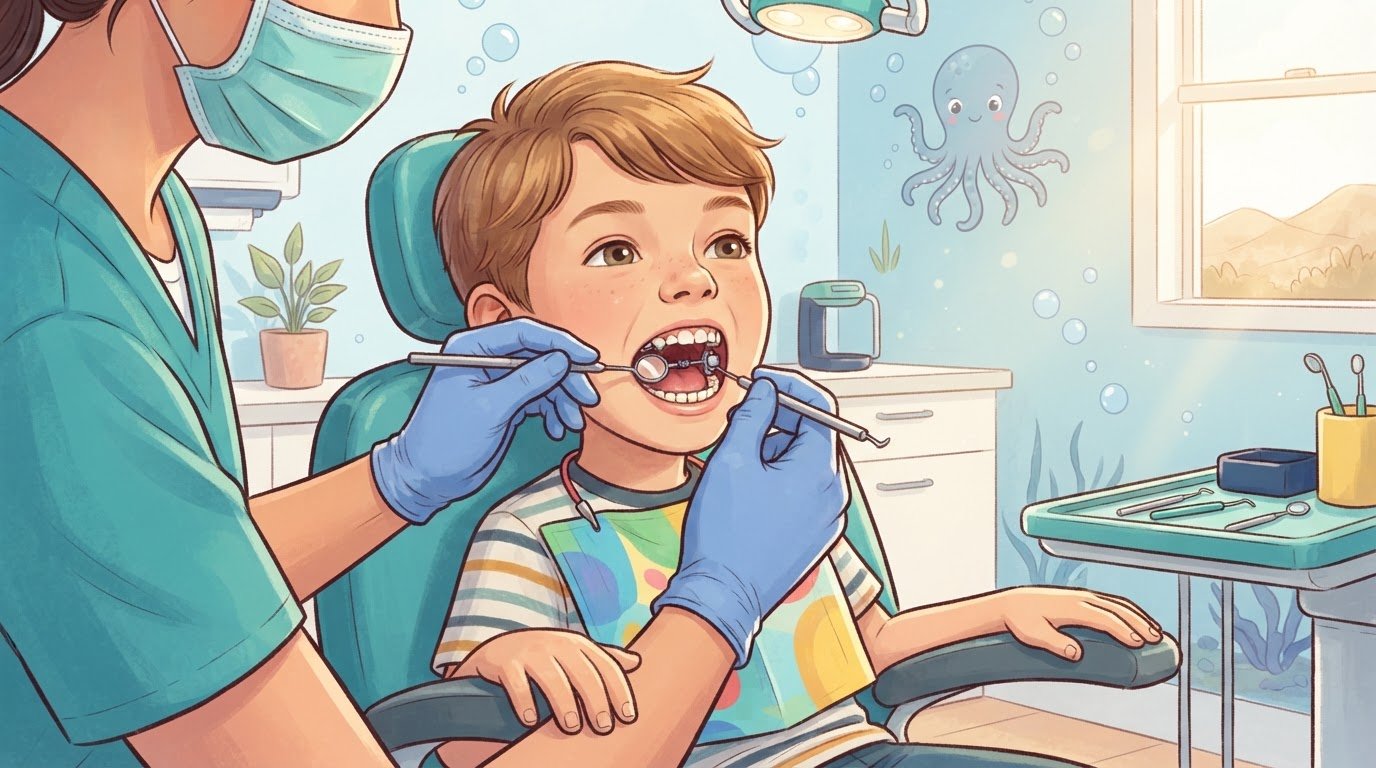
The dentist checks your toddler’s teeth and mouth, then explains the findings to you. The visit also gives you a chance to ask questions about oral health, brushing, and flossing.
Oral Exam Procedures
The dentist looks at each tooth, the gums, and how the teeth meet when your child closes their mouth. They may also ask about brushing, eating habits, and any changes you’ve noticed. A friendly, step-by-step explanation helps parents understand what the dentist is checking. You can share concerns about a spot, sensitivity, or a tooth coming in.
Dental X-rays aren’t routine for every toddler. Most children don’t need them until around age five or six, unless the dentist has a concern. The decision relates to what the exam reveals and what information images could provide. If X-rays are recommended, the dentist can explain what they’re looking for and how the images relate to your child’s oral health.
The exam can also lead to practical home-care guidance. Ask the dentist to show you how to position the toothbrush around small baby teeth, especially near the gumline. Begin flossing when two teeth touch, because a toothbrush cannot clean the tight space between them. Share your child’s routine so the advice fits your family’s day.
Prepare a short list of observations before arriving. Note a tooth that looks different, a change in eating, or questions about teeth coming in. Sharing examples helps the dentist focus the conversation. If your toddler needs a moment, a calm pause can make it easier to return attention to the exam.
Visit Duration
A toddler’s first dental appointment usually lasts about 30 minutes. That time may include the oral exam, a conversation with parents, and an introduction to the room or dental chair. The pace can depend on how your child responds and what the dentist needs to assess. Keep your schedule flexible around the appointment.
Use the visit to understand the next steps. Ask which areas need attention during brushing and what changes to watch as teeth develop. If the dentist finds a concern, request a plain-language explanation of the finding and suggested follow-up. Clear answers help you leave with a manageable plan, rather than unfamiliar terms.
Before you go, confirm the recommended timing for the next checkup and note it on your calendar. Routine checkups are generally scheduled every six months. Your child’s oral development and the dentist’s findings guide the ongoing plan. A brief note after the visit can also help you remember questions to bring to the next appointment.
How long does a toddler's first dental visit take?
A toddler’s first dental appointment usually lasts about 30 minutes. That gives time for an introduction, an oral check, and a conversation with you. The exact flow depends on how your child responds and what the dentist needs to review. Think of the visit as a first stop on a longer journey, not a race to finish every task.
The appointment may involve more than the time your child spends in the chair. You may need to check in, share health information, and discuss questions afterward. Keep the rest of the day flexible, especially if your toddler is tired or needs a quiet reset after meeting new people.
What can affect the appointment’s pace?
A curious toddler may explore the chair and mirror before the exam begins. A child who feels unsure may need time to watch and listen. The dentist can adjust the pace to your child’s comfort and the needs of the oral exam. Pausing to explain a tool or answer your question is part of a thoughtful visit.
The topics you bring can shape the conversation, too. Mention a spot you noticed while brushing, a question about eating, or a change in your child’s teeth. A short note on your phone can help you remember each point. Sharing your most important concern first makes good use of the appointment.
A cleaning may be included depending on your child’s needs and the visit plan. The dentist can explain what the cleaning involves and how your toddler is responding. Don’t treat the 30-minute estimate as a stopwatch target; a gentle introduction or a child needing time to settle may change the flow.
How to make the visit easier to plan
Choose a time that fits your toddler’s regular routine, and avoid stacking several demanding errands around the appointment. Bring a familiar comfort item, such as a small stuffed toy. If you’re traveling from Hollywood, allow time for the trip and arrival so the day doesn’t feel hurried.
Before leaving, prepare one or two questions about your child’s oral health. During the visit, let the dentist guide the exam and use simple words to describe what your toddler sees. Afterward, leave room for a calm transition, such as a quiet ride home or a familiar activity.
If you’re ready to plan your toddler’s first visit, schedule a pediatric dental appointment.
Fun Valley Kids Dental Group: Pediatric Dental Exams
Fun Valley Kids Dental Group provides pediatric dental exams at its Sun Valley office for families beginning or continuing their child’s dental care. During an exam, the dentist can assess your child’s teeth and discuss brushing, oral health, and prevention.
Depending on your child’s needs, care may also include a dental cleaning, fluoride treatment, or dental sealants. The dentist discusses these options based on your child’s teeth and exam findings, so you understand the next steps and how to support healthy habits at home.
To plan your toddler’s first appointment, contact Fun Valley Kids Dental Group or visit funvalleykidsdental.com.
Make the Next Step a Positive One
For families traveling from Hollywood, your toddler’s first dental visit takes place at Fun Valley Kids Dental Group in Sun Valley. There’s no need for the appointment to feel like a performance. Your child can take time to get used to the setting while you focus on building trust from one visit to the next.
After the appointment, notice what helped your toddler feel at ease. Perhaps a favorite toy, sitting close to you, or knowing what comes next made the experience more manageable. Keep that detail in mind for future visits. A familiar routine can help your child approach dental care with growing confidence.
When you’re ready to plan your child’s next step, connect with Fun Valley Kids Dental Group. Each visit is another chance to nurture a healthy smile and help your little explorer feel more at home.
Frequently Asked Questions
How is a pediatric dentist different from other dentists?
A pediatric dentist has specialized training focused on children’s teeth, development, and dental care. This can help when a young child needs age-appropriate explanations or an exam adapted to their comfort. A family dentist may treat children as part of a broader patient group. Consider the dentist’s experience with young children and how they communicate with children and caregivers.
Baby teeth aren’t permanent; why do they need special care?
Baby teeth help children speak clearly and guide permanent teeth into position as they grow. A cavity in a baby tooth can affect eating or cause discomfort, so keep brushing and dental checkups part of the routine. Mention a tooth that looks discolored or bothers your child while eating. The dentist can examine it and explain what care may be appropriate.
How can I make my child feel comfortable at the dentist?
Give your child a simple, familiar preview of the visit without making it sound like a test. You might play dentist with a stuffed animal, taking turns counting its teeth, then your child’s. Let your toddler choose a comfort toy to bring along. During the appointment, stay close and follow the dental team’s cues; a calm, predictable approach can help your child feel supported.
When should a toddler have their first dental visit?
A child should have their first dental visit within six months of their first tooth coming in or by their first birthday, whichever comes first. Children should see the pediatric dentist every six months, starting at least by age 1. If your toddler has already passed these milestones, arranging an appointment now gives the dentist a chance to review their teeth and discuss a suitable care routine.
What happens during a toddler's first dentist visit?
The dentist checks your child’s teeth and mouth, then discusses findings and your questions. Share details such as a spot you noticed or how your child responds to brushing. X-rays aren’t needed for every toddler; the dentist may consider them if there’s a specific concern. If imaging is recommended, ask what the dentist needs to see and how it will guide care.
How do I prepare a toddler for their first dental appointment?
Which dentists in Hollywood, Los Angeles treat toddlers?
Fun Valley Kids Dental Group provides pediatric dental care from its physical office in Sun Valley, California, rather than a Hollywood location. Its care is for infants, children, and teenagers. The practice serves nearby communities including North Hollywood, Burbank, and other San Fernando Valley areas. Families can consider the office location and travel needs when deciding whether it suits their toddler’s care.
What should I look for when choosing a pediatric dentist in Hollywood?
Look for a dentist who regularly cares for young children, explains exam steps clearly, and makes room for caregiver questions. Ask how the team adapts an appointment when a toddler is hesitant and whether they explain findings in everyday language. You can also consider the trip from Hollywood, the office environment, and whether the dentist’s approach fits your child’s needs and your family’s preferences.


Comments