


When Dental Trauma Means Your Child Needs the ER

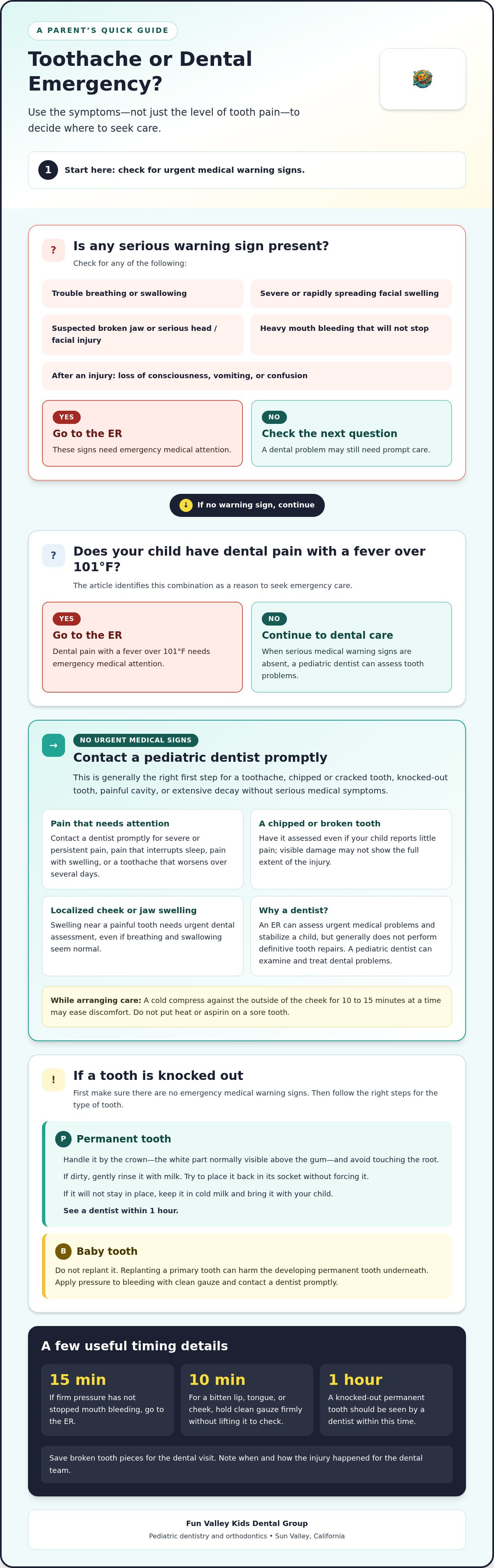
The emergency room isn’t always the right first stop for a child’s toothache. Knowing when to take a child to the ER for a dental issue starts with recognizing signs of a medical emergency: trouble breathing or swallowing, severe or rapidly spreading facial swelling, a broken jaw, heavy bleeding that won’t stop, or a serious head or facial injury. For tooth pain, a chipped tooth, or a knocked-out tooth without these severe symptoms, contact a pediatric dentist promptly.
It’s understandable to feel unsure when your child is hurting, especially after a fall or when sudden swelling appears. The key is to distinguish urgent medical warning signs from dental problems that need prompt attention from a dentist.
This guide explains which symptoms call for the ER, what to do if facial swelling develops, and when a pediatric dentist is the better next step. You’ll also learn simple ways to protect your child’s mouth while arranging care, so you can make a calmer, clearer decision.
Table of Contents
What can a pediatric dentist do that an ER cannot?
Take a child to the emergency room for trouble breathing or swallowing, a suspected broken jaw, severe bleeding, or dental pain with a fever over 101 degrees Fahrenheit. A dental injury with a serious head or facial impact also needs immediate medical attention. If firm pressure hasn’t stopped mouth bleeding after 15 minutes, go to the ER.
An emergency room focuses on urgent medical problems, such as serious injuries, infection, severe pain, and bleeding. Staff can assess dangerous symptoms and stabilize a child, but ERs generally don’t perform dental procedures or definitive tooth repairs. A pediatric dentist has the tools and training to examine and treat children’s teeth, including decay, fractures, and other dental injuries.
That difference matters when a child has a painful cavity or chipped tooth but no severe medical symptoms. An ER may provide temporary pain relief or antibiotics, but the tooth may still need dental treatment afterward. A pediatric dentist can assess the cause and recommend appropriate care. For example, a loose baby tooth and a cracked tooth can both hurt, but they need different evaluations.
Choose where to seek care based on the symptoms, not just the level of tooth pain. Mild-to-moderate pain that can be managed with over-the-counter pain relievers can usually wait for a pediatric dental visit. Contact a dentist promptly for severe or persistent pain, pain that interrupts sleep, or pain with swelling or fever. A toothache that worsens over several days also needs dental attention.
Go to the ER: Trouble breathing or swallowing, a broken jaw, severe bleeding, or fever over 101 degrees Fahrenheit with dental pain.
Contact a pediatric dentist: A chipped or cracked tooth, a painful cavity, or tooth pain without serious medical symptoms.
For a bitten lip, tongue, or cheek, hold clean gauze firmly against the area for 10 minutes without lifting it to check. If bleeding continues after 15 minutes of firm pressure, seek emergency care. Save any broken tooth pieces for the dental visit; they may help the dentist assess the injury.
Routine check-ups help catch problems before they become painful emergencies. Children should begin regular dental visits when their first primary tooth erupts, or no later than age 1. Regular exams and cleanings let a pediatric dentist look for early decay and guide parents on oral hygiene. A check-up cannot prevent every fall or cracked tooth, but it can help families address developing dental concerns sooner.
Is facial swelling from a tooth an emergency?
Facial swelling beside a painful tooth can signal an infection or abscess, so don’t dismiss it as ordinary toothache discomfort. Seek emergency medical care for severe or rapidly spreading swelling, especially if your child has trouble breathing or swallowing. Fever with tooth pain may signal an infection and warrants prompt medical attention.
Swelling that stays localized still needs prompt attention. Contact a dentist urgently when your child has a swollen cheek or jaw near a painful tooth, even if breathing and swallowing seem normal. The location and spread of swelling, fever, pain, and your child’s overall condition help show how urgent the next step is. A cold compress against the outside of the cheek for 10 to 15 minutes at a time may ease discomfort while you arrange care.
For toothaches, broken teeth, and extensive decay without serious medical symptoms, dental care is usually the appropriate first step. A dentist can examine the tooth and address the underlying problem. Have a chipped or broken tooth assessed even if your child reports little pain, since visible damage may not show the full extent of the injury. If your child’s dentist is unavailable and serious symptoms appear, go to the emergency room.
A knocked-out permanent tooth needs prompt attention. Handle it by the crown, the white part normally visible above the gum, and avoid touching its root. If it’s dirty, gently rinse it with milk. Try to place it back in its socket if possible, without forcing it. If it won’t stay in place, keep it in cold milk and seek dental care immediately. A child should see a dentist within 1 hour.
Keep the tooth moist in cold milk if it can’t be returned to its socket.
Bring the tooth with your child if it cannot be placed back.
Note when and how the injury happened for the dental team.
A baby tooth is different: don’t replant it. Replanting a primary tooth can harm the developing permanent tooth underneath. If a baby tooth is knocked out, apply pressure to any bleeding with clean gauze and contact a dentist promptly.
While arranging care, don’t put heat or aspirin on your child’s sore tooth. For an injury without breathing or swallowing problems, a pediatric dentist can assess the tooth and guide the next step. Families can arrange an urgent pediatric dental evaluation for a tooth injury or pain that needs dental attention.
What If My Child Has Facial Swelling or a Dental Abscess?
Facial or jaw swelling with tooth pain needs prompt attention because it can signal an infection or follow an injury. The key is whether the swelling is spreading or affecting breathing, swallowing, or your child’s overall condition.
Facial Swelling and Dental Infection
A dental abscess is a pocket of infection near a tooth, and swelling may appear in the cheek or jaw. A painful tooth with localized swelling needs urgent dental assessment, even if your child is otherwise acting normally. Swelling can worsen, so note where it began and whether it is spreading. A dental office can assess the tooth and determine appropriate care for the underlying problem.
Don’t try to diagnose an abscess by appearance alone. A sore tooth, visible gum swelling, or bad taste can be useful details to report, but they don’t show how far an infection extends. Tell the dental team when the swelling started, whether it has changed, and whether your child has a fever. These observations help you describe the symptoms clearly.
Fever and Breathing or Swallowing Difficulty
Facial swelling with a fever over 100 degrees Fahrenheit calls for immediate emergency evaluation. Trouble breathing or swallowing is an emergency: take your child to the ER or call 911. These symptoms can mean swelling or infection is affecting more than the tooth, so don’t wait for a routine dental appointment.
Severe or rapidly spreading swelling needs emergency medical care, particularly if it reaches the jaw or interferes with normal swallowing. Stay with your child and describe the changes clearly: when the swelling appeared, how quickly it grew, and whether breathing or swallowing changed. A hospital emergency room can evaluate serious medical complications and facial injuries.
Some situations involve both a tooth problem and a separate injury. A broken jaw, substantial facial trauma, or swelling after a blow to the mouth calls for emergency assessment. If the impact also caused a head injury, watch for loss of consciousness, vomiting, or confusion. These symptoms may require urgent medical attention before dental care.
If the swelling stays localized and your child breathes and swallows normally, contact a dentist urgently for guidance and an examination. If symptoms worsen while you arrange care, seek emergency medical help. For example, a child with a sore cheek who develops spreading jaw swelling needs a fresh assessment.
Seek emergency care: Trouble breathing or swallowing, rapidly spreading swelling, fever over 100 degrees Fahrenheit with tooth pain, broken jaw, or serious facial trauma.
Arrange urgent dental care: Localized swelling near a painful tooth without breathing or swallowing difficulty.
When to call a pediatric dentist instead of the ER
For most toothaches, broken teeth, dental infections, and knocked-out teeth without serious medical symptoms, contact a pediatric dentist first. A dental office can examine the tooth and plan treatment; an emergency room focuses on medical stabilization and generally doesn’t provide definitive dental repairs.
A child with localized tooth pain and no swelling or fever can generally contact a pediatric dentist the next business day. A chipped tooth still deserves an assessment, even if it doesn’t hurt. A small visible chip, for example, may not show how deeply the tooth is affected. A dentist can evaluate the damage and explain the appropriate care.
Call sooner for severe or persistent pain, tooth pain that interrupts sleep, or a broken tooth with worsening discomfort. Share clear details: when the pain began, whether it is getting worse, and whether your child can eat and drink. If fever or facial swelling develops, mention those symptoms too. This information helps the dental team understand the urgency and guide your next step.
An emergency room may help manage severe pain or treat medical complications, but it generally doesn’t perform fillings, extractions, or definitive tooth repairs. Temporary relief doesn’t necessarily resolve decay or damage. For example, a child treated for pain in the ER may still need a dental visit for a cavity or fractured tooth. Arrange dental follow-up after an ER visit if the tooth problem remains.
If the pediatric dentist is unavailable after hours, use your child’s symptoms to decide what to do next. Serious medical warning signs call for emergency care. Without those signs, arrange a dental evaluation as soon as possible. Don’t wait for a routine check-up if a toothache is worsening; note changes in pain, swelling, or fever while arranging care.
Call a pediatric dentist: Localized tooth pain without swelling or fever, a chipped or broken tooth, or a dental problem needing examination.
Choose the ER: Severe medical symptoms, including breathing or swallowing difficulty, uncontrolled bleeding, or serious facial injury.
After an ER visit: Arrange dental follow-up if the underlying tooth problem still needs treatment.
For mild-to-moderate toothache while arranging a dental visit, gently rinse your child’s mouth with warm water and check for trapped food. Age-appropriate acetaminophen or ibuprofen may help when given according to the dosing instructions. Never place medicine directly on the gums. If the pain becomes severe or new symptoms appear, reassess whether urgent medical care is needed.
Head injuries accompanying dental trauma
A fall can injure a child’s head, lips, gums, and teeth at the same time. Assess possible head-injury symptoms before focusing on a chipped tooth or bleeding mouth. If a head impact causes loss of consciousness, vomiting, or confusion, go to the ER first. These symptoms need emergency care before a dental evaluation.
After a blow to the face, note what happened and when. Record whether your child fell, struck an object, or was hit during play. Watch for changes in alertness, behavior, or ability to speak clearly. Also observe whether your child can breathe and swallow normally. This timeline gives medical and dental teams useful details about the injury.
For a bitten lip, tongue, or cheek, place clean gauze over the wound and apply firm pressure for 10 minutes. Keep the gauze in place without lifting it to check. If bleeding continues after 15 minutes of firm pressure, seek emergency care. A deep cut, broken jaw, or bleeding that is hard to control also needs urgent medical assessment.
Once serious head symptoms have been addressed, arrange a dental evaluation for any tooth injured in the fall or impact. A broken or chipped tooth needs examination even if your child says it doesn’t hurt. If a piece broke off, save it and bring it along. Tell the dentist which tooth was hit, when the accident happened, and whether pain or sensitivity has changed.
Parents can reduce the risk of some dental injuries during everyday activities. A mouthguard during contact sports helps protect teeth from impact. Avoid chewing ice and very hard foods, which can damage teeth. Remind children not to use their teeth to open packaging; use scissors or ask an adult instead.
Head impact with concerning symptoms: Go to the ER first for loss of consciousness, vomiting, or confusion.
Mouth bleeding: Hold gauze firmly over the wound for 10 minutes without checking underneath.
Tooth injury: Save any broken pieces and arrange a dental evaluation after urgent medical concerns are addressed.
Prevention: Use a mouthguard for contact sports, skip chewing ice, and keep teeth away from packages.
A dental emergency after a fall may need both medical and dental attention, but the order matters. Address head-injury symptoms first; then a dentist can assess tooth damage and guide care. Even if your child settles after the initial fright, report the impact and any new tooth pain at the dental visit.
Fun Valley Kids Dental Group: Pediatric Dental Exams
Fun Valley Kids Dental Group provides pediatric dental exams for children and families in Sun Valley, serving nearby communities including Pacoima, Arleta, Panorama City, North Hollywood, Burbank, and Sylmar. Once urgent medical concerns have been addressed, an exam can assess your child’s teeth and support preventive care. Dental cleanings, fluoride treatments, and dental sealants are also available.
If your child has no emergency warning signs, a pediatric dental visit can address oral health concerns and keep routine care on track. Fun Valley Kids Dental Group offers a welcoming, child-focused environment with toys, games, themed décor, and Robin the robot to help make visits feel more comfortable and familiar.
Contact Fun Valley Kids Dental Group to arrange a pediatric dental exam for your child in Sun Valley.
Make Your Child’s Next Dental Step Clear
A simple family plan can make a stressful moment easier to manage. Keep your pediatric dentist’s contact details easy to find, and decide which adult can handle calls or transportation while you focus on your child. If you’re still weighing when to take a child to the ER for a dental issue, use the warning signs above to guide your next step.
After the immediate concern is handled, help your child return to their usual routine and feel comfortable about future dental visits. A calm conversation can make the next step feel more familiar.
To plan your child’s next visit, contact Fun Valley Kids Dental Group. Your family can take the next step with confidence.
Frequently Asked Questions
Should I Take My Child To The ER For a Toothache?
For a toothache without serious medical symptoms, contact a pediatric dentist rather than starting at the ER. Before calling, ask your child to point to the sore tooth and note what makes it hurt, such as chewing or drinking something cold. Share whether the pain comes and goes or stays steady. These details can help the dental team understand the problem and advise you on the next step.
When is a child's dental problem an emergency?
A dental problem needs emergency attention when your child’s condition may require immediate medical assessment. If you’re unsure, describe what happened, when it began, and how your child is acting now. For example, note whether your child is alert and responding normally. Clear observations can help emergency staff understand the situation, while a dentist can assess tooth damage after urgent medical concerns are addressed.
Call Us or Go to the ER?
Call a pediatric dentist for guidance when the concern seems limited to a tooth and your child is otherwise stable. Be ready to explain your child’s age, which tooth hurts, when symptoms began, and any relevant health conditions or medicines. If you’re asking when to take a child to the ER for a dental issue, focus on whether there’s an urgent medical concern, not tooth discomfort alone.
Can I go to the ER for a toothache in the middle of the night?
You can go to the ER overnight if you believe your child needs urgent medical evaluation. For tooth pain without those concerns, write down when it started and whether anything changed during the night, then contact a pediatric dentist when available. Nighttime pain can feel more intense while lying down, so note whether your child’s position affects their discomfort. Don’t exceed medication directions while helping your child rest.
Can You Go To The ER For Tooth Pain?
Yes. An ER can assess a child whose tooth pain is part of a broader medical concern. If you go, bring a list of medicines your child has taken, including the amount and time given, along with known allergies and health conditions. This helps the care team understand what your child has already received. The ER may address immediate medical needs, while a dentist can assess the tooth afterward.
Should I Go to the ER for a Broken Tooth?
A broken tooth without other serious concerns is usually assessed by a dentist, who can examine the damage and recommend care. Until the appointment, keep your child from biting hard foods with the injured tooth. If a fragment came loose, put it in a clean container and bring it along. Tell the dentist whether the break happened while eating, playing, or after a fall, as that context helps describe the injury.
When should a child with facial or gum swelling go to the ER?
Seek emergency care if swelling is changing quickly or your child’s condition is worsening. If the swelling appears localized and your child seems stable, contact a dentist promptly and keep track of how it looks. A photo taken in consistent lighting can help you describe any changes while arranging care. Share when you first noticed the swelling and whether it began after a toothache or an impact.
What are signs of a dental infection spreading in a child?
Changes beyond the sore tooth, such as increasing swelling or your child becoming unusually tired or irritable, deserve prompt attention. Keep a simple timeline of symptoms, including when discomfort began and any temperature readings. This record can help the clinician understand how the problem has progressed. Don’t try to drain a swollen area or place medication directly on the gums while arranging professional care.

This article offers valuable guidance for parents on recognizing dental emergencies and understanding when medical or dental care is needed. Knowing these warning signs can help families make informed decisions and protect children's oral health. A qualified Pediatric Dentist in Seattle can also help parents manage dental concerns early.