


Palatal expanders for children in Sun Valley: age and care

A palate expander and braces do different jobs: an expander widens the upper jaw, while braces move teeth into position. Children who need one typically receive a palatal expander between ages 7 and 12, often to address a crossbite, a narrow upper jaw, or severe crowding. For families considering a palatal expander for children in Sun Valley, an orthodontic check by age 7 can help identify whether expansion may be useful.
It’s understandable to wonder whether an expander will hurt or make everyday routines tricky. Children may feel pressure or mild soreness as their mouths adjust, but the experience varies. An expander also doesn’t straighten teeth, so braces or clear aligners may still be part of treatment later.
This guide explains who may benefit from an expander, why age and dental development matter, and what children can expect as it works. You’ll also learn how expanders compare with braces and aligners, how to care for one, and what can make the adjustment more comfortable for your child.
Table of Contents
Palatal Expanders: Who Needs One, at What Age, and Does It Hurt?
An orthodontist may consider expansion for a narrow upper jaw, crossbite, or severe crowding. Families considering a palatal expander for children in Sun Valley can compare treatment plans based on diagnosis, appliance design, adjustment schedule, and follow-up care. Ask how the orthodontist will track jaw width and bite changes, and what signs will guide the next treatment phase.
Treatment Steps and the Holding Period
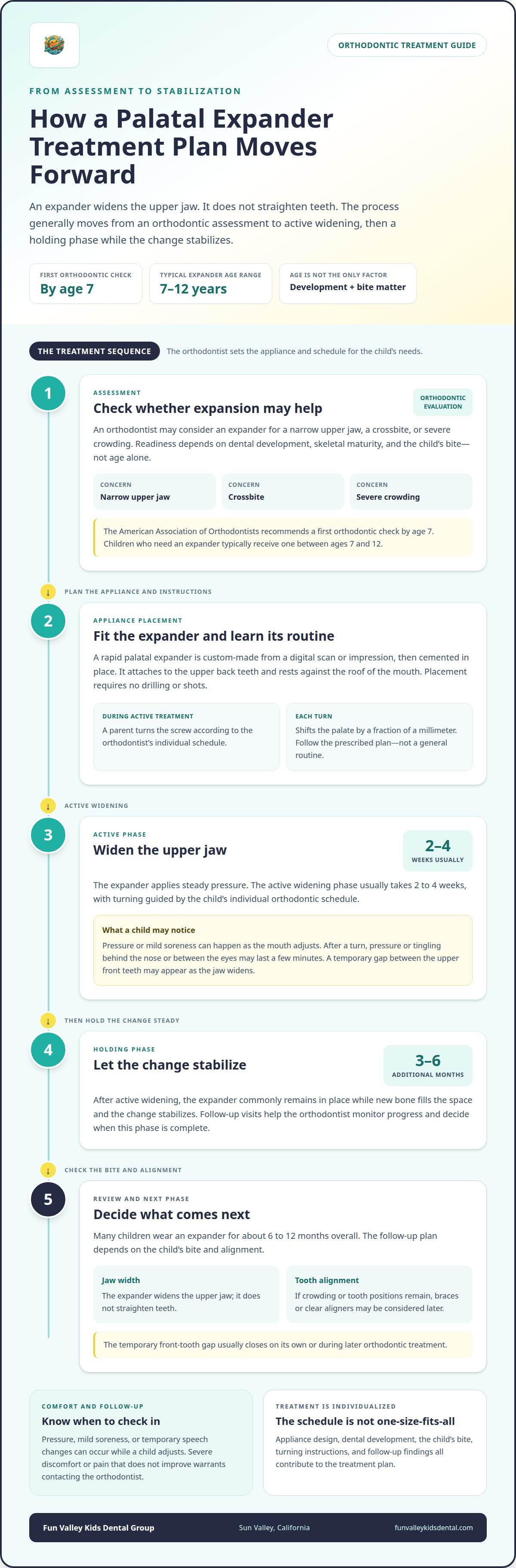
A palatal expander applies steady pressure to widen the upper jaw, then stays in place while the change stabilizes. A rapid expander attaches to the upper back teeth and rests against the roof of the mouth. Placement requires no drilling or shots. During active treatment, a parent turns the screw according to the orthodontist’s individual schedule. Each turn shifts the palate by a fraction of a millimeter.
Active widening usually takes 2 to 4 weeks. Afterward, the expander commonly remains in place for another 3 to 6 months while new bone fills the space. Many children wear it for about 6 to 12 months overall. Follow-up visits let the orthodontist monitor progress and decide when the holding phase is complete.
Early Treatment and Age
Early orthodontic treatment evaluates a child while the jaw is growing, then addresses concerns when timing may help. The American Association of Orthodontists recommends a first orthodontic check by age 7. Children who need an expander typically receive one between ages 7 and 12, but age alone doesn’t determine readiness.
An orthodontist weighs dental development, skeletal maturity, and the child’s bite. A narrow upper jaw or crossbite may be identified around age 6 or 7. The upper jaw’s growth seam can respond to gentle expansion as new bone forms. Parents should use the child’s prescribed turning schedule, not a general routine.
A temporary gap between the upper front teeth can appear as the jaw widens. It usually closes on its own or during later orthodontic treatment. An expander changes jaw width, but doesn’t straighten teeth. If crowding or tooth positions remain afterward, braces or clear aligners may be considered. The follow-up plan depends on the child’s bite and alignment.
According to the American Association of Orthodontists, the midpalatal suture typically fuses around ages 14 to 16. Older teens and adults may need a mini-implant-supported expander or, in some cases, surgically assisted expansion. After a turn, pressure or tingling behind the nose or between the eyes may last a few minutes. Severe discomfort or pain that doesn’t improve warrants contacting the orthodontist.
For a palatal expander for children in Sun Valley, compare providers by asking how the diagnosis, custom appliance, turning plan, and follow-up visits fit together. Dental plans with orthodontic benefits may cover 30% to 50% when an expander is medically necessary. Coverage, benefits, and patient responsibility should be verified with the office and the insurance carrier.
Fixed and removable expander types
A fixed expander stays inside the mouth throughout treatment, while a removable appliance can come out for eating and cleaning. Both types address upper-jaw width, but they require different wear routines. A fixed appliance remains in place between meals and brushing. A removable one works only while the child wears it, so following the prescribed wear schedule matters.
Fixed expanders attach to the upper back teeth or bond to teeth. A rapid palatal expander is one example: it’s custom-made from a digital scan or impression, then cemented in place. Some fixed designs use a small screw that a parent turns according to the orthodontist’s schedule. Other designs use built-in springs or wires, so they don’t need key turning.
Removable expanders can be taken out for meals, cleaning, and other activities. That flexibility may make brushing the appliance easier, but it also means the child must wear it as directed. Taking it out more often than prescribed changes its wear time. An orthodontist can explain how the appliance’s design and instructions fit the child’s treatment plan.
Fixed: stays in place and may use a screw, spring, or wire.
Removable: comes out for eating and cleaning, and works only while worn.
Both: are selected to address the child’s orthodontic needs, including jaw width or crowding.
The word “expander” doesn’t always mean a removable plate. A child’s rapid expander is fixed, so it stays inside the mouth during treatment. By contrast, a removable appliance can be lifted out by the child or parent. The attachment method shapes everyday care: clean around the bands and palate area of a fixed appliance, while a removable one can be cleaned outside the mouth.
These appliances aren’t interchangeable just because both can widen the upper jaw. The orthodontist considers the movement needed, the child’s dental development, and whether the wear routine suits the child. Adults may need a different approach because the palate’s growth seam fuses with age. Options can include mini-implant-supported or surgically assisted expansion. Appliance type is part of the plan, not a choice based on appearance alone.
Before treatment begins, parents can clarify whether the appliance is fixed or removable, how it’s activated, and which care steps apply. For example, ask whether the design has a turning screw or built-in springs, and whether it comes out for meals. Those details help families understand the daily routine without assuming every expander works the same way.
How Do You Keep an Expander Clean?
Pressure, mild soreness, and speech changes can happen as a child adjusts to a palatal expander. After a turn, pressure or tingling behind the nose or between the eyes may last a few minutes and usually fades quickly. Mild soreness for a day or two is also common as the mouth adapts. These sensations can make the first days feel different, but every child’s experience varies.
The appliance widens the growing upper jaw by gradually moving its two halves apart. Each key turn shifts them by a fraction of a millimeter, so the pressure may be noticeable even when the movement is small. Parents should follow only the orthodontist’s individual turning schedule. Don’t add turns to speed up progress or follow a general schedule meant for another child.
Speech may sound different while the tongue learns to move around the appliance. Most children speak clearly within a week of getting used to it. Reading aloud together or practicing familiar phrases can help parents notice speech changes over those first days. Soft foods can also make meals easier while the mouth adjusts, especially during the first few days.
At home, keep the routine simple and follow the orthodontist’s directions for turning and care. The key should fit the appliance’s screw, and each turn should follow the prescribed direction and schedule. If you’re unsure whether a turn was completed, don’t guess or repeat it. Follow-up visits help the orthodontist monitor the expander and answer questions about the routine.
Pressure after turning: note when it begins and whether it fades within a few minutes.
Mild soreness: expect some adjustment over a day or two; soft foods may help.
Speech changes: listen for progress as your child gets used to speaking with the appliance.
Loose appliance: stop turning the key and contact the orthodontist; don’t remove or re-cement it at home.
Possible adjustment effects include brief pressure or tingling, mild soreness, temporary speech changes, and a loose appliance. Contact the orthodontist about severe discomfort or discomfort that doesn’t improve. A loose expander also needs attention: stop turning the key and don’t try to fix it at home. These steps help parents respond without adding turns or changing how the appliance sits.
Keep track of the schedule and any changes your child describes, such as pressure after turning or difficulty speaking. Sharing those observations at follow-up visits gives the orthodontist useful details about the adjustment. If discomfort is severe or persists, contact the orthodontist rather than changing the turning plan yourself.
Eating and cleaning with an expander
A fixed expander creates small spaces where food can collect, especially around its bands and the roof of the mouth. A useful routine is to brush the teeth and appliance carefully, then check the mirror for trapped food. The appliance doesn’t replace normal brushing. Keeping surrounding teeth clean matters throughout treatment, including around permanent teeth as they come in.
Some foods are more likely to cling to or pull against an appliance. Children with a palate expander should avoid sticky, chewy choices such as gum, taffy, caramel, and fruit snacks. These foods can catch around the appliance and make cleanup harder. Choose foods that are easier to chew and clear from the mouth, and cut meals into manageable pieces when needed.
After eating, have your child check for food caught near the expander. A water flosser can rinse food from around and under the appliance. Use it as part of cleanup, not as a replacement for brushing. If a small piece remains lodged, don’t tug at the expander or use a sharp object. Brush gently around the area and rinse again.
Brush: clean the teeth and accessible appliance surfaces as part of the normal daily routine.
Rinse: use a water flosser to clear food around and beneath the expander.
Skip: avoid sticky, chewy foods such as caramel, taffy, gum, and fruit snacks.
Notice: look for food trapped near the bands or palate after meals.
A narrow space under the appliance can be tricky to reach with a toothbrush alone. A water flosser can help rinse the area. Encourage your child to clean gently and take time around each side rather than rushing. If the appliance feels loose or comes off, stop turning the key and contact the orthodontist instead of trying to remove or re-cement it.
Food choices can make the first days with an expander easier, too. Soft foods may feel more comfortable while the mouth adjusts; avoid sticky textures that cling to the appliance. If your child breathes through their mouth or has trouble breathing through the nose, mention it during an orthodontic visit. Breathing concerns don’t change the basic cleaning routine, but they may be useful context for the evaluation.
A dental cleaning can complement home care by giving the dental team a chance to clean around the teeth and discuss brushing habits. At home, a quick mirror check after meals helps your child spot leftover food before it stays around the appliance. Keep the routine steady, with brushing and rinsing after meals when practical, and avoid picking at the expander if food feels stuck.
Expanders compared with braces and aligners
An expander and braces address different parts of an orthodontic problem. An expander widens the upper jaw with gentle pressure, while braces move teeth into position. Clear aligners also address tooth position, not jaw width. For example, a child may need an expander for a crossbite, then braces if teeth still need alignment afterward.
A rapid expander typically attaches to the upper back teeth and stays in place during treatment. Its job is to change the width of the upper jaw, not correct every tooth position. A temporary gap between the upper front teeth can appear as the jaw widens. That gap may close on its own or during later orthodontic treatment.
Braces focus on tooth alignment, after or apart from expansion. They may be considered when crowding or tooth positions remain a concern. An expander can create room by changing jaw width, but it doesn’t straighten teeth. This distinction helps parents understand why an expander and braces may appear in the same treatment plan rather than as competing choices.
Clear aligners are another option for moving teeth when appropriate. They aren’t a substitute for expansion when the treatment goal is to widen the upper jaw. The right approach depends on the bite, tooth position, dental development, and orthodontic evaluation. A child’s lower teeth may also need attention, so the overall plan considers how both arches meet when the mouth closes.
Expander: widens the upper jaw; it doesn’t straighten teeth.
Braces: move teeth into position when alignment needs treatment.
Clear aligners: can move teeth when the orthodontic evaluation supports their use.
For parents comparing options, start with the treatment goal. If the concern is a narrow upper jaw or crossbite, ask how expansion addresses that jaw relationship. If the concern is crooked teeth or crowding, ask how braces or aligners could address tooth position. When both issues are present, the orthodontist can explain the sequence and how progress will be assessed at follow-up visits.
Neither appliance is automatically the easier or better choice. A fixed expander stays in place, and braces remain attached during treatment, while aligners are removable. Those differences affect daily routines, but the bite and tooth position guide the clinical choice. The useful comparison isn’t simply “expander or braces,” but “what needs to change, and which appliance can make that change?”
The key takeaway: an expander changes jaw width, while braces or aligners address tooth alignment. Some children may need both stages; others may need a different plan. An orthodontic evaluation connects the appliance to the child’s specific bite, including how upper and lower teeth meet. This helps treatment target the actual concern rather than choosing by appliance type alone.
Fun Valley Kids Dental Group: Pediatric Dental Exams
Fun Valley Kids Dental Group offers pediatric dental exams to help families keep track of a child’s oral health and development. If you’re wondering how an appliance fits into your child’s broader dental care, an exam is an opportunity to discuss their teeth and daily oral hygiene. Dental cleanings, fluoride treatments, and dental sealants can also support preventive care when appropriate.
Bring questions about brushing around an expander, food getting caught, or changes you’ve noticed in your child’s mouth. Sharing those details helps make the visit conversation useful. For orthodontic decisions, the child’s bite, tooth position, and dental development are important considerations.
Plan Your Child’s Next Orthodontic Conversation
The next useful step is to connect the appliance discussion to your child’s specific goals. Before an appointment, note what prompted your concern, such as a crossbite noticed during meals or crowding as permanent teeth appear. Bring questions about how progress will be assessed and what may happen after expansion. These details help keep the conversation focused on your child, not just the appliance.
Families considering a palatal expander for children in Sun Valley can use an orthodontic evaluation to discuss their child’s bite, tooth position, and dental development. The evaluation helps determine which treatment approach fits those needs. If you’re also planning routine dental care, Fun Valley Kids Dental Group offers pediatric dental visits to support your child’s ongoing oral health.
Contact Fun Valley Kids Dental Group to take the next step. A clear plan can help your family move forward with confidence and make each visit feel more manageable for your child.
Frequently Asked Questions
Will My Child Still Need Braces Later?
Possibly. An expander widens the upper jaw, but it doesn’t align individual teeth. After expansion, an orthodontist assesses the bite and tooth positions to see whether braces or aligners may help. For example, a child’s jaw width may improve while crowding or rotated teeth remain. The next step depends on alignment goals identified after expansion, not simply on having worn an expander.
What Happens After the Expansion Is Finished?
After active widening stops, the appliance may stay in place during a holding phase while the change stabilizes. At follow-up visits, the orthodontist monitors the appliance and the child’s bite. The plan may then move to another orthodontic phase, such as braces or aligners, if tooth alignment still needs attention. Parents can ask what signs will show that the holding stage is complete.
How Is an Expander Adjusted at Home?
For an expander with a screw, a parent uses the key as instructed and follows the child’s individual turning schedule. Avoid adding turns or borrowing instructions from another family, since schedules are tailored to the treatment plan. If the key doesn’t seem to engage, the appliance feels loose, or a turn is uncertain, stop rather than forcing the mechanism and contact the orthodontist for guidance.
Is an expander the same as a retainer?
No. An expander changes the width of the upper jaw, while a retainer helps maintain tooth positions after orthodontic movement. A fixed expander stays attached during its treatment phase; a retainer is commonly removable. The appliances have different jobs, so one doesn’t automatically replace the other. Ask which appliance your child has and what change it’s meant to support.
What Does an Expander Feel Like in the First Week?
During the first week, a child may notice pressure after an adjustment, a temporary lisp, or a new feeling against the tongue. Familiar meals and reading aloud can help you notice how your child adapts. Keep a brief note of when discomfort occurs and what your child describes. Report severe discomfort or discomfort that doesn’t improve to the orthodontist.
What is a palatal expander and why might a child need one?
A palatal expander is an orthodontic appliance used to widen a narrow upper jaw. An orthodontist may consider it for a child with a crossbite, where the upper and lower teeth meet incorrectly, or when jaw width contributes to crowding. It changes jaw width rather than straightening each tooth. That distinction helps families understand why a separate alignment stage may follow.
At what age is a palatal expander most effective for children?
Children who need an expander typically receive one between ages 7 and 12, while the jaw is growing. The American Association of Orthodontists recommends an initial orthodontic check by age 7, which can help identify timing concerns. A child’s age is one consideration; the orthodontist also evaluates jaw development, bite, and dental maturity before planning treatment.
What types of palatal expanders are available for children?
Expanders may be fixed or removable. Fixed designs attach to teeth and can use a turning screw, springs, or wires; removable designs come out for meals and cleaning and work while worn. For example, a rapid palatal expander is fixed and activated with a screw. The appliance’s design shapes its daily routine, including how the child wears and cares for it.



Comments