


How to Build Trust With a Pediatric Dentist at Every Visit

Trust isn’t built in a single appointment. Knowing how to build trust with a pediatric dentist starts with helping your child feel prepared, listened to, and proud of each small step. A calm conversation before the visit can make the dental office feel less like an unknown place and more like a familiar stop on the map.
It’s natural to want your child to feel safe and comfortable in the dental chair. To build trust with a pediatric dentist, use upbeat, age-appropriate explanations, bring a favorite comfort item, and offer calm reassurance. During the visit, gentle explanations, praise, and time for questions can help your child feel included rather than rushed.
In this guide, you’ll learn how preparation at home and a welcoming dental team can work together to build confidence. We’ll cover ways to recognize effort, make care feel gentler, and help visits become familiar through consistent care. Each visit can be a small milestone, giving your child room to grow more comfortable and helping your family build a lasting relationship with the dental team.
Table of Contents
Preparing children for dental visits
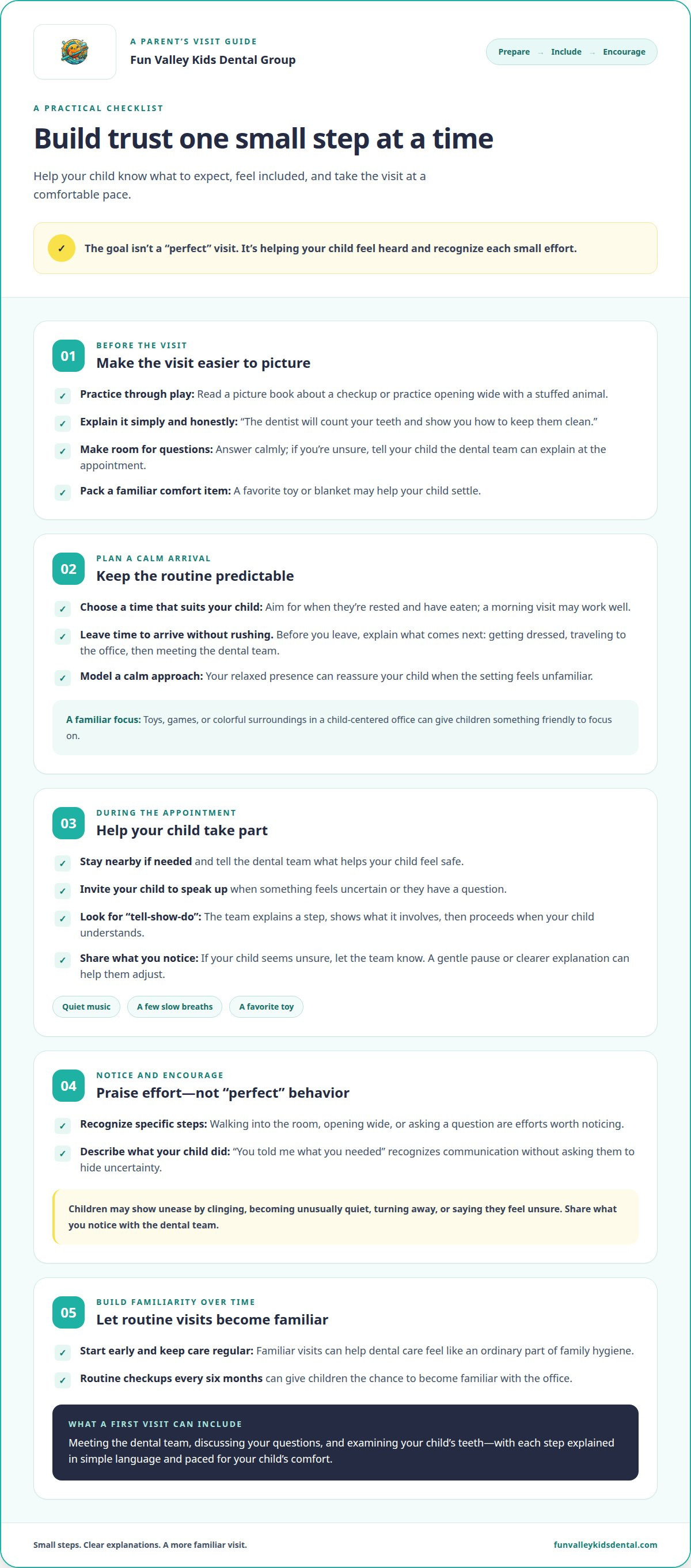
A child’s first dental visit can include meeting the dental team, discussing your questions, and examining your child’s teeth. The dentist can explain each step in simple language and adjust the pace to your child’s comfort.
Welcoming Child-Centered Office Environments
A child-centered dental office uses welcoming details, such as toys, games, or colorful surroundings, to make a visit feel more familiar. These features give children something friendly to focus on before meeting the dental team. For example, your child can explore the play area while you share concerns with the team. A comfortable setting can make the first moments feel less unfamiliar.
Parents’ Role in Preparation and Reassurance
Prepare your child by keeping the visit predictable and modeling calm behavior. Read a picture book about a dental checkup, or practice opening wide with a stuffed animal at home. Let your child bring a favorite toy or blanket if it helps them settle. Your relaxed presence gives your child a reassuring example to follow if they feel anxious.
Reassuring Conversations Before the First Visit
A reassuring conversation explains the visit honestly, using words children can understand. Try: “The dentist will count your teeth and show you how to keep them clean.” Invite questions and answer calmly, without adding dramatic details or using words such as “hurt.” If you don’t know an answer, explain that the dental team can answer it at the appointment. This keeps the conversation clear and trustworthy.
Choose an appointment time when your child is rested and has eaten. A tired or hungry child may find it harder to settle into a new routine, while a morning visit may work well. Allow time to arrive without rushing. Before leaving home, explain what comes next: getting dressed, traveling to the office, then meeting the dental team.
Early, regular visits can help make dental care feel like an ordinary part of family hygiene. The American Academy of Pediatric Dentistry says introducing dental care early helps normalize routine visits and reduce the likelihood of later dental anxiety. Routine checkups every six months can also help children become familiar with the office. A familiar routine is easier to understand than a visit that happens only when something feels wrong.
During the appointment, stay nearby if your child needs your presence, and let the dental team know what helps them feel safe. A favorite toy, quiet music, or a few slow breaths can offer comfort. Praise a specific effort, such as walking into the room or asking a question. These small steps help children take part in the visit at their own pace.
How can a pediatric dental team build trust with children?
A pediatric dental team builds trust through clear explanations, a gentle pace, and respect for a child’s questions. You can help by sharing what your child finds reassuring or difficult.
Age-Appropriate Communication and Tell-Show-Do
Tell-show-do means explaining a step, showing a child what it involves, then proceeding when they understand. For example, the dentist might describe a small mirror, let your child see it, and then use it to look at their teeth. Simple words and one step at a time make care easier to follow. This approach gives children a clearer sense of what comes next.
Clear Explanations and Positive Reinforcement
Clear explanations help children understand what the team is doing and why. A dentist might say, “I’m counting your teeth,” before an exam, then praise your child for opening wide or asking a question. Specific praise recognizes effort without requiring a child to feel fearless. Plain-language explanations of findings and proposed care also help you understand decisions and discuss concerns.
Parent-Dentist Communication and Collaboration
Trustworthy care includes respectful communication with both the child and parent. Before a first visit, ask what the exam includes, how the team responds if your child needs a pause, and how findings or treatment options will be explained. Share relevant concerns and what helps your child feel comfortable.
To assess a dentist, consider the office atmosphere, the team’s manner with children, and patterns in patient reviews. Ask about pediatric dentistry training, state licensure, and board certification, and invite the dentist to explain their qualifications. Read reviews across platforms for recurring themes; consult the relevant state dental board’s public records for information about formal disciplinary actions.
Recognizing Fear and Discomfort
Your child may show unease by clinging to you, becoming unusually quiet, turning away, or saying they feel unsure. These signs don’t automatically mean the dentist is a poor fit; tiredness or unfamiliar surroundings can also affect a child. Tell the team what you notice and encourage your child to speak up. A gentle pause or clearer explanation can help the team adjust.
A pediatric dental exam can give parents a chance to discuss communication, comfort, and their child’s needs with the dental team. Explore pediatric dental exams as a starting point for that conversation.
Praise and positive reinforcement
Positive reinforcement works best as information, not a scorecard. Instead of judging whether a child was “good,” describe what they chose to do: “You told me what you needed.” This recognizes communication without suggesting that children must hide uncertainty to earn approval. When considering how to build trust with a pediatric dentist, remember that trust makes room for a child’s honest reactions, not just perfect cooperation.
Specific acknowledgment also helps children connect their actions with their growing confidence. A calm “You gave that a try, even though it felt new” recognizes effort without claiming the experience was easy. Keep your words sincere and proportional. Overstated praise can sound like pressure, especially if your child still feels uneasy. A brief, accurate observation respects their point of view and leaves room for them to describe the visit in their own words.
Reinforcement should not turn a dental appointment into a bargain. If a child hears that a treat depends on staying quiet or completing every step, they may feel responsible for pleasing adults instead of sharing discomfort. A more supportive message separates care from performance: “You can tell us how this feels.” This defines success as participating honestly, not meeting an adult’s preferred version of a calm visit.
Avoid comparing your child with siblings or other children. Each child brings a different temperament, history, and pace to dental care. Comparisons can make one child feel less capable, even when meant as encouragement. Notice personal progress instead, such as your child expressing a preference more clearly than before. Keep the focus on their experience, not someone else’s behavior.
For families exploring how to build trust with a pediatric dentist, positive reinforcement is a steady way to show that a child’s voice matters. Acknowledge courage and honesty together: a child can feel nervous and still explain what would help. This avoids labeling fear as failure and gives the dental team a clearer picture of your child’s needs, so future conversations can respect their comfort and growing independence.
Pediatric dentists can build children’s confidence by recognizing actions such as sitting still, opening wide, or asking questions. Keep the acknowledgment specific: “You opened wide when you were ready,” or “You asked what was happening.” This helps your child understand what you noticed without suggesting every part of the visit felt comfortable or that kindness depends on continued cooperation. If your child pauses or needs help, respond calmly and invite them to say what would make the next step easier. Recognize a question or an attempt without turning praise into a demand. Focusing on your child’s own actions leaves room for different ways of taking part. They may show confidence by cooperating in one moment and asking for clarification in another.
Gentle techniques, technology, and pain management
A comfortable dental experience combines clear explanations, attention to a child’s signals, and techniques suited to the visit. Before care begins, share what helps your child feel settled.
Pain Management and Comfort Techniques
Pain management and comfort techniques aim to make dental care more manageable while addressing a child’s needs. A child can practice slow breathing, listen to calming music, or focus on a story during an appointment. If they feel unsure or uncomfortable, they can tell the team, which can offer reassurance, pause, or adjust its approach.
Before treatment, the dentist can explain comfort options to parents. The appropriate plan depends on the child’s health history, the treatment, and clinical evaluation. Share past experiences and ask what your child may feel, how the team will respond, and what comfort measures are available.
Tell-Show-Do Behavior Management
Tell-show-do introduces a dental step by describing it, showing the child what it involves, then proceeding gently. For example, the dentist can explain a dental mirror, let your child see it, and demonstrate how it looks at teeth. This sequence replaces surprises with clear expectations, helping your child follow each part of the appointment.
Technology can also support understanding when the team explains it in child-friendly terms. If digital dental imaging is part of an exam, the dentist can tell the child what the image shows and why it helps assess teeth. An explanation should match the child’s age and questions, rather than leaving unfamiliar equipment to speak for itself.
A predictable routine gives children cues about what happens next. The team might describe the next step, invite your child to settle into the chair, and check how they feel before continuing. If your child becomes tense or turns away, a brief pause gives them space to explain. Naming the concern helps the team respond to the signal rather than guess at its cause.
Some children find it easier to concentrate when attention has a friendly destination. During an exam, the team might talk about a favorite subject or guide the child through counting slow breaths. A short story or music can help redirect attention during care. These techniques support communication; they don’t require a child to hide discomfort or stop asking questions.
After the appointment, parents can describe which comfort steps helped, such as music, a pause, or a simple explanation. Sharing that detail at a future visit gives the dental team a practical starting point. The aim is not to make every visit identical, but to create a familiar routine that can adapt as a child’s needs change.
Building a long-term relationship with a dentist
A lasting relationship grows through familiar routines, honest conversations, and care that responds to a child’s changing needs. At each visit, you and the dental team can build on what you learned together previously.
Consistency can make dental visits feel more predictable. When the same dental team sees your child over time, familiar faces, explanations, and routines can help them know what to expect. Share what worked during an earlier appointment, such as letting your child ask questions before an exam. The team can use that information to make future visits more responsive.
Regular checkups give the dentist a chance to monitor oral development and notice concerns early. A child’s teeth, brushing habits, and comfort with care change as they grow. For example, you might mention that your child has started brushing independently or feels unsure about a new dental tool. Those details can help shape useful guidance and next steps in care.
Trust grows when families can ask direct questions and receive clear answers. Ask what a procedure involves, why it’s recommended, and what alternatives are available. A dental team can explain findings in everyday language and leave room for follow-up questions. This shared understanding helps you make informed decisions and gives your child a calm, consistent message.
Keep a simple record of details that may help at the next visit. Note your child’s questions, what caused worry, and which reassurance felt useful. For instance, if knowing each step helped during an exam, tell the team before the next appointment. If your child felt overwhelmed by too much explanation, the team can try shorter descriptions. This practical feedback makes care more personal without expecting every visit to go exactly alike.
Positive reinforcement can continue between appointments. Recognize your child for keeping up with brushing, speaking up about discomfort, or asking how to care for a new tooth. Avoid promising that every visit will feel the same; instead, explain that the dentist and family will work together as needs change. This honest language helps children see trust as teamwork, not a test they must pass.
Families can begin building that partnership by bringing questions and sharing what helps their child feel welcome. Plan your child’s ongoing dental care as a step toward familiar, supportive visits.
Over time, a dentist who knows your family’s history can tailor treatment plans to what has worked before and what may need attention.
Fun Valley Kids Dental Group
Fun Valley Kids Dental Group offers children and families a welcoming place to build familiarity with dental care in Sun Valley, California. Pediatric Dental Exams and Dental Cleanings give the dental team opportunities to get to know your child and discuss questions about their oral health.
If your child feels unsure about dental visits, share what helps them feel comfortable and ask questions during the appointment. Clear conversations can help you understand each step and support your child as they get to know the dental team. Contact Fun Valley Kids Dental Group in Sun Valley to discuss your child’s dental care and schedule an appointment.
Take the Next Step Toward Comfortable Visits
Learning how to build trust with a pediatric dentist is an ongoing partnership shaped by your child’s needs and growing confidence. As your child gets older, their questions and comfort cues may change. Keep sharing what helps, and let them take an active role in conversations about their care. Each new visit can build on that shared understanding.
Fun Valley Kids Dental Group offers Pediatric Dental Exams and Dental Cleanings as part of children’s dental care. These visits can give your family time to discuss your child’s oral health and ask questions in a child-focused setting. Contact Fun Valley Kids Dental Group to talk about your child’s dental care. Your family can take this next step at a pace that feels right for your child.
Frequently Asked Questions
How to Enhance Child-Patient Interaction in Dental Clinics?
Dental teams can connect with children by addressing them directly and making room for age-appropriate choices. A friendly greeting using the child’s name and speaking at their eye level can help them feel included. During a visit, the team might offer a choice between two available cartoons or invite the child to look at a tooth model. These small interactions give children ways to participate without making care feel like a test.
Why Is Communication Important in Pediatric Dentistry?
Good communication helps the dental team understand what a child is experiencing and helps parents understand care decisions. A child who goes quiet may feel worried, uncomfortable, or simply tired, so sharing what you notice gives the team useful context. You can also describe relevant health history and ask how proposed care fits your child’s needs. Clear conversation creates a shared understanding before your family decides on next steps.
How can parents help a child feel comfortable with a pediatric dentist?
Agree on a simple way your child can signal that they need attention, such as raising a hand. Tell the dental team about the signal before the appointment so they can respond if your child uses it. During conversation, give your child room to answer when they’re ready, while staying close if they want your support. This gives them a practical way to take part and communicate their needs.
What qualifications and certifications should a pediatric dentist have in the U.S.?
Ask about the dentist’s pediatric dentistry training, state licensure, and board certification.



Comments