


How to Calm a Child Before the Dentist: A Parent’s Guide

Updated: Oct 6
What if the goal isn’t to make your child feel no nerves, but to help them feel safe enough to take the next step? If your child is tearful, frightened, or refusing to go, you may be wondering how to calm a child before the dentist without making the worry bigger. It can be hard to watch your child struggle, especially when you’re trying to keep your own concerns from showing.
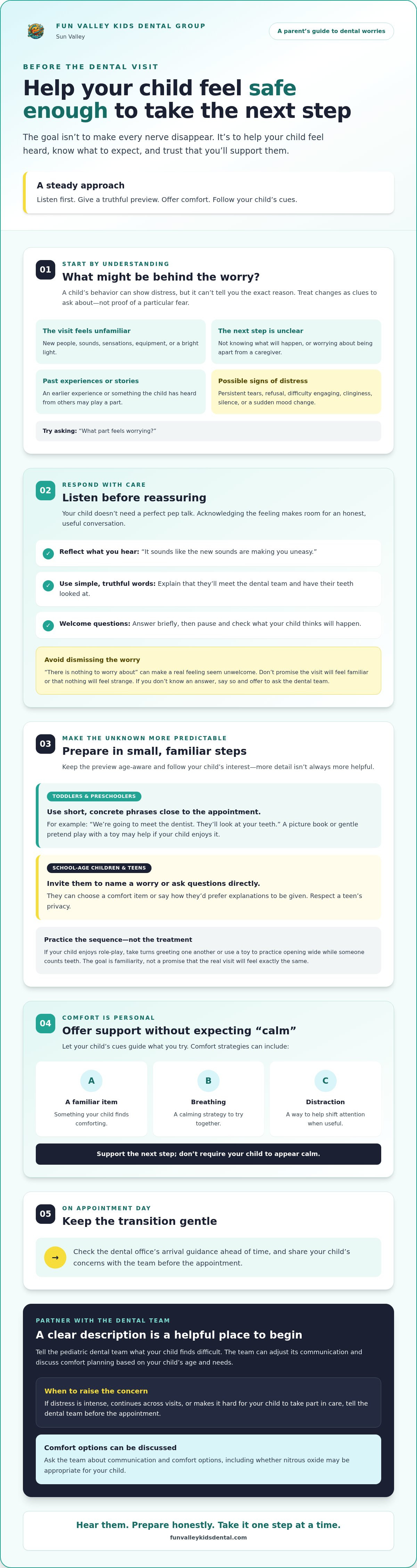
Your child doesn’t need a perfect pep talk. They need to feel heard, know what to expect, and trust that you’ll support them. Honest, simple preparation can make the visit feel more predictable. A pediatric dental team can also adjust how it communicates and discuss comfort planning based on your child’s age and needs.
This guide offers age-aware ways to talk about the appointment, practice at home, and respond when worries show up. You’ll also learn what to ask the dental office and when to discuss additional comfort options, including whether nitrous oxide may be appropriate. Small, steady steps can help your child approach the visit feeling supported, one part of the journey at a time.
Table of Contents
Why children feel nervous before a dental appointment, and what parents can do
A dental visit can bring a child into an unfamiliar place with new people, sounds, and sensations. Dental anxiety is worry or fear connected with dental care. Some children feel briefly nervous but settle as they learn what to expect. Others may show stronger distress, such as persistent tears, refusal, or difficulty engaging. That reaction deserves support, not a label. The general idea of Dental fear includes a range of feelings, but behavior alone can’t tell a parent the reason for a child’s fear.
A child may be reacting to a past experience, separation from a caregiver, uncertainty about what comes next, or something they’ve heard from others. There may be no single cause. When thinking about how to calm a child before the dentist, remember that the aim isn’t to talk them out of their feelings. It’s to understand what’s troubling them and make the next step feel more manageable.
Predictable preparation gives children a clearer picture of the visit and can help them feel more in control as they meet each new step.
What might a child be afraid of at the dentist?
Try asking an open, gentle question: “What part feels worrying?” A child might mention being apart from you, the bright light, unfamiliar equipment, possible discomfort, or simply not knowing what will happen. Younger children may show concern through clinginess, silence, or a sudden change in mood instead of explaining it clearly. Treat these changes as clues to ask about, not proof of a particular fear or diagnosis.
How should parents respond to dental fear?
Listen first. You might say, “It sounds like the new sounds are making you uneasy,” then give your child room to respond. Avoid brushing the worry aside with “there is nothing to worry about,” which can make a real feeling seem unwelcome. Offer honest reassurance instead, using simple explanations. You can describe the appointment as a chance to meet the dental team and care for growing teeth, while reminding your child that they can share questions or concerns.
If your child’s distress is intense, continues across visits, or makes it hard to take part in care, tell the dental team before the appointment. A pediatric dental team can adapt its communication and discuss comfort planning with you. You don’t need to arrive with a perfect solution. A clear description of what your child finds difficult is a helpful place to begin.
How to prepare a child for the dentist with honest, age-aware conversations
A clear preview can turn an unknown appointment into a sequence your child can picture. Keep it truthful: explain that they’ll meet the dental team and have their teeth looked at, but don’t promise that nothing will feel strange or unfamiliar. Cleveland Clinic notes that fear of the dentist can be connected to earlier experiences. Give your child room to share what they’re thinking instead of assuming what will help.
Truthful, age-appropriate previews make the visit less of a mystery and give children a clearer sense of what comes next.
Answer questions briefly, using words your child understands. Then pause and check in: “What do you think will happen?” or “Is there anything else you want to know?” This helps you spot misunderstandings without overwhelming them with details. If you don’t know the answer, say so and offer to ask the dental team.
Role-play can help if your child enjoys it. Take turns being the patient and the person greeting them, or use a toy to practice opening wide while someone counts the teeth. Keep pretend play focused on the order of events, rather than acting out treatment. The goal is familiarity, not a promise that the real visit will feel exactly the same.
What should you tell a toddler or preschooler?
Use short, concrete phrases close to the appointment: “We’re going to meet the dentist. They’ll look at your teeth.” A picture book or gentle pretend visit with a toy may help your child picture what you mean, if they enjoy that kind of play. Follow their attention. A brief explanation may be enough, while too many details can make the visit feel bigger than it is.
How can you prepare a school-age child or teen?
Older children may be ready to name a specific worry or ask questions directly. Invite them to choose a comfort item or say how they’d prefer explanations to be given. For teens, respect their privacy and include them in conversations about their care rather than speaking for them by default. If they are nervous about upcoming orthodontic work or appearances, discussing modern discreet solutions—such as those highlighted by aesthetic dental practices like JustSmile—can also help them feel more at ease. Choice doesn’t mean they control every part of the appointment; it gives them a meaningful voice in how they prepare.
These small conversations are a practical part of how to calm a child before the dentist, and they can help the dental team understand what your child needs. Families who want to share concerns ahead of a visit can contact Fun Valley Kids Dental Group in Sun Valley to discuss their child’s worries and communication preferences.
Which calming strategies can help before and during a dental visit?
There isn’t one magic trick for every child. A familiar object may comfort one child, while another prefers a song, a quiet explanation, or something engaging to focus on. Treat these as options to offer, not tests your child has to pass. The goal is to help them feel supported, not to make them look calm for other people.
Try one simple approach and notice your child’s response. If it seems to add pressure, let it go and try something else. Ask the dental team which comfort items are welcome and how they explain each step, since office policies and approaches can differ.
Which simple calming tools can families try?
Comfort item: Offer a familiar small toy or other appropriate object, and check with the office about its current policies before bringing it.
Breathing or a song: If your child is receptive, try a few slow, comfortable breaths together or quietly sing a familiar tune. Keep it light rather than insisting they follow a pattern.
Distraction: A story, simple game, or conversation about a favorite topic may help shift attention while waiting. Ask what your child would enjoy.
Steady encouragement: Use brief, specific praise, such as “You told me what you needed” or “You gave that a try.” Recognize effort, not perfect composure.
Clear explanations can also help during the visit. Your child may feel more prepared if the dental team describes what they’re doing in simple steps. You can ask the team to pause and explain things in a way your child can follow, rather than adding a running stream of detail yourself. Some children want to know what comes next; others prefer fewer words.
When should parents ask about additional comfort options?
Tell the dentist if fear persists, a previous visit was difficult, or your child has sensory needs that may affect the appointment. Share what you’ve noticed and what has helped or made things harder. This gives the pediatric dental team useful context to tailor communication and discuss possible comfort supports with you.
Nitrous oxide sedation is among the services listed by Fun Valley Kids Dental Group, but it isn’t automatically right for every child or visit. Ask the dentist whether it may be appropriate for your child’s situation, and discuss the clinician’s assessment, consent, and judgment before deciding. It’s a clinical option to consider with the dental team, not a replacement for that conversation.
As you consider how to calm a child before the dentist, keep the plan flexible. Familiar routines and parent-led coping tools may be useful, while clinical options require an individual discussion with the dentist. Your child can still feel nervous and be supported; there’s no need to demand a worry-free smile.
What to do on appointment day when your child feels scared
A simple plan can help you focus on the next step instead of trying to manage the whole appointment at once. Check the office’s arrival guidance ahead of time, and aim for a calm transition without arriving so early that waiting adds to your child’s worry. Before the visit begins, let the dental team know what your child is concerned about and what tends to help.
Arrive and settle in. Follow the office’s instructions about when to arrive. Give your child a moment to get oriented, and offer a familiar comfort item if the office allows it.
Share useful context. Briefly tell the team about specific fears, a difficult past visit, or anything that may make the appointment harder. You don’t have to explain everything in front of your child.
Take one step at a time. Use a steady voice and describe only what’s happening next, such as, “We’re going to say hello to the dentist.”
Start the conversation together. Let your child ask questions or share preferences directly if they feel comfortable. You can ask the team how they handle questions, breaks, and a child’s participation.
How can parents help during check-in and the first conversation?
Your calm presence can make the first few minutes feel more familiar. Keep your words brief and reassuring instead of describing the entire appointment at once. If your child wants to speak for themselves, give them time. If they look to you for help, support them without automatically answering every question. Ask the office about its current guidance on whether a parent may accompany a child in treatment areas.
What if a child becomes upset in the dental chair?
Stay nearby and acknowledge the feeling: “I can see this is hard right now.” Avoid threats, shame, or bargaining that turns the visit into a test your child can pass or fail. Let the dental team guide the next step. You can ask whether a pause or a different explanation might help, while leaving clinical decisions to the dentist.
Children may need different kinds of support from one visit to another. If your child’s fear grows, tell the team rather than trying to push through alone. A pediatric dental team can listen to your concerns and discuss how to adapt communication and comfort planning for your child. To share your child’s worries before a visit, contact Fun Valley Kids Dental Group.
How a pediatric dentist in Sun Valley can support a calmer visit
Parents know their child’s signals best, and sharing those clues with the dental team can help the visit feel more tailored. Fun Valley Kids Dental Group is a pediatric dental and orthodontic practice in Sun Valley, California, serving children and teens. Families come from Sun Valley and nearby communities, including Los Angeles, Tujunga, Sunland, Glendale, Burbank, Hollywood, Pacoima, Sylmar, the San Fernando Valley, Pasadena, and North Hollywood. Before the appointment, let the team know what your child is worried about, how they prefer to receive explanations, and what has helped during challenging moments.
What information should parents share with the dental team?
Offer practical details, not just “they’re nervous.” For example, explain if your child is worried about unfamiliar sounds, needs extra time to process instructions, or had a previous visit that felt difficult. Mention sensory needs or other factors that could affect the appointment experience. You can also ask the office about its current arrival guidance, caregiver presence, and comfort-item policies so you and your child know what to expect.
There’s no need to have a perfect plan before you speak with the team. Your observations can help pediatric dental professionals adjust their communication and discuss suitable comfort options. Nitrous oxide sedation is among the practice’s listed services, but it isn’t right for every child or every visit. Ask the clinician whether it may be appropriate, and discuss their assessment and guidance.
How can families build confidence for future dental visits?
Notice the small steps your child takes. Asking a question, walking into the office, or telling the team what feels difficult can all be meaningful progress, even if some worry remains. Afterward, keep the conversation positive and factual. You might say, “You told the dentist what you needed,” rather than repeatedly replaying the hardest moment. That helps the next visit feel like a fresh part of the journey, not a test your child has already failed.
For more local guidance, look for the practice’s Pediatric Dentist in Sun Valley, CA: Your Guide to a Lifetime of Happy Smiles. Families with questions about sedation can also explore Pediatric Sedation Dentistry in Sun Valley, CA and discuss their child’s situation directly with the clinician. These guide titles are included as reading suggestions; confirm the current page links with the practice rather than relying on an unverified URL.
If you’re considering how to calm a child before the dentist and want advice shaped around your child’s concerns, reach out to Fun Valley Kids Dental Group in Sun Valley. A conversation with the team can help you prepare questions and understand what comfort planning may be appropriate for the visit.
Take the next step toward a more supported visit
Helping your child feel steadier starts with listening, honest age-appropriate explanations, and a plan that can flex around their needs. If you’re wondering how to calm a child before the dentist, remember that success doesn’t have to mean no nerves. A child asking a question, sharing a worry, or taking part at their own pace is making progress.
On appointment day, share your child’s concerns with the dental team and ask how they handle questions, pauses, and caregiver involvement. A pediatric team can tailor communication and discuss comfort planning with you. Fun Valley Kids Dental Group focuses on pediatric dental and orthodontic care, and nitrous oxide sedation is among its listed services. Ask the clinician whether it may be appropriate for your child and visit; it isn’t necessary or suitable for every appointment.
Talk with our pediatric dental team about helping your child feel prepared. With patience, clear communication, and support from home to the dental chair, your family can take this next step together.
Frequently Asked Questions
How can I calm my child before the dentist?
Start by listening to what feels worrying, then offer one or two gentle supports your child can choose from. A familiar comfort item, a favorite song, or a few slow, comfortable breaths may help, but no single strategy works for every child. Explain the next step simply and praise effort rather than expecting your child to seem calm. Share persistent worries with the dental team so they can discuss ways to support your child.
Should I tell my child about a dental appointment in advance?
Yes, give your child a truthful, age-appropriate preview before the visit. For a young child, you might say, “We’re going to meet the dentist, who will look at your teeth.” Older children may want more details or time to ask questions. Avoid promising that nothing will feel unfamiliar. Keep the conversation brief, then check what your child understood or wants to know so you can clear up uncertainty without overwhelming them.
What should I say if my child is scared of the dentist?
Acknowledge the feeling before offering reassurance. You could say, “I hear that you’re worried about what might happen,” then ask what part feels hardest. Avoid dismissing the fear with “There’s nothing to worry about,” which may leave your child feeling unheard. Be honest about what you know, and offer to ask the dental team about anything you’re unsure of. Remind your child that they can share questions and concerns during the visit.
Can I stay with my child during a dental appointment?
Ask the dental office about its current caregiver and treatment-area policies before the appointment, since arrangements can vary. You can also ask how the team handles a child who wants a parent nearby or needs support during the first conversation. Explain what helps your child feel secure, while allowing the dental team to guide the visit. For families in Sun Valley and nearby San Fernando Valley communities, asking in advance can help clarify expectations.
Is nitrous oxide used for children who are anxious about the dentist?
Nitrous oxide may be an option to discuss with your child’s dentist, but it isn’t automatically appropriate for every child or appointment. Fun Valley Kids Dental Group lists nitrous oxide sedation among its services. The clinician can discuss whether it may fit your child’s situation, based on an individual assessment and clinical judgment. Ask questions about the option directly with the dental team, and don’t assume it’s necessary just because your child feels anxious.
What if my child cries or refuses to open their mouth at the dentist?
Stay calm, acknowledge that your child is upset, and let the dental team guide what happens next. Don’t threaten, shame, or turn cooperation into a bargain or test. You can ask whether a pause or a different explanation might help, but the dentist should guide clinical decisions. If your child isn’t ready to participate, tell the team what you’re seeing and ask how they recommend proceeding with your child’s needs in mind.
When should I tell the dentist that my child has dental anxiety?
Tell the dental team as early as you can, ideally before the appointment begins. Share specific concerns, such as fear of unfamiliar sounds, a difficult past visit, or sensory needs that could affect the experience. Mention what has helped your child and how they prefer to receive explanations. This gives the pediatric dental team useful context for communication and comfort planning. You don’t need a formal diagnosis to let the dentist know your child is worried.



Comments