


Is My Child Too Young for Braces? Signs and Options

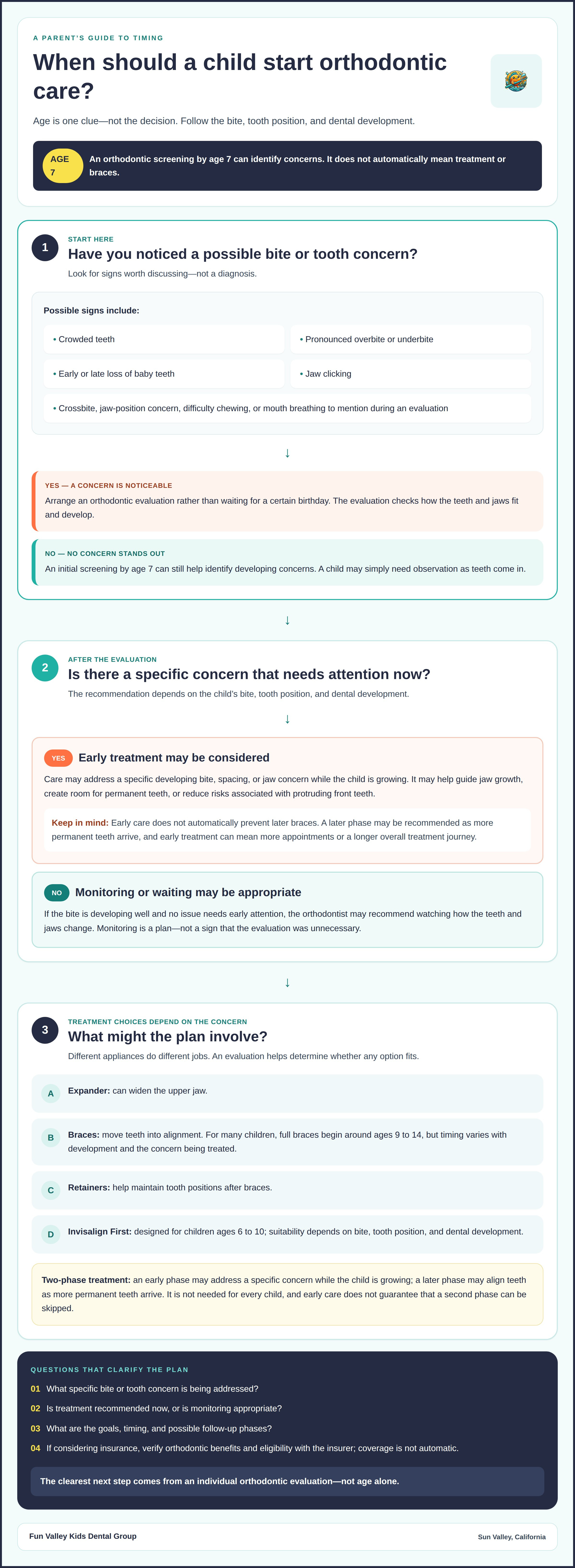
A child doesn’t have to be ready for braces to be ready for an orthodontic check. If you’re wondering whether your child is too young for braces, age alone isn’t the deciding factor: the bite, tooth position, and dental development all matter. An orthodontic screening by age 7 can spot concerns, and parents don’t need to wait until then if they notice a possible problem.
It’s natural to wonder, “Is my child too young for braces?” Some children need only monitoring as their smiles grow, while others may benefit from early orthodontic care. This guide explains why braces might be considered, what an early evaluation can assess, and which signs are worth discussing. You’ll learn what an orthodontic check can reveal and how to understand the next step.
Table of Contents
Why Might My Child Need Braces?
Braces may address crowding, an overbite, or other bite concerns as a child grows. An early orthodontic evaluation can help determine whether treatment is appropriate now or whether monitoring is the better next step.
Timing the First Orthodontic Evaluation
An orthodontic evaluation checks how teeth and jaws fit and develop, and many orthodontists recommend an initial screening by age 7. A child’s first orthodontic check-up commonly occurs between ages 6 and 9. These visits help spot concerns early, even when baby teeth remain. An evaluation does not automatically mean braces; it helps clarify whether to treat, monitor, or wait.
Early Treatment and Full Braces
Early orthodontic treatment addresses a specific developing concern, while full braces move teeth into alignment as treatment progresses. For most children, braces begin around ages 9 to 14, but the right timing depends on the bite, tooth position, and dental development. A child with crowding may need a different plan from one with a pronounced overbite. Some children need observation rather than immediate treatment.
Two-phase treatment separates early care from later braces when both are appropriate. The first phase may address a concern while the jaw and teeth are developing; a later phase may align teeth as more permanent teeth arrive. This approach isn’t necessary for every child. An orthodontist considers the specific concern and dental development before recommending treatment phases.
Benefits and Risks of Early Treatment
Early care may guide jaw growth, create room for permanent teeth, or reduce risks associated with protruding front teeth. It can also involve more appointments and a longer overall treatment journey if a later phase is needed. Starting braces before they can address a specific concern may add treatment without a clear benefit. Ask the orthodontist to explain the reason for treatment and its goals.
Appliances serve different purposes. An expander can widen the upper jaw, braces move teeth, and retainers help maintain their positions after braces. An orthodontic evaluation helps determine which option, if any, suits your child’s bite and dental development.
Dental insurance may cover braces if the plan includes orthodontic benefits and its criteria are met. Medicaid orthodontic coverage depends on the applicable program and eligibility, so neither type of coverage is automatic. Review your benefits and treatment requirements with your insurer before planning care.
When choosing orthodontic care for your child, look for clear explanations of the bite concern, treatment options, timing, and follow-up. The orthodontist should explain why early treatment is recommended or why monitoring is appropriate. Ask how appliances such as expanders or retainers fit the plan, and make sure your child’s dental development is part of the discussion.
What Are Orthodontic Options for Younger Kids?
Some children benefit from treatment before all their permanent teeth arrive; others do better by waiting. The right timing depends on the concern and how your child’s bite and teeth are developing.
Treatment Before Permanent Teeth Arrive
Early orthodontic treatment can address certain bite and jaw concerns while a child has a mix of baby teeth and permanent teeth. An orthodontist may consider treatment for a crossbite, crowding, or a jaw-position concern. Addressing a developing problem may guide growth or make room for incoming teeth. The goal is to address a specific concern, not to straighten every tooth early.
Early Treatment or Waiting
Starting treatment early may help with some concerns, but it doesn’t automatically prevent later braces. A child who receives early care may still need a later phase as permanent teeth come in. Waiting can make sense when the bite is developing well and no issue needs early attention. An orthodontist weighs the child’s teeth, bite, and growth when considering these options.
Traditional braces often begin between ages 8 and 14, while some orthodontists consider treatment as young as 6 or 7. Others may wait until age 9. These ages show why a calendar alone can’t settle the question. A crossbite may call for a different timeline than mild spacing, and the type of concern matters more than a birthday.
Phase One and Phase Two Timelines
Two-phase treatment divides orthodontic care into an early phase and a later phase, often during the teenage years. Phase 1 addresses a specific concern while the child is still growing; Phase 2 aligns teeth as more permanent teeth arrive. The time between phases may involve monitoring rather than active treatment. Early care may reduce the complexity or duration of later braces, but it doesn’t ensure that a second phase can be skipped.
Braces and Other Options for Younger Children
Options for younger children include traditional braces and appliances such as expanders, which can widen the upper jaw. Invisalign First is designed for children ages 6 to 10, though suitability depends on the child’s bite, tooth position, and dental development. An orthodontic evaluation connects the treatment choice to the specific concern, such as crowding or a crossbite.
Mouth breathing and difficulty chewing are details worth sharing during an orthodontic evaluation, because they help describe how a child’s mouth functions. They don’t by themselves determine which appliance is appropriate. A clear plan explains what the treatment aims to address, how progress will be reviewed, and whether another phase may follow. An orthodontic evaluation can help map those options for a growing smile.
Monitoring mixed-dentition development
Mixed dentition is the stage when baby teeth and permanent teeth are present together. Following these changes helps an orthodontist assess how the bite and jaws develop, rather than judging a child’s smile by one tooth. A child may need observation as teeth emerge, even if no appliance or braces are recommended at that appointment.
By age seven, the back teeth have finished coming in, giving an orthodontist a useful view of how the upper and lower teeth meet. The evaluation checks their alignment from side to side and front to back. For example, an upper tooth that sits inside a lower tooth when biting may indicate a crossbite. How the teeth fit together matters as well as the position of individual teeth.
Baby teeth commonly begin to fall out around ages 6 or 7, while permanent teeth continue arriving over time. The sequence can help explain crowding or gaps as a child’s smile changes. An orthodontist considers which teeth have emerged and how the upper and lower jaws relate. A single crooked front tooth doesn’t show the whole picture; the developing bite provides more context.
Permanent molars also mark stages of dental development. The molars commonly called “12-year molars” are one milestone in considering space for permanent teeth. Their arrival can affect what an orthodontist sees in the back of the mouth, while front teeth may be at a different stage. An evaluation considers the whole bite, not just the newest tooth or the straightness of the front teeth.
Mouth breathing can contribute to orthodontic concerns, so mention ongoing breathing patterns during a dental or orthodontic appointment. A palatal expander widens the upper jaw and can widen the nasal cavity; it may reduce mouth breathing. That doesn’t mean an expander is right for every child. Its role depends on the developing bite and the concern identified during an evaluation.
If an orthodontic concern is being monitored, the orthodontist may follow your child periodically and reassess how the teeth are emerging. The evaluation focuses on how the upper and lower teeth align when biting and whether development is progressing as expected. If a concern changes as permanent teeth arrive, the plan can be reconsidered. Monitoring connects each appointment to your child’s changing dental development.
Signs a child may need an evaluation
A parent can watch how a child’s teeth meet, how chewing feels, and how baby teeth fall out. Crowding, an underbite, or jaw clicking can each prompt an orthodontic evaluation, even if the child is younger than 7.
Look for changes in alignment, not just whether the front teeth appear straight. Crowded or crooked teeth, noticeable gaps, and a pronounced overbite or underbite can point to a bite concern. An underbite, for example, occurs when the lower teeth sit ahead of the upper teeth when biting. An orthodontist assesses how the teeth fit together, not appearance alone.
Crowding or gaps: Teeth overlap, twist, or leave noticeable spaces.
Bite differences: An overbite or underbite is pronounced when the child closes their teeth.
Jaw sounds: Clicking or popping occurs as the child opens or closes their mouth.
Chewing discomfort: Biting or chewing feels painful or difficult.
Cheek biting: The child repeatedly bites the inside of their cheek while chewing.
Tooth loss timing: Baby teeth fall out unusually early or late.
Tooth-loss patterns can matter because baby teeth help hold space for permanent teeth. Losing a baby tooth early may lead to spacing or alignment concerns as adult teeth emerge. Losing one late can also affect the order in which teeth appear. Note which tooth came out and when, and share that information at the appointment.
Habits are another useful clue. Prolonged thumb or finger sucking can affect jaw and tooth positions; continuing beyond age 5 can contribute to bite problems. Describe how often the habit occurs and whether it continues during sleep. This context helps an orthodontist understand the child’s developing bite without treating the habit alone as a diagnosis.
Repeated jaw popping, painful chewing, or constant cheek biting is worth discussing, as each can signal that the upper and lower teeth don’t meet comfortably. These signs don’t identify a specific orthodontic problem on their own. They give the orthodontist concrete examples to assess alongside tooth position, bite, and dental development.
Parents don’t need to wait until a child reaches age 7 if they notice a possible concern. A screening at that age is a useful milestone, not a rule that prevents earlier evaluation. Invisalign is a treatment option for some children, but visible crowding or gaps alone can’t determine whether clear aligners or another approach fits. An orthodontist evaluates the whole bite and the child’s development before recommending treatment.
Treating Orthodontic Issues Before Permanent Teeth
A child can have an orthodontic concern before all permanent teeth arrive. An examination of the developing bite can help determine whether an issue needs attention during growth or can be monitored as more teeth emerge.
Early assessment can be useful when a problem affects how the jaws fit or whether permanent teeth have room to come in. A crossbite, for example, occurs when upper teeth bite inside lower teeth. Crowding may also raise concerns about space for incoming teeth. These findings don’t automatically mean braces are needed, but they help an orthodontist determine what the developing smile needs.
Some concerns an orthodontist may assess while baby teeth remain include:
Crossbite: The upper and lower teeth don’t meet in the expected position.
Crowding: Teeth compete for space as permanent teeth emerge.
Protruding front teeth: Their position can raise concern about injury risk.
Persistent thumb or finger sucking: Continuing after age 5 can contribute to bite problems.
Growth can be relevant to treatment planning. While a child’s jaw is still growing, an orthodontist can adjust its position as it develops. Early treatment may also guide jaw growth, make room for permanent teeth, or reduce the risk of trauma to protruding front teeth. Speech or swallowing concerns may also be part of the evaluation. Each goal should relate to a specific finding, not simply a wish to straighten teeth early.
A crossbite or crowding doesn’t mean every child needs immediate orthodontic treatment. The orthodontist considers the child’s bite, jaw position, tooth development, and how the concern affects growing teeth. If early care isn’t needed, monitoring can track changes as more permanent teeth arrive. This helps explain why two children with similar-looking teeth might receive different recommendations.
Early care can be followed by a later phase during the teenage years. Standard Phase 2 braces treatment lasts 12 to 24 months. Phase 1 treatment doesn’t guarantee that a child will avoid Phase 2. It can address a growth-related problem first, while later treatment focuses on tooth alignment as development continues.
At an evaluation, the orthodontist explains which concern is being treated, what the planned approach aims to change, and how progress will be followed. If you’d like an orthodontic professional to assess your child’s developing bite, schedule an orthodontic evaluation.
Fun Valley Kids Dental Group: Traditional Braces
Fun Valley Kids Dental Group provides orthodontic evaluations and traditional braces for children at its Sun Valley, California, office. An evaluation considers your child’s bite, tooth position, and dental development to help determine whether to begin treatment or monitor changes.
Pediatric dental exams and cleanings support children’s oral health alongside orthodontic care.
If you’re considering braces or have noticed a change in your child’s bite, contact Fun Valley Kids Dental Group to discuss an orthodontic appointment.
Take the Next Step Toward a Clearer Plan
If you’re wondering, “Is my child too young for braces?”, an orthodontic evaluation can turn uncertainty into a practical plan. It gives you a chance to discuss what you’ve noticed, understand the options, and learn whether treatment or monitoring makes sense for your child’s developing smile.
Share concerns such as changes in your child’s bite, trouble chewing, or teeth that seem crowded. You can also ask how the orthodontist will track development and explain a recommendation. The goal is a plan that suits your child, not a decision based on age alone.
Fun Valley Kids Dental Group provides orthodontic evaluations and traditional braces in a welcoming setting for children and families. Treatment timing and the right approach depend on your child’s individual examination and dental development.
Connect with Fun Valley Kids Dental Group to discuss your child’s orthodontic needs. A thoughtful next step can help your family move forward with confidence and comfort.
Frequently Asked Questions
Is age 7 too young to start braces?
Age 7 is often a good time for an orthodontic screening, but it doesn’t automatically mean braces should start. If you’re asking, “Is my child too young for braces?” at this age, the answer depends on the developing bite and any concerns the orthodontist identifies. The visit helps determine whether to treat or monitor. It can provide a clearer plan without committing a child to treatment.
When should kids get braces?
Many children start braces around ages 9 to 14, but timing depends on their orthodontic needs and dental development. A child with a concern affecting the bite may need a different schedule from a child whose teeth are developing comfortably. The orthodontist also considers which permanent teeth have emerged and how they fit together. A treatment plan should explain why braces are being considered at that point in the child’s growth.
Are early braces more expensive?
A child’s age alone doesn’t determine whether braces are appropriate. Early treatment may be followed by a second phase, so the overall plan can involve more than one stage. Other children may be monitored before starting treatment later. The concern and recommended care shape the plan. Ask the orthodontist to outline the expected phases, and review your insurance benefits with your carrier.
Can my 14-year-old still get braces?
Yes. Age 14 falls within the ages when many children begin braces. An orthodontist assesses your teen’s bite, tooth position, and dental development to determine whether braces are appropriate. For example, the plan may address crowding or a bite concern after reviewing how permanent teeth fit together. An evaluation can also clarify whether traditional braces or another suitable option better matches your teen’s needs.
What Is the Appropriate Age for Braces?
There isn’t a single appropriate age for every child, though braces commonly begin between ages 9 and 14. If you’re wondering, “Is my child too young for braces?” age alone can’t answer that. The orthodontist considers the concern being treated and the child’s growth. Some children need attention earlier, while others can wait as more teeth come in. A recommendation should explain why that timing fits the child.
What is the best age for a child’s first orthodontic evaluation?
A child’s first orthodontic evaluation commonly takes place between ages 6 and 9, with an orthodontic screening recommended by age 7. The appointment can assess tooth development and how the jaws meet, even if no treatment is planned. If you notice a concern before your child’s seventh birthday, an earlier assessment can help clarify what’s happening. The screening is an opportunity to understand development, not a promise that braces will be needed.
At what age do children usually start braces?
Children usually start braces around ages 9 to 14, after enough permanent teeth have emerged for the planned treatment. Some orthodontists describe ages 11 to 13 as a common practical window, but a child’s bite and tooth development matter more than matching a specific birthday. For instance, two children of the same age may have different treatment timing because their teeth emerge and fit together differently.
What signs indicate a child may need braces or early orthodontic treatment?
Signs worth discussing include crowded or crooked teeth, a pronounced overbite or underbite, jaw clicking, painful chewing, and baby teeth lost unusually early or late. Repeated cheek biting can also suggest that the teeth don’t meet comfortably. Note when you notice the concern and whether it affects eating or daily comfort. These details help an orthodontist assess your child’s bite and decide whether further evaluation is appropriate.
Comments