


Managing Your Child's Brace Pain: A Parent's Guide

Your child was excited to leave with braces, but by dinner their teeth feel tender and a wire is rubbing their cheek. It’s natural to wonder how to manage brace pain for a child and whether the discomfort is part of the adjustment or a sign something needs attention. Mild soreness can happen after braces are fitted or adjusted, but the right comfort step depends on what’s causing it.
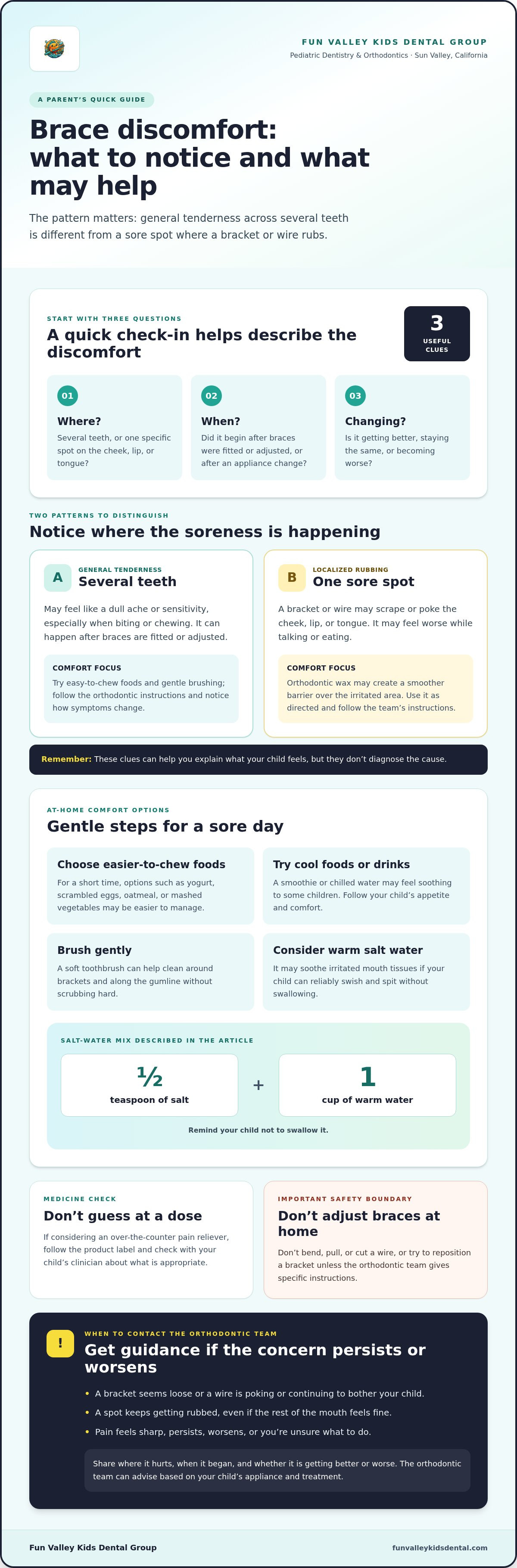
Discomfort often comes from pressure as teeth begin to move, or from a bracket or wire rubbing the cheek, lip, or tongue. The pattern can help you choose what to do next: general tenderness across several teeth is different from a sharp, sore spot in one place. Below, you’ll find gentle ways to make eating and brushing more comfortable, what not to try at home, and when to contact your child’s orthodontic team.
Table of Contents
Why Do Braces Hurt a Child? Common Causes and Timing
Brace discomfort can have more than one cause. Your child’s description is a helpful starting point, but it can’t identify the cause on its own. After braces are fitted or adjusted, several teeth may feel tender as they respond to pressure. A bracket or wire can also rub one spot inside the mouth. Ask where it hurts and what the sensation feels like, then consider whether it started after an adjustment or appliance change.
Braces can make teeth feel tender because they apply steady pressure to guide them toward new positions. Orthodontic treatment focuses on tooth and jaw alignment; the overview of Orthodontics explains the broader purpose of this care. Tenderness may occur after braces are first placed or following an adjustment, and the timing varies from child to child.
What can make teeth feel sore after braces are fitted or adjusted?
As braces apply pressure, teeth and the tissues around them may feel sensitive. Your child might describe a dull ache across several teeth or say that biting into a sandwich or chewing something firm feels uncomfortable. Chewing sensitivity by itself doesn’t mean a tooth has been damaged, but it can make meals less comfortable while the mouth adjusts.
Ask your child to point to the tender area and say whether it hurts all the time or mainly while eating. That distinction helps you describe the discomfort to the orthodontic team, which can consider it alongside your child’s treatment plan.
How can rubbing from a bracket or wire feel different?
Rubbing is often more localized. Your child may point to one spot on the cheek, lip, or tongue and describe a scrape, poke, or irritation that gets worse when talking or eating. General tooth tenderness, by comparison, may involve several teeth and feel more noticeable when chewing. With good light, take a gentle look at the area your child points to. Don’t pull or bend any wires.
If a bracket seems loose or a wire is poking or continuing to bother your child, contact the orthodontic team for guidance. A spot that keeps getting rubbed deserves attention, even if the rest of your child’s mouth feels fine.
Notice how the pain feels and whether it changes. Mild tenderness after fitting or an adjustment is different from pain that feels sharp, persists, or worsens. These clues don’t diagnose the problem, but they help you explain it clearly. If you’re unsure how to manage brace pain for a child, start with three questions: Where does it hurt? When did it begin? Is it getting better or worse? The orthodontic team can help you decide on the next step.
What Helps Brace Pain at Home, and What Should Parents Avoid?
Simple comfort measures can make a sore day easier while your child adjusts. They offer temporary relief, not a substitute for advice from the orthodontic team. Choose steps that suit your child and pay attention to whether symptoms settle or change. The American Dental Association’s braces guidance provides general background on orthodontic treatment; your child’s orthodontic team can advise about their appliance and care.
Which gentle comfort measures may make eating and brushing easier?
For a short time, offer soft foods that need little chewing, such as yogurt, scrambled eggs, oatmeal, or mashed vegetables. If chewing feels tender, let your child choose easier-to-manage foods rather than pushing through a painful meal. Cool foods or drinks, such as a smoothie or chilled water, may feel soothing to some children. Follow your child’s appetite and comfort.
Keep brushing gently. A soft toothbrush can help your child clean around brackets and along the gumline without scrubbing hard. Rinsing with warm salt water may soothe irritated mouth tissues if your child is old enough to swish and spit reliably. Mix about half a teaspoon of salt into a cup of warm water, and remind your child not to swallow it.
If you’re considering an over-the-counter pain reliever, follow the product label and check with your child’s clinician about what’s appropriate. Don’t guess at a dose or assume a medicine is suitable because another child used it. Home comfort measures may help during an adjustment, but they don’t explain the cause of pain or replace professional guidance.
How should parents respond to a rubbing bracket or wire?
If a bracket or wire rubs one spot, orthodontic wax may provide a smoother barrier over the irritated area. Use it as directed and follow the orthodontic team’s instructions. Ask your child to point out the exact sore spot so you can distinguish localized rubbing from general tooth tenderness.
Home care can soothe discomfort, but it isn’t a safe way to repair or adjust braces. Don’t bend, pull, or cut a wire, or try to reposition a bracket, unless the orthodontic team gives you specific instructions. If rubbing persists, the appliance seems loose or damaged, or your child’s pain is worsening, contact the team rather than experimenting at home.
When you’re unsure how to manage brace pain for a child, focus on comfort and observation: choose easy-to-eat foods, keep oral care gentle, and note what seems to trigger the soreness. If the concern persists, Fun Valley Kids Dental Group’s orthodontic team in Sun Valley can assess your child’s concern and guide the next step.
Brace Pain or a Problem? How to Decide What to Do
It can be hard to tell whether your child has expected tenderness or a problem that needs attention. Look at the pattern, check whether it’s changing, and listen to how your child describes it. These general guideposts can help you decide what to do, but they can’t determine the cause of an individual child’s pain. If you’re uncertain, contact the orthodontic team for advice based on your child’s appliance and treatment.
Common tenderness: Mild, general sensitivity around the time braces are fitted or adjusted may be temporary. Follow the orthodontic instructions and notice whether the discomfort eases, stays the same, or worsens.
Localized rubbing: A sore spot on the cheek, lip, or tongue may mean part of the appliance is touching the area. If a wire keeps rubbing or a bracket feels loose, contact the orthodontic team for advice.
Needs professional advice: Persistent, sharp, severe, or worsening pain, or symptoms involving swelling, injury, difficulty eating or drinking, or a broken appliance call for prompt guidance. The team can help decide whether your child needs an examination.
Which signs are more consistent with temporary soreness?
After a fitting or adjustment, a child may describe a mild ache or tenderness across several teeth, especially when biting or chewing. That pattern can fit ordinary adjustment discomfort, but every child experiences braces differently, and the sensation alone can’t confirm what’s causing it. Follow your child’s orthodontic instructions and notice whether the soreness is improving or making everyday activities harder.
A brief note can help you track changes: record when the discomfort began, where your child feels it, and what seems to make it better or worse. This isn’t a substitute for care, but it gives the orthodontic team useful details if you call.
When should parents contact the orthodontic team?
Reach out promptly if pain persists or worsens, a bracket is loose or broken, or a wire continues to irritate your child. Also seek professional guidance for swelling, a mouth injury, or trouble eating or drinking. Describe what happened, when it started, where it hurts, and whether the appliance looks damaged. The orthodontic team can use those details to advise you and decide whether an examination is appropriate.
If your child has a serious injury or symptoms are rapidly worsening, seek urgent medical care rather than waiting for routine orthodontic advice. For other concerning changes, contact the orthodontic team promptly and follow their instructions. If you’re unsure how to manage brace pain for a child, asking for individual guidance is a sensible next step.
A Simple Parent Plan for Managing Brace Pain Day by Day
A calm check-in can turn a worrying moment into a manageable routine. Let your child know you’re there to help and that they don’t need to explain the discomfort perfectly. Together, you can notice what has changed and decide whether home comfort or a call to the orthodontic team makes sense.
Ask what hurts. Invite your child to point to the spot and describe the feeling in their own words. Ask whether it bothers them while chewing, brushing, talking, or resting.
Look gently. With clean hands and good light, check the area your child points to. Notice whether a bracket or wire appears loose or touches the cheek or lip. Don’t tug, bend, or adjust the appliance.
Choose a comfort step. If chewing feels tender, offer a soft meal or snack. Keep brushing carefully around the braces, and follow the orthodontic team’s instructions for any recommended products or care.
Monitor what happens. Check in again later and note whether the discomfort is easing, staying the same, or getting worse. Contact the orthodontic team if you’re concerned or symptoms persist.
Explain the plan in reassuring, simple language: “Let’s figure out where it feels sore, then we’ll choose something that may help.” This helps your child feel heard and involved, rather than frightened or responsible for the discomfort.
How can families make meals and oral care more comfortable?
Offer a few soft choices, such as oatmeal, yogurt, or scrambled eggs, and let your child pick what feels manageable. Keep brushing gentle and consistent, taking care around brackets and wires without forceful scrubbing. Ask whether the sore feeling is in one spot or several, and whether it changes during a meal or while brushing. Those details can make your check-ins and any conversation with the orthodontic team more useful.
What information should parents note before calling?
Keep a short note on your phone or a piece of paper. Include when the discomfort began, whether it followed an adjustment or an appliance issue, where your child feels it, and whether it’s improving or worsening. Add any other symptoms and have the orthodontic care instructions nearby. Sharing a clear timeline helps the orthodontic team understand your concern and advise you on what to do next.
For broader orthodontic context, our guide to a kids orthodontist in 91352 offers another starting point for families learning about care. For help with your child’s braces or discomfort, schedule an orthodontic appointment in Sun Valley with Fun Valley Kids Dental Group. The Sun Valley office serves families from nearby Pacoima, Arleta, Panorama City, North Hollywood, Burbank, and Sylmar.
When to Get Orthodontic Help for Your Child’s Brace Pain
Contact your child’s orthodontic team if discomfort is persistent, worsening, unusually sharp, or interfering with eating and drinking. A loose bracket, a wire that keeps rubbing, swelling, or an injury also deserves prompt professional guidance. You don’t need to identify the cause at home. Sharing what you’ve noticed helps the team decide whether your child should be assessed and what to do next.
If your child has a serious mouth injury or symptoms are rapidly worsening, seek urgent care. For other brace-related concerns, contact the orthodontic team and describe the situation. If an injury is part of the concern, the practice’s emergency dental care guidance may also help you understand the next step.
What may happen when a child is assessed for brace pain?
The orthodontic team may ask when the discomfort began, where your child feels it, and whether it has changed. They may review the appliance and your child’s symptoms to understand the concern. An assessment doesn’t automatically mean a particular repair or treatment; next steps depend on what the team finds, your child’s treatment plan, and their individual needs.
At Fun Valley Kids Dental Group in Sun Valley, Dr. Haykani provides orthodontic care. He completed his DDS education at UCLA and advanced orthodontic training at NYU. The orthodontic team can consider your child’s concern in the context of their care rather than relying on a general guide to determine what’s happening.
How can parents prepare for an orthodontic appointment?
A few details can make it easier to explain what’s going on. Bring your child’s orthodontic instructions, and note when the discomfort began, whether it followed an adjustment or appliance issue, and what seems to make it better or worse. If you see a loose or damaged part, describe what you noticed rather than trying to fix it yourself.
Give your child space to explain the feeling in their own words. “It pokes when I talk” or “it hurts when I bite” can help the team understand the concern. You can also ask how to handle similar discomfort within your child’s treatment plan, including which comfort measures are appropriate and what changes should prompt another call. Keep the conversation calm and reassuring, so your child knows the appointment is a chance to get help, not a reason to feel blamed.
It’s understandable to wonder how to manage brace pain for a child when discomfort doesn’t settle or something about the appliance seems wrong. An individual orthodontic assessment can provide guidance tailored to your child’s symptoms and plan. Contact Fun Valley Kids Dental Group in Sun Valley to schedule an orthodontic appointment and discuss your child’s concern with the team.
Take the Next Step With Confidence
Your child doesn’t have to navigate brace discomfort alone, and you don’t need to work out its cause by yourself. A calm conversation with the orthodontic team can help turn uncertainty into a clear next step. Keep encouraging your child to describe what they feel; being heard can make the adjustment feel less daunting.
Knowing how to manage brace pain for a child starts with responding gently and reaching out when something doesn’t seem right. For guidance about your child’s braces or to arrange an orthodontic appointment, contact Fun Valley Kids Dental Group in Sun Valley. Dr. Haykani provides orthodontic care, including braces and Invisalign treatment. The practice serves families in Sun Valley and nearby Pacoima, Arleta, Panorama City, North Hollywood, Burbank, and Sylmar.
Frequently Asked Questions
Is it normal for a child’s teeth to hurt after braces are tightened?
Some tenderness after an adjustment can be a normal response as teeth adapt to braces. Your child may notice it most when biting into firmer foods. A sudden, sharp ache in one tooth or pain that feels different from their usual adjustment soreness deserves a call to the orthodontic team. Share what changed and when it started so they can advise you based on your child’s treatment.
How long does brace pain last for a child?
The timing varies, but soreness after an adjustment often peaks within 24 to 48 hours and eases over the next few days. It usually settles within a week. After braces are first fitted, tenderness may last around three to seven days as the mouth adapts. These are common patterns, not a deadline. If pain is worsening or lasts longer than expected for your child, ask the orthodontic team for advice.
Can my child eat with sore braces?
Your child can usually eat according to their comfort and the food guidance from the orthodontic team. Try smaller bites and let them chew slowly, choosing foods that don’t strain their teeth or appliance. If they avoid eating or drinking because of pain, contact the team rather than relying on a limited diet for an extended time. Their advice can account for your child’s braces and treatment plan.
What can I give my child for brace pain?
For short-term orthodontic discomfort, acetaminophen or an NSAID such as ibuprofen may be options, but check with your child’s clinician and follow the medicine label. Don’t guess a dose or combine products without professional guidance. If you’re deciding how to manage brace pain for a child who takes other medicines or has health concerns, tell the clinician what they take and ask what’s appropriate for them.
Can orthodontic wax help if braces are rubbing my child’s cheek?
Orthodontic wax can provide a temporary cushion between a bracket and a tender spot on the cheek. Follow the orthodontic team’s instructions for using it, and let them know if the rubbing continues or the wax won’t stay in place. Wax may ease contact, but it won’t fix a loose bracket or damaged wire. If the appliance seems altered or broken, get advice from the team.
What should I do if a wire is poking my child?
Contact your child’s orthodontic team for instructions, especially if the wire keeps poking or has become loose. Don’t pull, bend, or cut it unless the team specifically guides you. Encourage your child not to prod the spot with their fingers or tongue, which may increase irritation. If there’s an injury or symptoms are rapidly worsening, seek urgent care rather than waiting for routine orthodontic guidance.
When should I call an orthodontist about my child’s braces?
Call if discomfort is severe, persistent, worsening, or interfering with eating or drinking, or if you notice a loose bracket, a bothersome wire, swelling, or an injury. Share when it began, what your child feels, and any changes to the appliance. Fun Valley Kids Dental Group’s orthodontic office is in Sun Valley and serves families from nearby Pacoima, Arleta, Panorama City, North Hollywood, Burbank, and Sylmar. The team can advise whether an assessment is appropriate.
Comments