


Preventing Baby Bottle Syndrome: A Parent’s Step-by-Step Guide

Can you protect your baby’s first teeth without abruptly changing a feeding routine that works for your family? Preventing baby bottle syndrome starts with small, steady habits, not blame or sudden changes to necessary feeds. It’s understandable to have questions about bedtime bottles, between-meal sipping, and what to do when those first tiny teeth appear.
In this guide, you’ll learn how to build tooth-friendly feeding routines while meeting your baby’s needs, clean gums and emerging teeth, and recognize when to seek a pediatric dental assessment. Frequent, prolonged exposure to sugary liquids can raise the risk of early tooth decay, so everyday routines matter.
We’ll cover bottle and cup habits, gentle brushing, and your child’s first dental visit. The American Academy of Pediatric Dentistry recommends scheduling that visit within six months of the first tooth appearing or by your baby’s first birthday. It’s a chance to ask questions and plan for your child’s oral health as they grow.
Table of Contents
What Is Baby Bottle Syndrome, and How Can It Affect Baby Teeth?
The phrase “baby bottle syndrome” can sound worrying, but it describes a pattern of early tooth decay, not parental failure. Feeding is one part of your baby’s care. You can build tooth-friendly habits gradually while continuing to meet your child’s needs.
Baby bottle syndrome is a familiar name for tooth decay in young children, often associated with repeated or prolonged exposure to drinks that contain sugars. Dental professionals use the broader term early childhood caries (ECC), because decay can have different contributing factors and isn’t limited to babies who use bottles. The overview of What Is Baby Bottle Syndrome explains how the common name relates to ECC and its terminology.
Is baby bottle syndrome the same as early childhood caries?
Baby bottle syndrome is a familiar term for early childhood caries, or tooth decay in a young child’s primary teeth, often linked with frequent or prolonged exposure to sugary drinks. ECC is broader and can affect children who don’t use bottles. Bottle use alone doesn’t mean a child will develop cavities.
Why do feeding patterns matter for developing teeth?
Some drinks, including milk, formula, and juice, contain sugars or other fermentable carbohydrates. Bacteria in the mouth can use these carbohydrates and produce acids that affect tooth enamel. With repeated exposure over time, the risk of decay can rise. A feed as part of a baby’s usual routine is different from frequent or prolonged exposure, such as when a bottle is used for comfort over an extended period or left with a child during sleep.
This isn’t a reason to feel guilty or abruptly change necessary feeds. It’s useful information for shaping routines that work for your family. Preventing baby bottle syndrome means reducing frequent, lingering exposure to sugary liquids while supporting your child’s feeding needs. If you’re unsure how your baby’s feeding routine fits their needs, bring it up at a pediatric dental checkup.
Primary teeth matter even though they eventually fall out. They help children chew and develop speech, and they hold space that guides permanent teeth into position. Caring for them supports your child’s comfort and everyday development as they explore new foods, sounds, and milestones.
How to Prevent Baby Bottle Syndrome With Supportive Feeding Habits
You don’t need to turn feeding into a strict schedule. Aim for a routine that protects your child’s teeth while meeting their nutrition, comfort, and development needs. If you have questions about breast milk, formula, or feeding frequency, your child’s pediatric clinician can offer guidance tailored to your baby.
What should parents put in a bedtime bottle?
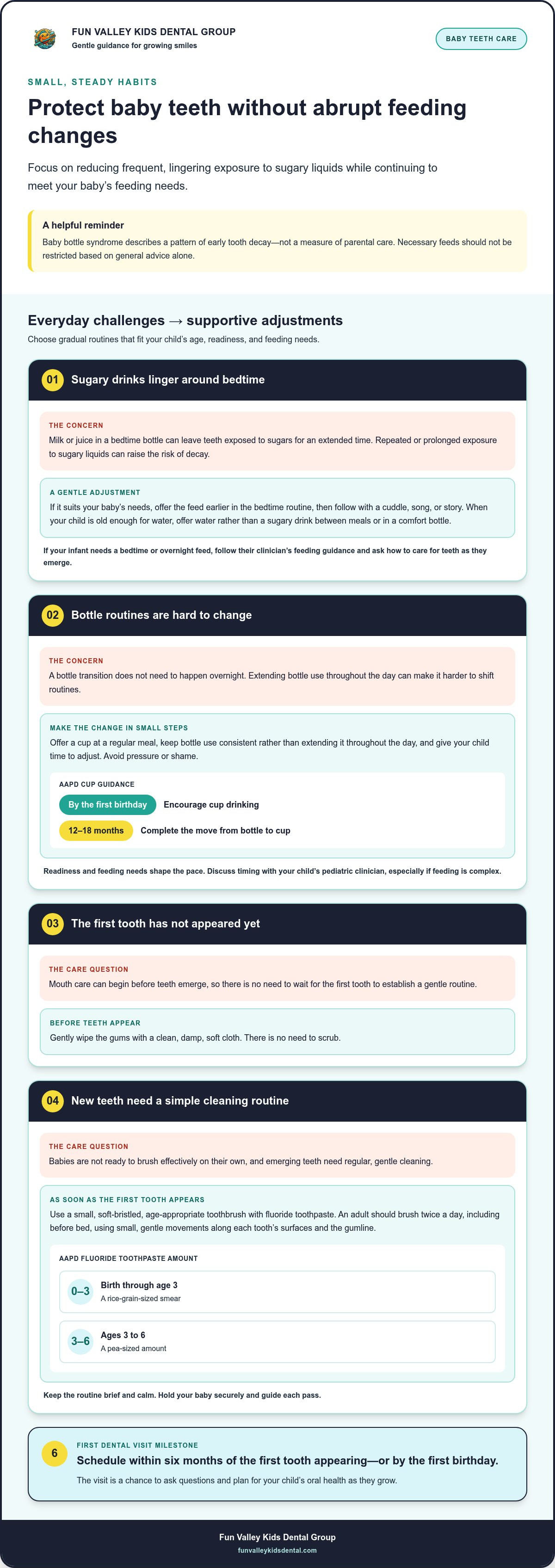
Regularly settling a baby to sleep with a bottle of milk or juice can leave teeth exposed to sugars for an extended time. The American Dental Association’s advice on preventing baby bottle tooth decay explains why bedtime bottle habits matter. When your child is old enough for water, offer water rather than a sugary drink between meals or in a bottle used for comfort. Age and feeding needs matter, so don’t replace or restrict a necessary feed based on general advice alone.
If it suits your baby’s needs, try offering the feed earlier in the bedtime routine, then move on to a cuddle, song, or story before sleep. Make changes gently and consistently. If your infant needs a bedtime or overnight feed, follow their clinician’s feeding guidance and ask how to care for their teeth as they emerge.
How can families make bottle transitions manageable?
A cup transition doesn’t have to happen overnight. The American Academy of Pediatric Dentistry recommends encouraging cup drinking by the first birthday, with the move from bottle to cup completed between 12 and 18 months. Your child’s readiness and feeding needs may shape the pace. Discuss timing with their pediatric clinician, especially if feeding is complex.
Small steps can make a new routine easier to learn. Offer a cup at a regular meal, keep bottle use consistent rather than extending it throughout the day, and give your child time to adjust. Avoid pressure or shame. For more everyday ideas, read this guide to how to prevent cavities in children.
These routines are a practical starting point for preventing baby bottle syndrome, not a substitute for individualized feeding advice. Fun Valley Kids Dental Group provides pediatric dental exams for infants, children, and teens, where you can discuss feeding habits and oral care.
How to Clean Baby Teeth and Gums as They Grow
Oral care can begin before your baby’s first tooth appears. Gently wipe the gums with a clean, damp, soft cloth. When a tooth emerges, switch to a small, soft-bristled toothbrush and fluoride toothpaste. The American Academy of Pediatric Dentistry (AAPD) recommends a rice-grain-sized smear for children from birth through age 3, then a pea-sized amount for ages 3 to 6.
When should parents start cleaning a baby’s mouth?
Before teeth emerge, gently wipe your baby’s gums with a soft, clean, damp cloth. There’s no need to scrub. This simple step helps make mouth care a familiar part of the day.
As soon as the first tooth appears, begin brushing it with a soft-bristled, age-appropriate toothbrush and fluoride toothpaste. Brush twice a day, including before bed, and have an adult do the cleaning. Babies aren’t ready to brush effectively on their own, so stay close and guide each pass.
How should parents brush a baby’s first teeth?
Hold your baby securely and use small, gentle movements to clean each tooth’s surfaces and along the gumline. Keep the routine brief and calm. If your baby wiggles, try brushing while they’re settled in your lap, using a warm, encouraging tone.
Use the right amount of fluoride toothpaste for your child’s age. The AAPD and American Dental Association (ADA) recommend:
Birth through age 3: a smear about the size of a grain of rice.
Ages 3 through 6: a pea-sized amount.
Use fluoride toothpaste, but keep the amount small, especially before your child can spit reliably. An adult should apply the toothpaste and brush or closely assist, so the child doesn’t swallow more than needed. Bring questions about your baby’s oral-care routine to a pediatric dental exam.
For preventing baby bottle syndrome, make daily cleaning manageable: wipe the gums before teeth arrive, then brush twice a day from the first tooth onward with a soft toothbrush and an age-appropriate smear of fluoride toothpaste. Continue supervising as your child grows, and adjust the toothpaste amount at age 3.
When to Ask a Pediatric Dentist About Baby Bottle Syndrome
You don’t have to interpret every change in your baby’s mouth alone. A pediatric dentist can examine your child’s teeth, explain what they see, and discuss prevention in light of your child’s age, feeding habits, and oral-care routine. A checkup can be useful even if you haven’t noticed a concern. It’s a chance to ask questions and plan your next steps for preventing baby bottle syndrome.
What early changes in baby teeth should parents notice?
Look for changes such as white spots or brown or dark areas on a tooth. These can have different causes, and a dental professional can assess them. If you notice a change, note which tooth is affected and whether your baby seems less comfortable or is eating differently. Those details can help guide the conversation without assuming the spot is decay or a reason to panic.
Arrange a dental assessment if you see a change that concerns you. If your child has pain, swelling, or difficulty feeding, contact an appropriate healthcare professional promptly for guidance. These signs don’t identify the cause, but they are reasons to seek advice rather than wait and wonder.
When is a baby’s first dental visit recommended?
The American Academy of Pediatric Dentistry recommends a child’s first dental visit within six months of the first tooth appearing or by the first birthday. This early visit is preventive support, not just a response to a visible problem. A pediatric exam gives you a place to discuss your baby’s teeth and feeding habits, as well as cleaning and fluoride.
For more on this milestone, explore your child’s first dental visit guide. Bring questions or note any changes you’ve seen so the appointment can focus on what matters to your family. Your child’s dental team can explain what needs follow-up and which everyday habits may support healthy teeth as they grow.
If it’s time for your baby’s first checkup, schedule a pediatric dental exam with Fun Valley Kids Dental Group.
Build a Baby Bottle Syndrome Prevention Plan With Your Child’s Dental Team
A simple plan can bring feeding, home care, and professional guidance together without making family life feel like a checklist. Choose steady habits that suit your child’s needs, then bring questions to a pediatric dental visit. As your baby grows, you can adjust the plan as feeding and oral-care routines change.
What can parents bring up at a preventive dental visit?
Describe a typical day, including bedtime feeds, bottle or cup habits, and how you clean your child’s mouth. If you’ve noticed a tooth change, mention its location and whether your child seems uncomfortable or is eating differently. You don’t need a perfect routine or all the answers. These details help make the discussion specific to your child.
You can also ask about:
How to handle feeding and settling at bedtime in a tooth-friendly way.
When and how to adjust bottle or cup habits as your child grows.
Whether your brushing routine and fluoride toothpaste amount suit your child’s age.
What preventive care, such as a dental cleaning or fluoride treatment, may be appropriate.
Every child’s needs are different. During a pediatric dental exam, the dentist can assess your child’s teeth and discuss appropriate options rather than assume every baby needs the same advice or treatment.
How can families keep prevention simple at home?
Keep the routine small enough to repeat: make mindful feeding choices, clean your child’s mouth daily, and bring questions or changes to regular dental visits. A calm, encouraging tone can make brushing feel like a familiar part of the day. As your child grows, adjust the routine to fit their stage and needs.
Fun Valley Kids Dental Group provides pediatric dental exams, cleanings, and fluoride treatments for families in Sun Valley and nearby communities, including Los Angeles, Tujunga, Sunland, Glendale, Burbank, Hollywood, Pacoima, Sylmar, the San Fernando Valley, Pasadena, and North Hollywood. Discuss these preventive services with your child’s dental team as you build a plan for preventing baby bottle syndrome. Explore pediatric dental care at Fun Valley Kids Dental Group and take the next step toward a comfortable, confident start for your child’s smile.
Take the Next Step Toward a Healthy Smile
Protecting your baby’s teeth doesn’t require a perfect routine. Thoughtful feeding habits, gentle daily cleaning, and support from a pediatric dental team can help you build a plan that fits your child as they grow. That’s the heart of preventing baby bottle syndrome: small, steady steps without blame or pressure.
Watch for changes in your child’s teeth, and bring questions about feeding, brushing, or fluoride to a dental visit. Pediatric checkups can support prevention from the first tooth onward. Fun Valley Kids Dental Group cares for infants, children, and teenagers, with preventive services including pediatric dental exams, cleanings, fluoride treatments, and sealants.
Start with one simple habit and build from there. Explore pediatric dental care at Fun Valley Kids Dental Group and book a pediatric dental exam for your child.
Frequently Asked Questions
What is baby bottle syndrome?
Baby bottle syndrome is a familiar term for early childhood caries, or tooth decay in a young child’s primary teeth. The term often refers to decay associated with frequent or prolonged exposure to sugary drinks, including milk, formula, or juice. It doesn’t mean a parent has done something wrong, and bottle use alone doesn’t cause cavities in every child. Gentle daily cleaning and guidance from a pediatric dental team can support preventing baby bottle syndrome.
Can a baby get cavities from a bottle at night?
Frequent or prolonged exposure to milk, formula, or juice during sleep can contribute to tooth decay. These drinks contain sugars, and repeated exposure may affect the teeth over time. Don’t skip a feed your baby needs. Follow your child’s feeding guidance, and ask their clinician how to manage bedtime or overnight feeds while caring for emerging teeth.
When should I start brushing my baby’s teeth?
Start brushing as soon as the first tooth appears, using a small, soft-bristled toothbrush and fluoride toothpaste. The American Academy of Pediatric Dentistry recommends a smear about the size of a grain of rice for children from birth through age 3, then a pea-sized amount from ages 3 to 6. An adult should brush or closely assist, since babies can’t clean their teeth effectively on their own.
Should I put water or milk in my baby’s bedtime bottle?
Water is a tooth-friendly choice for a bottle used for comfort or between meals when your child is old enough for water. Regularly putting a baby to sleep with milk or juice can leave teeth exposed to sugars for a long time. Don’t withhold a necessary feed based on general advice. If your baby needs bedtime or overnight feeding, discuss their needs and oral care with their clinician.
What are the early signs of baby bottle tooth decay?
Possible signs include white spots or brown or dark areas on a tooth. These changes can have different causes, so a dental professional can assess what they mean. If you notice a spot, note which tooth it’s on and whether your child seems uncomfortable or is eating differently. Arrange an assessment for concerning changes, and seek prompt healthcare guidance for pain, swelling, or difficulty feeding.
When should my baby first see a dentist?
The American Academy of Pediatric Dentistry recommends a first dental visit within six months after the first tooth appears or by your baby’s first birthday. This visit is preventive, not only for visible concerns. You can discuss feeding routines, cleaning, fluoride, and questions about your baby’s teeth. Fun Valley Kids Dental Group provides pediatric dental exams for infants, children, and teenagers in Sun Valley.
Does baby bottle syndrome only happen to babies who use bottles?
No. Early childhood caries can affect young children who don’t use bottles, too. “Baby bottle syndrome” is a familiar phrase, but it can make the causes sound narrower than they are. Tooth decay may be influenced by several factors, including repeated exposure to sugary liquids and daily oral-care habits. A pediatric dental exam can help assess your child’s teeth and provide guidance suited to their needs.



Comments