


Signs of a Dental Infection in a Child: A Parent’s Checklist

Updated: Oct 14
What if your child’s “sore tooth” shows up as skipped meals, a grumpy mood, or a swollen cheek instead? Young children may not be able to explain where it hurts, so spotting the signs of a dental infection in a child can feel like detective work. It’s understandable to wonder whether a change is ordinary sensitivity or something that needs prompt attention.
This checklist explains symptoms to discuss with a pediatric dentist, warning signs that need emergency medical care, and useful details to share with your child’s dental team. A symptom alone can’t confirm an infection, but persistent pain, gum or facial swelling, fever, or a pimple-like bump on the gums shouldn’t be ignored.
Pay attention to what has changed and how quickly symptoms are progressing. If your child has trouble breathing or swallowing, or swelling spreading toward the eye or down the neck, seek emergency medical care immediately. For other concerning signs, arrange prompt dental evaluation. Fun Valley Kids Dental Group provides pediatric dental care at its office in Sun Valley, California, serving families from Los Angeles and nearby communities including Tujunga, Sunland, Glendale, Burbank, Hollywood, Pacoima, Sylmar, Pasadena, North Hollywood, and the San Fernando Valley.
Table of Contents
Signs of a Dental Infection in a Child: A Parent’s Checklist
A change in your child’s mouth can be unsettling, but symptoms alone can’t confirm an infection. Tooth pain, swelling, or a change in color can have different causes. Your observations still matter: they help a pediatric dental team understand what’s happening and decide how to assess it.
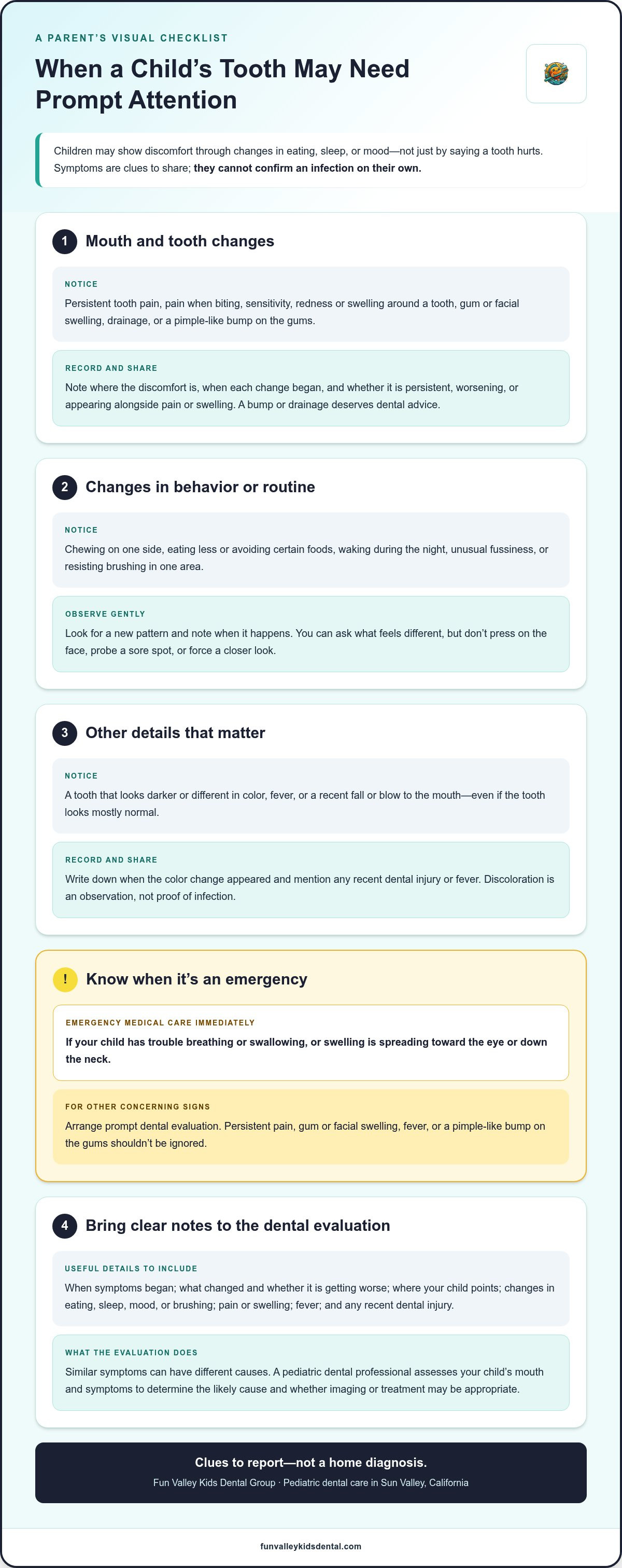
Quick checklist: Note persistent tooth pain, pain when biting, sensitivity, gum or facial swelling, drainage, a bump near a tooth, tooth discoloration, or changes in eating, sleep, mood, or brushing. Record when each change began and whether it’s getting worse.
Mouth and tooth changes to notice
Look for redness or swelling around a tooth, fluid or pus draining from the gums, or a small pimple-like bump. A dental abscess is one type of infection involving tissues around a tooth. The overview of Dental Abscess describes common causes and symptoms. A bump or drainage deserves dental advice, but only an examination can help determine the cause.
Also note a tooth that looks darker or different in color from nearby teeth. Discoloration is an observation, not proof of infection. Write down when you first noticed the change and whether it has spread, become more noticeable, or appeared alongside pain or swelling.
Behavior changes that may suggest discomfort
Children don’t always have the words to point to a sore tooth. A younger child might chew on one side, avoid certain foods, wake during the night, seem unusually fussy, or resist brushing a particular area. These behaviors can have other explanations, but a new pattern alongside mouth changes is worth mentioning to the dental team.
Observe gently. Ask what feels different or notice whether your child favors one side while eating, but don’t press on the face or probe a sore spot. If brushing suddenly becomes difficult, note what your child does and when it happens rather than forcing a closer look.
Focus on what you can see and hear rather than trying to diagnose the cause. Include the tooth or side of the mouth your child points to, if they can show you, and whether symptoms come and go or seem persistent. Mention any recent dental injury, too.
What a Dental Infection Means and Why Symptoms Can Differ
A dental infection occurs when bacteria affect a tooth or nearby tissues. It may involve the soft inner part of a tooth or the area around its root, but “infection” doesn’t describe one exact symptom pattern. Children can react differently, and similar discomfort may have other causes. Understanding how an infection can develop provides context, but a parent can’t confirm the cause from signs alone.
How decay or injury may affect a tooth
Tooth decay starts in the hard outer surface. If it advances, bacteria may reach deeper structures inside the tooth and cause inflammation or infection. A crack or break can also expose inner tooth layers, depending on its location and depth. Not every cavity or damaged tooth is infected, but changes after decay or an injury deserve attention.
A fall or blow to the mouth is important to mention, even if the tooth looks mostly normal. An injury can affect a tooth beneath the surface, and symptoms may vary from child to child. The dental team considers the history alongside an examination to assess what may be happening.
Why a parent cannot confirm infection at home
Tooth sensitivity, soreness, and difficulty chewing can occur with more than one dental problem. A child may also have trouble describing where or how it hurts. Boston Children’s Hospital’s overview of dentoalveolar infections in children explains that infections can involve a tooth and surrounding tissues, which is why professional assessment matters.
Pain intensity alone doesn’t tell you whether an infection is present or how serious a dental problem may be. Mild discomfort may still need assessment, while strong pain can have causes other than infection. A dental professional evaluates your child’s symptoms and mouth, then determines the likely cause and whether further assessment or treatment is appropriate.
Possible signs can guide your next step, but only a dental professional can assess whether a child has an infection. Share what changed and when it began. The signs of a dental infection in a child are clues to report, not a home diagnosis.
Fun Valley Kids Dental Group provides pediatric dental care at its Sun Valley office. The team can assess your child’s symptoms and recommend next steps based on the examination and individual needs.
Can a Child Have a Dental Infection Without Obvious Tooth Pain?
Yes. A child may not clearly say that a tooth hurts, even when something in the mouth needs attention. Younger children may not know how to describe discomfort, while older children may show it through changes in their routines. These changes are clues to share, not proof of infection. The absence of tooth pain doesn’t rule out a dental problem.
Subtle signs when children cannot explain what hurts
Look for patterns rather than relying on one behavior. A child might chew on one side, eat less, avoid hard or cold foods, wake more often, or seem unusually irritable. Age, language, and communication skills affect how a child describes discomfort. These shifts can have many causes, but if they’re new or continue, contact a pediatric dental practice for advice rather than waiting for your child to identify a painful tooth.
This guide can help you choose a next step, but it can’t diagnose an infection. If you’re concerned, don’t use the list of symptoms as a reason to delay an evaluation.
When symptoms call for emergency medical care
Breathing and swallowing come first. If either becomes difficult, or swelling spreads quickly toward the eye or down the neck, seek emergency medical care immediately. These signs need urgent attention beyond a dental symptom checklist. Tell the medical team when the swelling or difficulty began and how it has changed.
Safety first: Trouble breathing or swallowing, or rapidly spreading facial swelling, calls for emergency medical care now. For other concerning mouth symptoms, contact a pediatric dental practice promptly. A dental professional can assess your child and determine the likely cause; a symptom list cannot confirm an infection.
The signs of a dental infection in a child may be less obvious than a complaint of toothache. Take a noticeable change in your child’s eating, sleeping, or behavior seriously, but leave diagnosis to a dental professional. A clear description of what you’ve observed helps the team understand the concern and guide the next step.
What Parents Should Do When They Suspect a Dental Infection
You don’t need to identify the cause before reaching out. Note what has changed, when you first noticed it, and contact a pediatric dental practice for guidance. A few clear details help the team understand your concern and decide how to proceed with an evaluation.
What to note before speaking with a dental team
Write down when the change began, where you notice it, and whether it seems to be worsening or coming and going. If your child can describe the feeling, note their words, even if they’re simple, such as “it feels funny when I chew.” Include recent falls, blows to the mouth, or dental treatment, along with changes in eating or sleep.
If you see a change in the mouth, a photo may help you describe it, as long as taking one won’t delay urgent care. Note whether your child has a fever, is avoiding brushing near one area, or is eating differently. These observations help the dental team understand the situation, but they aren’t a diagnosis.
Observe: What has changed in your child’s mouth or routine?
Record: When did it start, and how has it changed since?
Contact: Share your notes with a pediatric dental practice and ask about the next step.
How to choose the next step
Contact a pediatric dental practice promptly if you suspect an infection or notice new, localized swelling. Explain what you’ve observed, when it began, whether your child has had a recent injury, and whether fever is present. You don’t need to wait for your child to describe a clear toothache before seeking guidance.
For difficulty breathing or swallowing, or facial swelling that’s spreading rapidly, seek emergency medical care immediately. Don’t delay to finish taking notes or to take a photo. The guide “Is it a Dental Emergency? A Parent’s Guide” can offer more context, but severe warning signs need immediate attention.
While arranging care: Don’t squeeze or try to drain a gum bump, and don’t place aspirin directly on a tooth or gum. Avoid giving leftover antibiotics. A dental or medical professional should assess your child and guide medication decisions. Comfort measures at home can’t identify or treat the source of a possible infection.
Fun Valley Kids Dental Group provides pediatric dental care, including emergency dental care, at its Sun Valley office. The pediatric dental team can assess your child’s symptoms and arrange an evaluation.
What to Expect from a Pediatric Dental Evaluation in Sun Valley
An evaluation helps the dental team understand what your child is experiencing and consider the likely cause. Share what you’ve noticed and how the concern has affected your child’s routine. Because similar symptoms can have different causes, the visit focuses on assessing your child rather than diagnosing from a checklist alone.
How the dental team assesses a child’s symptoms
The team may ask when the concern began, whether anything seems to trigger it, and whether your child has had a recent injury or dental treatment. They’ll examine the tooth and nearby areas. Depending on the findings, they may recommend dental imaging to gather more information. Imaging isn’t automatic; the examination helps guide whether it’s appropriate.
This child-focused assessment helps the team determine whether an infection or another dental concern may be involved. You can also ask questions and discuss what the findings mean before considering next steps.
How findings shape possible treatment
Recommendations depend on the tooth’s condition and your child’s individual clinical needs. A tooth-colored filling may be considered for some cavities. Depending on the findings, a white crown or pulpotomy may be appropriate for a damaged or deeply affected baby tooth. If preserving the tooth isn’t suitable, the team may discuss extraction. These are options, not treatments every child needs.
A pulpotomy treats affected tissue inside a baby tooth and may be considered when the rest of the tooth can be preserved. The team can explain the reasoning behind a recommendation and what it involves. Nitrous oxide may also be considered for comfort, depending on your child’s needs, health history, and care plan.
Fun Valley Kids Dental Group provides pediatric dental care at its Sun Valley office. Learn about pediatric dental appointments and what to expect from an evaluation.
Take the Next Step Toward Clarity
You don’t need to be certain what’s causing a change before asking for help. Trust your observations and let a pediatric dental evaluation bring clarity. Even a few notes about what feels different can help you start the conversation and choose a next step for your child.
Fun Valley Kids Dental Group provides emergency pediatric dental care, with recommendations shaped by each child’s examination and needs. Noticing the signs of a dental infection in a child can feel worrying, but you don’t have to sort through every possibility on your own. Contact the Sun Valley team to schedule a pediatric dental appointment.
Frequently Asked Questions
Can a dental infection in a child go away on its own?
No. A child’s discomfort may ease or change, but that doesn’t mean the underlying problem has resolved. A gum bump that drains can also seem less bothersome afterward, yet the cause may still need dental treatment. Don’t use temporary improvement as a reason to cancel an evaluation. The signs of a dental infection in a child deserve professional attention so the source can be assessed and appropriate care recommended.
Can a dental infection spread beyond a child’s tooth?
Yes, an infection can spread into nearby tissues and may become more serious. Increasing facial swelling, fever, or a child seeming increasingly unwell should be reported promptly to a dental professional. If swelling spreads rapidly toward the eye or down the neck, or your child has trouble breathing or swallowing, seek emergency medical care immediately. Don’t wait for a toothache to become severe before responding to concerning changes.
Is a dental abscess in a child contagious?
A dental abscess itself isn’t typically treated like a contagious illness that spreads through casual contact. Still, the bacteria associated with tooth decay can be present in saliva. As a general oral-health precaution, avoid sharing toothbrushes, and don’t put a child’s pacifier in an adult’s mouth before returning it. These steps don’t treat an abscess or replace dental care. Arrange an evaluation if you suspect your child has one.
Can a child have a dental infection without a visible cavity?
Yes. A cavity may be hidden between teeth or beneath a surface that’s difficult to inspect at home, and an injury can affect a tooth without an obvious hole. A tooth may also have changes that aren’t easy to see without a professional examination. Don’t rely on a quick look in the mirror to rule out a problem. Share your concerns and any history of injury with the dental team.
Can a dental infection cause a child to stop eating?
It can make chewing or eating uncomfortable, so a child might eat less, favor soft foods, or avoid biting with one side of the mouth. Reduced appetite can also have other causes, so it doesn’t confirm a dental infection by itself. Notice whether the change appears alongside mouth discomfort, swelling, or disrupted sleep. If your child is refusing food or fluids, contact a dental or medical professional for advice.
Are antibiotics always needed for a child’s dental infection?
No. Antibiotics aren’t needed for every dental infection, and they can’t by themselves remove the source of a tooth problem. A dental professional decides whether they’re appropriate after assessing your child and the signs of infection. Treatment may need to address the affected tooth directly. Don’t give leftover antibiotics or stop a prescribed course without speaking with the prescribing professional, even if your child seems to feel better.
What should I do if a gum bump drains on its own?
Contact your child’s dental practice promptly, even if the bump becomes smaller or discomfort eases after it drains. Drainage doesn’t establish that the problem has cleared. Don’t squeeze, poke, or try to drain the area further. Note when it happened and whether you saw fluid, blood, or a change in swelling, then share those details with the dental team. Seek emergency medical care for breathing or swallowing difficulty or rapidly spreading facial swelling.



Comments