


Signs of Teething in Babies: Symptoms and How to Soothe Them

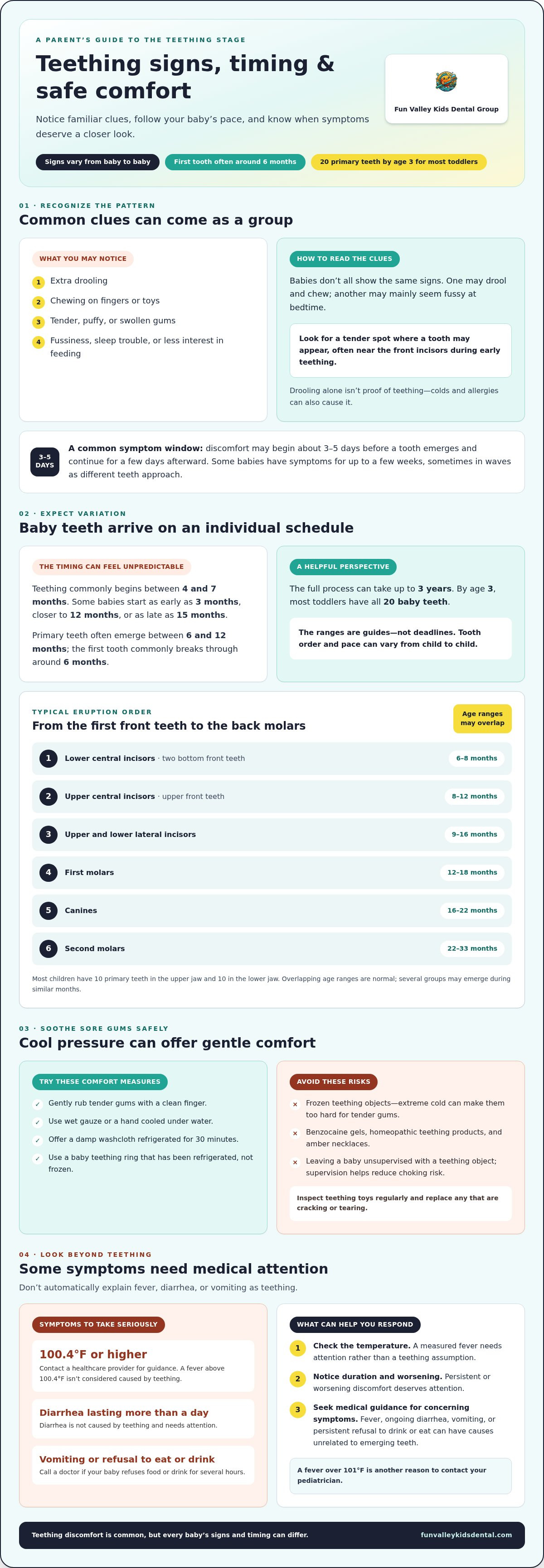
Common signs of teething in babies include extra drooling, chewing on fingers or toys, tender or swollen gums, and fussiness. A first tooth often appears between 4 and 7 months, though timing varies. Discomfort can begin several days before a tooth breaks through and linger for a few days afterward.
It’s natural to wonder whether every cranky moment or change in appetite means a tooth is coming in. These clues can help, but they don’t appear in every baby, and symptoms such as diarrhea or a high fever shouldn’t automatically be blamed on teething.
Here, we’ll cover common behavioral and physical signs, when baby teeth usually arrive, and gentle ways to soothe sore gums. You’ll also learn which symptoms call for medical attention, so you can support your little one with more confidence through this tooth-by-tooth milestone.
Table of Contents
What are the symptoms of teething?
Teething can bring drooling, chewing, tender gums, and fussiness as a tooth moves toward the surface. Symptoms vary, so watching how your baby feels over several days can help distinguish familiar discomfort from signs of illness.
Common Teething Signs
Common teething signs are changes in a baby’s mouth and behavior that may appear as a tooth approaches. Noticing several clues together can help you offer comfort while recognizing symptoms that don’t fit the usual pattern.
Your baby may drool more, chew on fingers or toys, or seem crankier than usual. Swollen or tender gums can make feeding less appealing, and some babies have trouble sleeping. MedlinePlus also lists refusing food and sleep problems as possible signs.
Not every baby shows every sign. One baby might chew toys and drool, while another may mainly seem fussy at bedtime. Colds and allergies can also cause drooling, so saliva alone doesn’t mean a tooth is coming through.
Physical Symptoms and Their Duration
Physical teething signs include changes around the gums, along with drooling and a need to chew. Their timing offers context, but duration matters too: discomfort that persists or worsens deserves attention rather than being assumed to come from teething.
Teething symptoms often begin about 3-5 days before a tooth emerges and may continue for a few days after it breaks through the gum. Some babies experience symptoms for up to a few weeks, and discomfort may come in waves as different teeth approach.
Look for a puffy or tender spot where a tooth may appear, often near the front incisors during early teething. A clean finger can gently rub the gums for comfort. Note when symptoms start and ease; this simple timeline can show whether discomfort follows a brief, tooth-related pattern.
Fever and Symptoms Needing Medical Attention
Fever, diarrhea, and vomiting shouldn’t be casually labeled teething symptoms. Teething doesn’t cause diarrhea, and a fever above 100.4°F isn’t considered caused by teething. If your baby’s temperature reaches 100.4°F or higher, contact a healthcare provider for guidance.
A fever over 101°F is another reason to contact your pediatrician. Diarrhea also needs attention, especially if it lasts more than a day; vomiting is not a reliable sign of teething either. These symptoms can have causes unrelated to emerging teeth.
Pay attention to feeding and drinking, too. If your baby refuses food or drink for several hours, call a doctor. A mild appetite change can accompany sore gums, but persistent refusal, diarrhea, vomiting, or a measured fever calls for a closer health assessment, not simply a teething explanation.
Typical timing of baby teeth eruption
Baby teeth usually arrive in a familiar sequence, but the starting age and pace vary. Knowing the usual milestones helps you follow your child’s development without expecting every tooth on an exact schedule.
When Teething Typically Begins
Teething commonly begins between 4 and 7 months, although some babies start as early as 3 months or closer to 12 months. That range gives parents context for common signs, but age alone doesn’t tell you exactly when a tooth will appear.
Primary teeth often begin emerging between 6 and 12 months, and the first tooth commonly breaks through around 6 months. Some babies may not start cutting teeth until closer to 12 months, while teething can begin as late as 15 months. These different ranges describe typical variation, not a deadline for each baby.
The full process, from the first tooth to the last, can take up to three years. By age 3, most toddlers have all 20 baby teeth. A slower start can still lead to the same set; development unfolds at an individual pace.
The Usual Order of Tooth Eruption
The usual order starts with the lower central incisors, the two bottom front teeth, followed by the upper front teeth. Knowing the general sequence helps you identify which area of the mouth may be changing as new teeth arrive.
Lower central incisors: Usually emerge at about 6-8 months.
Upper central incisors: Usually emerge at about 8-12 months.
Upper and lower lateral incisors: Often arrive at about 9-16 months.
First molars: Typically emerge at about 12-18 months.
Canines: Usually appear at about 16-22 months.
Second molars: Typically arrive at about 22-33 months.
The ranges overlap because several groups of teeth can emerge during similar months. For example, lateral incisors and first molars may appear within overlapping age ranges; a child’s teeth don’t have to follow a perfectly spaced calendar.
Most children have 10 primary teeth in the upper jaw and 10 in the lower jaw. The first two are usually the lower central incisors, though the exact order can vary. Tracking which teeth have appeared can make the journey easier to follow than comparing your baby’s milestones with another child’s.
How can I help soothe my baby while they’re teething?
For relief, offer a refrigerated teething ring or damp washcloth, and gently rub sore gums with a clean finger. Avoid frozen teething objects, benzocaine gels, homeopathic teething products, and amber necklaces, which can pose safety risks.
Safe Relief for Sore Gums
Cool pressure can soothe gum discomfort without applying medication directly to an infant’s gums. Wash your hands, then gently massage the tender area with a clean finger, or use wet gauze or a hand cooled under water.
For another cooling option, refrigerate a damp washcloth for 30 minutes before offering it. A teething ring should be refrigerated, not frozen; extreme cold can make the object too hard for tender gums.
Choose a teething object made for babies, and supervise your child while they use it to reduce choking risk. Inspect toys regularly and replace any that are cracking, tearing, or breaking down. A damaged object can shed loose pieces during chewing.
Cool cloth: Offer the refrigerated, damp washcloth while watching your baby.
Gum massage: Use a clean finger and gentle pressure on the sore spot.
Teething ring: Chill it in the refrigerator, never the freezer.
These simple steps can help soothe discomfort without numbing gels. Stay close while your baby chews, and remove a teething object if it becomes damaged or difficult to hold safely.
Teething Remedies and Products to Avoid
Avoid teething gels or liquids for babies younger than 2 years, especially products containing benzocaine. The American Academy of Pediatrics warns that benzocaine gels can poison babies’ blood cells and interfere with oxygen transport.
Skip homeopathic teething tablets or gels and amber teething necklaces. Necklaces can pose a choking hazard, while tablets and gels raise safety concerns. Frozen rings are also a poor choice because their hard, icy surface may feel uncomfortable against tender gums.
Ask your baby’s doctor before giving pain medicine, especially if your child is younger than 2 years. Medication suitability depends on your baby’s age, health, and symptoms; don’t guess at a dose or use adult products. If cooling and gentle gum pressure aren’t enough, the doctor can guide you on an appropriate option.
Keep the plan simple: use a clean, cool object, supervise chewing, and avoid products that numb the gums. If your baby’s discomfort comes with a fever, vomiting, or diarrhea, don’t assume it’s teething; contact a healthcare professional for guidance.
Drooling, chewing, and gum discomfort
Drooling and chewing can appear as a baby’s gums change during teething. The pattern, timing, and condition of teething toys can help you respond thoughtfully.
Drooling and Gum Discomfort
Extra saliva and tender, swollen gums are physical changes that may accompany teething. Noticing when they appear can help you understand your baby’s comfort and protect irritated skin.
Teething-related drooling may start as early as three or four months, when babies also explore objects with their mouths. Saliva can irritate the skin around the mouth and cause a rash; the irritation comes from drool touching the skin, not from the tooth itself.
Gently dab your baby’s chin and cheeks when saliva gathers instead of rubbing tender skin. Drooling alone doesn’t confirm teething: a cold or allergies can also increase saliva. Consider the whole picture, including gum tenderness and chewing, rather than treating one wet chin as a sure sign.
Chewing and Safe Teething Options
Chewing is a common way babies respond to gum pressure, and an intact teething toy offers an appropriate object to mouth. Choosing and checking toys matters, since supervised use helps reduce choking risks.
Stay close whenever your baby uses a teething toy. Inspect it regularly for cracks, tears, or other signs of damage, and replace a toy that’s deteriorating. A clean, intact toy is easier to monitor than one with loose or damaged parts.
Babies may also chew their fingers, fists, or nearby objects as they explore. Keep small, unsuitable items out of reach and offer a teething toy instead. Supervision remains important even with an item made for teething.
Check condition: Look over teething toys regularly and replace damaged ones.
Watch closely: Stay with your baby while they chew to help prevent choking.
Notice the gums: Tenderness or swelling alongside chewing can provide more context than chewing alone.
A drool rash may develop when saliva sits on the face, while a cold or allergies can explain drooling without teething. If the skin becomes irritated, reduce friction by dabbing gently. Notice whether chewing and gum tenderness occur together instead of relying on drooling alone.
These observations can help you understand your baby’s comfort as new teeth approach. Regular toy checks, close supervision, and attention to gum changes can make this mouth-exploration stage easier to manage.
Common behavioral and physical signs of teething
The signs of teething in babies are easier to interpret as a cluster of changes, not one isolated behavior. Extra drooling, chewing, tender gums, and fussiness may appear as teeth approach, while feeding or sleep patterns may shift, too.
MedlinePlus lists refusing food and sleep problems among possible teething signs. Sore gums, for example, may make settling harder at bedtime, or a baby may briefly turn away from a spoon. These changes can accompany teething, but they don’t prove it’s the cause.
Physical clues include puffy or tender gums, increased saliva, and mouthing fingers or safe objects. A teething rash can develop when drool irritates facial skin; saliva touching the skin causes the irritation, not the tooth itself. Colds and allergies can also increase drooling, so consider the wider picture.
Can teething cause babies to wake more often or eat less? Yes, sore gums may make sleep or feeding temporarily uncomfortable. MedlinePlus includes sleep problems and refusing food among possible signs, but persistent refusal to eat or drink for several hours warrants calling a doctor.
Look for clusters and changes instead of treating each behavior as a diagnosis. A simple note on your phone can help you track your baby’s mood, feeds, sleep, and gum appearance throughout the day.
Mouth: Note tenderness or swelling, especially near the front teeth or central incisors.
Behavior: Record increased fussiness, chewing, or waking compared with your baby’s usual routine.
Feeding: Notice whether your baby pauses, refuses a feed, or accepts a different texture.
Skin: Check whether a rash appears where drool touches the chin or cheeks.
Comfort measures such as a cool washcloth or refrigerated teething rings may help sore gums. Avoid teething gels containing benzocaine. A fever above 100.4°F isn’t considered caused by teething; fever, diarrhea, or vomiting shouldn’t be explained away as tooth-related.
One behavior can have several explanations. A cluster of signs of teething in babies, such as sleep changes alongside tender gums, may fit teething; illness symptoms deserve separate attention. A pediatric dental exam can help assess your child’s teeth and oral development. Schedule a pediatric dental exam if you’d like professional guidance about your baby’s developing smile.
Fun Valley Kids Dental Group: Pediatric Dental Exams
Fun Valley Kids Dental Group provides pediatric dental exams to help families understand a child’s developing teeth and oral health. If you’re unsure whether a sore spot is related to an erupting tooth, or want guidance on caring for new teeth, an exam gives you a chance to discuss your observations and your child’s needs.
Based in Sun Valley, California, the practice also provides dental cleanings, fluoride treatments, and dental sealants as part of children’s preventive care. These visits can support healthy habits as baby teeth emerge and your child’s smile grows.
For questions about your child’s teeth or to arrange a pediatric dental exam, contact Fun Valley Kids Dental Group in Sun Valley.
Make your baby’s next dental visit a confident step
As your baby’s smile changes, small observations can make your next conversation with a dental professional more useful. Note what you’ve noticed and bring your questions along. If the signs of teething in babies leave you unsure about your child’s oral care, a pediatric dental visit offers a chance to discuss your concerns and support healthy habits as their smile grows.
Fun Valley Kids Dental Group offers Pediatric Dental Exams, Dental Cleanings, and Fluoride Treatments for children. These visits can help families build familiarity with dental care and make each new milestone part of a positive routine.
When you’re ready to take that next step, contact Fun Valley Kids Dental Group. Your child’s dental journey can grow one comfortable, confident visit at a time.
Frequently Asked Questions
How long does teething last?
Discomfort around an individual tooth often lasts several days before and after it emerges, though some babies have symptoms for up to a few weeks. The complete journey from the first baby tooth to the last can take up to three years. A short symptom diary can help you see whether unsettled periods line up with new teeth or continue without a clear pattern.
What is teething syndrome?
“Teething syndrome” is a phrase people use for changes they associate with emerging teeth, such as sore gums, drooling, or fussiness. It’s not a reason to assume every symptom has the same cause. Diarrhea, vomiting, or a notable fever, for example, may signal something else. Consider each symptom on its own and seek medical advice for concerning signs rather than grouping them under teething.
When do babies start teething?
Many babies begin teething between 4 and 7 months, but the first tooth can arrive earlier or later. Some babies start around 3 months, while others don’t begin until closer to 12 months. The lower front teeth, called central incisors, commonly appear first. If your baby’s tooth timing differs from a sibling’s, that difference alone doesn’t tell you how the rest of their teeth will develop.
Can I give my baby pain medication for teething?
Ask your baby’s doctor before giving pain medicine, particularly if your child is younger than 2 years. The information here notes that infant acetaminophen may help babies over 2 months, and infant ibuprofen may be used from 6 months. Those ages don’t replace individualized guidance. Never guess a dose; the right choice depends on your baby’s age, health, and the product instructions.
Does a Fever Always Mean Your Infant is Teething?
No. A fever doesn’t prove that a tooth is coming in, and a temperature above 100.4°F isn’t considered caused by teething. Contact a healthcare provider if your baby’s temperature reaches 100.4°F or higher; a fever over 101°F is another reason to call the pediatrician. Watch your baby’s overall condition, too, and don’t dismiss vomiting or diarrhea as teething.
How can you help your child with the discomforts of teething?
Offer a cool, refrigerated teething ring or a damp washcloth chilled in the refrigerator for 30 minutes. You can also gently massage the gum with a clean finger. Keep your child within sight while they use a teething object, and check it for damage. For babies with ongoing discomfort, talk with their doctor before trying medication or another remedy.
Should I use teething gels or tablets?
Avoid teething gels or liquids for babies younger than 2 years, especially those containing benzocaine. The American Academy of Pediatrics warns that benzocaine gels can harm babies’ blood cells and interfere with oxygen transport. Avoid homeopathic teething tablets or gels as well. Amber teething necklaces can create a choking hazard, so choose simple cooling comfort measures instead.
What are the common signs and symptoms of teething in babies?
Common clues include sore or puffy gums, extra drooling, chewing on fingers or objects, and increased fussiness. Some babies may eat less or sleep differently. MedlinePlus also lists refusing food and sleep problems as possible signs. No single behavior confirms a tooth is emerging, so note which changes occur together and whether symptoms settle or persist.



Comments