


Treating a Cut Lip or Tongue After a Fall: What Parents Should Do

Updated: Oct 8
Could a small mouth cut look like a much bigger emergency? After a fall, blood from the lips or tongue can be startling, even when the injury is minor. Treating a cut lip or tongue after a fall starts with a calm check, because the impact may have affected more than soft tissue.
It’s understandable to feel worried, especially when your child is upset and the injury is hard to see clearly. First, look for signs of a more serious head injury, such as loss of consciousness, vomiting, dizziness, or a worsening headache. Then check whether any teeth look chipped, loose, or out of position.
This guide explains how to apply steady pressure to help control bleeding, clean the area gently, and ease swelling. You’ll also learn which symptoms call for urgent medical attention and when a tooth injury or other dental concern needs prompt assessment. With a clear plan, you can take the next right step and help your child feel safer.
Table of Contents
First aid for a child's cut lip or tongue after a fall
Blood can look dramatic when it comes from the mouth, but the amount you see doesn’t always show how serious the injury is. Start with your child, not the cut: check whether they’re responsive and breathing normally. If they’re difficult to wake, struggling to breathe, or badly hurt, call emergency services rather than trying to examine their mouth.
If your child is alert and breathing comfortably, help them settle before you look. Speak softly, explain what you’re doing, and have them sit somewhere stable with you close by. A calm, supported child is easier to assess, and you’re less likely to cause distress by rushing.
A calm first-aid sequence for a mouth cut
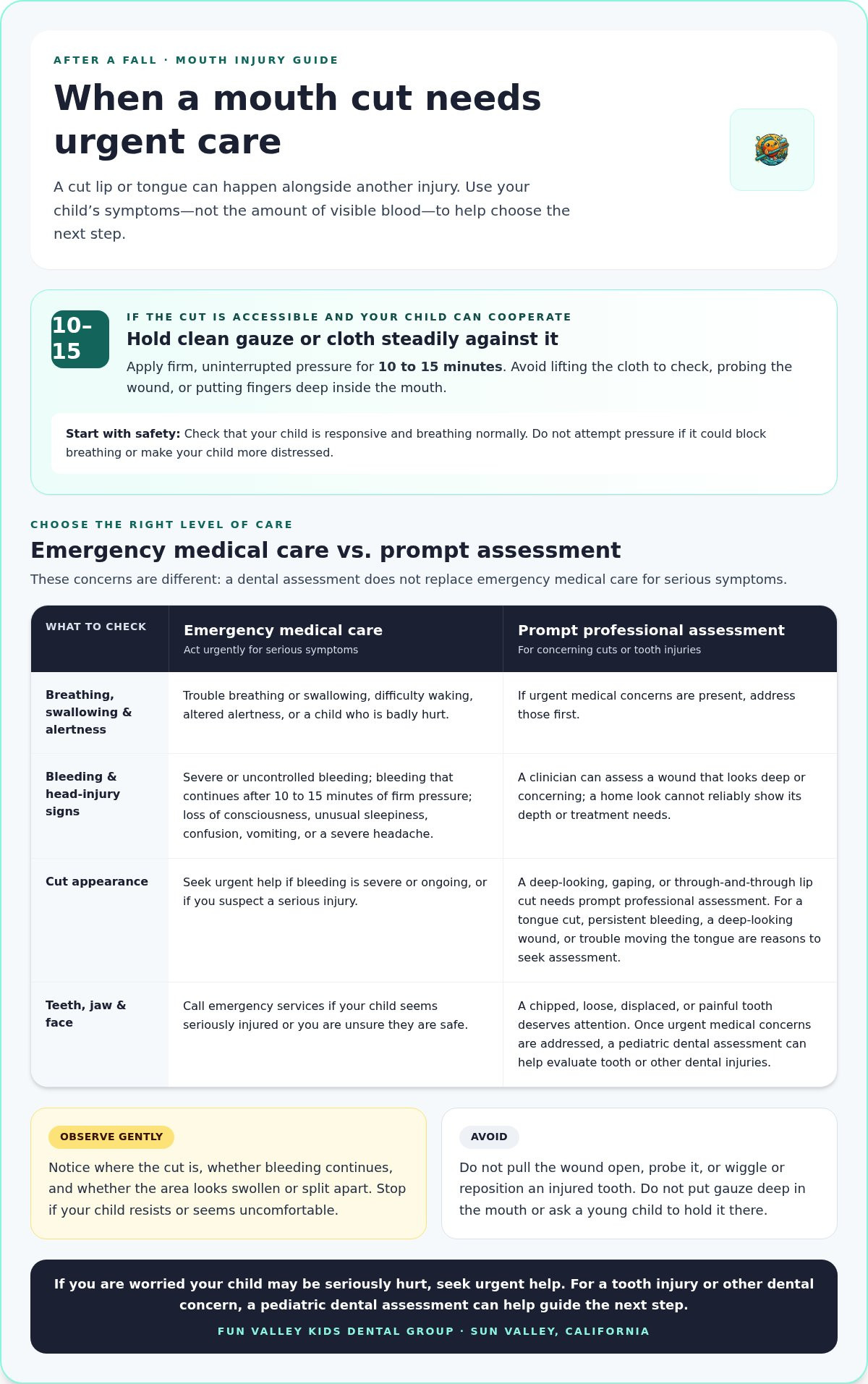
Once your child is settled, check only what you can see safely. If the cut is accessible and your child can cooperate, place clean gauze or a clean cloth gently against it. Apply firm, steady pressure for 10 to 15 minutes. Avoid probing the wound, pulling the lips or tongue apart, or placing your fingers deep inside the mouth.
Try not to lift the cloth to check whether the bleeding has stopped. Repeated checks can disturb a forming clot. Keep talking to your child or offer a quiet distraction while you hold the pressure in place. These general first aid principles support a simple approach: protect your child, take a moment to assess, and avoid actions that could make things worse.
Check responsiveness and breathing first. If your child is alert and able to cooperate, apply uninterrupted pressure to an accessible cut. Seek emergency help for severe bleeding, breathing or swallowing trouble, altered alertness, or suspected serious injury.
If bleeding is severe or continues after 10 to 15 minutes of firm pressure, seek urgent medical care. Don’t force your child to hold still or attempt pressure if doing so would block their breathing or make them more distressed.
Check for other injuries after the fall
Before focusing on the cut, notice how your child is acting and whether they can breathe and swallow normally. Look for possible injuries to the teeth, jaw, or face, too. A tooth that looks chipped, loose, or out of place deserves attention, but don’t try to move it back or test how firmly it’s attached.
Watch for concerning changes after the impact, such as loss of consciousness, unusual sleepiness, confusion, vomiting, or a severe headache. These symptoms may point to an injury beyond the mouth and need emergency medical assessment. If your child seems seriously injured or you’re unsure they’re safe, call emergency services. Once urgent medical concerns are addressed, a pediatric dental assessment can help evaluate tooth or other dental injuries. The next section explains what caregivers can safely observe about cuts in different parts of the mouth.
How lip and tongue cuts differ, and what caregivers can safely observe
A lip cut affects the soft tissue around the mouth, while a tongue cut is an injury to the muscle inside the mouth. The location can affect what you can see and how easily your child can cooperate with an exam. After a fall, either cut may occur alongside an injury to a tooth, jaw, or other facial tissue. Focus on visible clues instead of trying to inspect every part of the wound.
Check only what your child allows comfortably. You can note where the cut is, whether bleeding is continuing, and whether the area looks swollen or split apart. A wound’s appearance at home can’t reliably show how deep it is or determine what treatment it needs. The Children’s Hospital of Philadelphia explains when a cut lip or tongue needs medical attention; a clinician can assess concerns that aren’t clear from a quick look.
What to notice with a cut on the lip
Notice whether the cut is on the outer lip, inside the lip, or near the edge where the lip meets the surrounding skin. A deep-looking, gaping, or through-and-through cut, meaning one that passes from the inside to the outside, needs prompt professional assessment. Don’t repeatedly pull the lip open to get a better view. If your child resists or seems uncomfortable, stop rather than forcing an inspection.
What to notice with a cut on the tongue
Look at the tongue only if your child can open their mouth and cooperate comfortably. Notice whether bleeding persists, the wound looks deep, or your child has trouble moving their tongue normally. These are reasons to seek professional assessment. Don’t put gauze deep into the mouth or ask a young child to hold it there, since they may not be able to do so safely.
A simple observation can help you describe the injury: “The cut is on the inside of the lower lip,” or “The tongue is still bleeding.” Also note any nearby tooth that appears chipped, loose, displaced, or painful. Avoid touching, wiggling, or trying to reposition a tooth. A cut and a dental injury can happen together, and a visible soft-tissue wound doesn’t rule out damage to nearby structures.
As you consider treating a cut lip or tongue after a fall, remember that a home check is only a first look, not a diagnosis. Seek urgent medical care for severe or ongoing bleeding, trouble breathing or swallowing, altered alertness, or signs of a serious injury. For a tooth injury or other dental concern, a pediatric dental assessment can help guide the next step. Families can find pediatric dental care at Fun Valley Kids Dental Group in Sun Valley, California.
When a cut lip or tongue needs urgent medical or dental attention
Use your child’s symptoms and the type of injury to choose the next step. A dental visit can assess an injured tooth, but it doesn’t replace emergency medical care for breathing problems, serious bleeding, or other signs of major injury. If you’re worried your child may be seriously hurt, seek urgent help.
Emergency medical care: Trouble breathing or swallowing, severe or uncontrolled bleeding, altered alertness, loss of consciousness, or suspected serious trauma.
Prompt clinical assessment: A deep, gaping, or through-the-lip cut; bleeding that continues despite firm pressure; or a wound that appears difficult to assess safely.
Dental follow-up: A loose, broken, displaced, or painful tooth, or another concern involving the teeth or mouth after the fall.
Signs that call for emergency medical care
Call emergency services for breathing difficulty, severe uncontrolled bleeding, or suspected serious trauma. Seek urgent assessment as well if your child is unusually drowsy, confused, hard to wake, has lost consciousness, or develops concerning symptoms such as vomiting after the fall. Don’t delay emergency care to inspect the cut or arrange a dental visit.
A mouth wound needs prompt professional assessment if it looks deep or gaping, passes through the lip, or continues bleeding despite steady pressure. A clinician can decide whether the wound needs treatment. Don’t try to judge its depth by pulling the edges apart, and don’t attempt to close it yourself.
When a pediatric dentist may help with follow-up
A fall can affect the teeth as well as the lips or tongue. Arrange pediatric dental assessment for a tooth that looks loose, broken, displaced, or painful, or if you notice another dental concern. Avoid wiggling or repositioning the tooth while deciding where to seek care.
Keep the care pathways clear: urgent symptoms and cuts needing wound treatment call for medical assessment; concerns about teeth may need a pediatric dentist. A dentist’s evaluation doesn’t replace emergency medical care, and a serious medical concern should be addressed first. Fun Valley Kids Dental Group provides pediatric emergency dental care at its office in Sun Valley, California, for dental concerns after a fall.
As you decide on care, describe what you observed, when the injury happened, and whether the bleeding has changed. That information can help the medical or dental team understand the situation. If your child has no emergency symptoms but a tooth may be injured, seek pediatric dental follow-up rather than assuming the injury is only a cut.
How to care for a child’s mouth while a cut heals
Home care comes after you’ve considered urgent symptoms and whether a professional needs to assess the injury. If your child has already been evaluated, follow the instructions they were given. Wound location, age, and ability to cooperate can affect which care steps are appropriate, so don’t force rinsing or other care that distresses your child.
For a cut inside the mouth, a gentle rinse with cool water may help clear the area if your child can safely swish and spit. Stay nearby and keep the rinse simple. Don’t ask a young child to rinse if they might swallow the water or choke, and don’t use alcohol or hydrogen peroxide inside the mouth. If rinsing causes pain or bleeding, stop and seek professional guidance.
A cool compress wrapped in a clean towel may offer comfort when held against the outside of the mouth. Use it briefly, then give the skin a break. Never place ice directly on the wound or inside the mouth. A compress can ease discomfort, but it doesn’t treat a deeper injury or replace an assessment when one is needed.
Keeping eating and drinking comfortable
Offer cool fluids and soft foods if your child can swallow comfortably. Choose options that don’t scrape or sting the sore area, and avoid foods that are spicy, salty, or acidic while the mouth is tender. Let your child eat at their own pace rather than encouraging them to chew through discomfort. If swallowing is painful or difficult, or your child can’t drink, seek professional guidance instead of relying on food changes alone.
Changes to watch for during healing
Keep an eye on the injury and your child’s comfort. Contact a healthcare professional for advice if bleeding starts again, pain worsens, swelling increases, or the wound opens. For non-emergency advice, virtual healthcare services such as AskMyDoc.ca provide an example of how parents can quickly connect with a doctor online to evaluate minor symptoms. New or worsening symptoms deserve attention, even if the cut looked small at first.
Get emergency help immediately for breathing difficulty, trouble swallowing, or changes in alertness. These are not routine healing concerns. If your child’s symptoms change suddenly or you’re unsure whether they’re safe, seek urgent medical care rather than continuing home care.
When treating a cut lip or tongue after a fall, gentle care and careful observation can support comfort, but they can’t confirm that the injury is healing as expected. Follow the examining professional’s instructions, especially if your child also injured a tooth. For a dental concern after a fall, schedule a pediatric dental assessment with Fun Valley Kids Dental Group in Sun Valley.
Choosing a next step for your child’s mouth injury in Sun Valley
After treating a cut lip or tongue after a fall, choose care based on your child’s symptoms and the kind of injury you can see. A cut may need medical assessment, while a tooth that looks damaged or out of place may need a pediatric dental evaluation. These care pathways can overlap, but a dental visit isn’t a substitute for emergency medical care.
Match the concern to the appropriate care
Seek emergency medical care for breathing difficulty, severe bleeding, altered alertness, or suspected serious trauma. For a deep or gaping cut, or bleeding that persists, get prompt professional assessment. A medical professional can evaluate the wound and determine what care it needs. Don’t delay urgent attention to arrange a dental visit first.
Emergency symptoms or serious trauma: Call emergency services or seek emergency medical care.
A cut needing wound assessment: Seek prompt medical guidance, especially if it appears deep or won’t stop bleeding.
A possible tooth injury: Arrange pediatric dental assessment if a tooth is loose, broken, displaced, or painful.
A reassuring next step for Sun Valley families
Not every lip or tongue cut needs a dental appointment. If your child’s concern is limited to a cut, follow the medical guidance appropriate to the wound. If you notice a tooth injury or another dental concern, a pediatric dentist can assess that part of the injury and help you understand the next step.
Fun Valley Kids Dental Group provides pediatric emergency dental care for dental concerns, including injuries affecting teeth. The practice is located in Sun Valley and serves families from nearby communities, including Los Angeles, Tujunga, Sunland, Glendale, Burbank, Hollywood, Pacoima, Sylmar, Pasadena, and North Hollywood.
As you decide what to do, keep your child comfortable and focus on the concern that needs attention first. If there are serious symptoms, seek emergency medical care. If the immediate concern is a tooth or another dental injury, contact Fun Valley Kids Dental Group about pediatric dental care in Sun Valley. A calm, clear next step can help you move forward without expecting a dental visit to replace medical care.
Take the next step with confidence
A fall can leave a child shaken, even after the immediate moment has passed. Offer comfort, give them time to settle, and let them know you’re there to help. Your calm presence can make the next decision feel more manageable for both of you.
Treating a cut lip or tongue after a fall can involve more than watching the sore spot. If a dental concern remains once urgent medical needs have been addressed, a pediatric dental evaluation can help you understand what attention may be appropriate. You don’t have to figure out every detail on your own.
For a dental concern after your child’s fall, contact Fun Valley Kids Dental Group in Sun Valley to schedule a pediatric dental assessment. The team can help your family take a thoughtful next step after a dental injury.
Frequently Asked Questions
Can a small cut in a child’s mouth bleed a lot?
Yes. The lips and tongue have a rich blood supply, so even a small cut can leave noticeable blood in the mouth. That can look frightening, but the amount of blood alone can’t tell you how deep the injury is. Watch how your child is acting and whether the bleeding slows with steady pressure. If you’re unsure about the wound or bleeding continues, seek professional guidance.
Do all tongue cuts need stitches?
No. A clinician needs to assess the wound to decide whether it needs closure or other treatment. That decision can depend on its depth, edges, location, and bleeding, and a quick look at home may not show enough. Don’t try to judge by stretching the tongue or pressing into the cut. If it looks deep, stays open, or keeps bleeding, arrange prompt medical assessment.
Should I check my child for a head injury after a fall?
Yes. A fall that causes a mouth injury can also affect the head, so notice changes in your child’s behavior as well as visible injuries. Dizziness, nausea, vomiting, a headache, unusual confusion, or loss of consciousness needs urgent medical attention. If your child is hard to wake or seems seriously unwell, seek emergency care. Don’t focus only on the mouth while concerning symptoms are present.
Can my child go back to school or sports after cutting their mouth?
Let your child’s condition guide the decision. If bleeding has stopped, they feel well, and no medical assessment is needed, ordinary activities may be more comfortable than sports at first. Don’t send them to play while bleeding, significant pain, dizziness, or other concerning symptoms continue. If a clinician has assessed the injury, follow their activity guidance, especially if the fall may have involved a head injury.
What if my child’s tooth is loose after the fall?
Don’t wiggle the tooth or try to push it back into place. A loose tooth after a fall needs prompt dental advice, whether it’s a baby tooth or an adult tooth. Tell the dental team which tooth is affected and whether your child has pain or trouble biting. If there are also serious symptoms, such as breathing difficulty or altered alertness, seek emergency medical care first.
Can I use a saltwater rinse for a child’s mouth cut?
A gentle warm saltwater rinse may be an option during healing if your child is old enough to swish and spit reliably. Mix one-half teaspoon of salt into one cup of water, and use the rinse after meals if it feels comfortable. Don’t use it for a child who may swallow or choke on it, and stop if it causes pain or bleeding. Follow any clinician’s specific instructions.
What should I do if the cut starts bleeding again?
Have your child sit calmly and, if they can cooperate safely, place clean gauze against the accessible cut with steady pressure. Keep the pressure in place rather than lifting it repeatedly to check. If bleeding is severe, seek emergency care. If it doesn’t settle after 10 to 15 minutes of firm pressure, get urgent medical assessment. Don’t put gauze deep in the mouth or ask a young child to hold it there.



Comments