


What Happens During a Pulpotomy? A Parent's Guide to Your Child's Smile Adventure

What if saving your child's primary tooth was as simple as a 30-minute adventure? Many parents feel a wave of worry when they hear the term "baby root canal," often fearing discomfort or questioning why a temporary tooth needs such a specialized procedure. It's completely natural to want the quickest and most comfortable path for your little hero. At Fun Valley Kids Dental Group, we prioritize partnership and clarity to help alleviate those concerns from the very first visit.
In this guide, you'll discover exactly what happens during a pulpotomy and how this gentle treatment protects your child's dental development. We use modern, bioactive materials like Mineral Trioxide Aggregate (MTA) that boast success rates as high as 95% for saving treated teeth according to 2026 clinical standards. You'll learn about our "magic air" comfort options, the clinical steps we take to remove "sugar bugs," and the simple aftercare tips that ensure a sparkling recovery. Our goal is to provide a clear understanding that builds confidence in your family's dental health journey.
Key Takeaways
Understand how preserving a baby tooth acts as a natural space maintainer for your child's future adult smile.
Learn exactly what happens during a pulpotomy to remove "sugar bugs" while keeping the healthy roots of the tooth alive.
Discover the "fear-free" comfort tools we use, such as "magic air," to ensure the procedure is a positive adventure for every child.
Get a practical recovery checklist for the first 24 hours to manage the "numb" phase and choose the best soothing snacks.
See why families across the San Fernando Valley trust Fun Valley Kids Dental Group as their specialized pediatric dental home.
Table of Contents
What is a Pulpotomy? Understanding the 'Baby Root Canal' Adventure
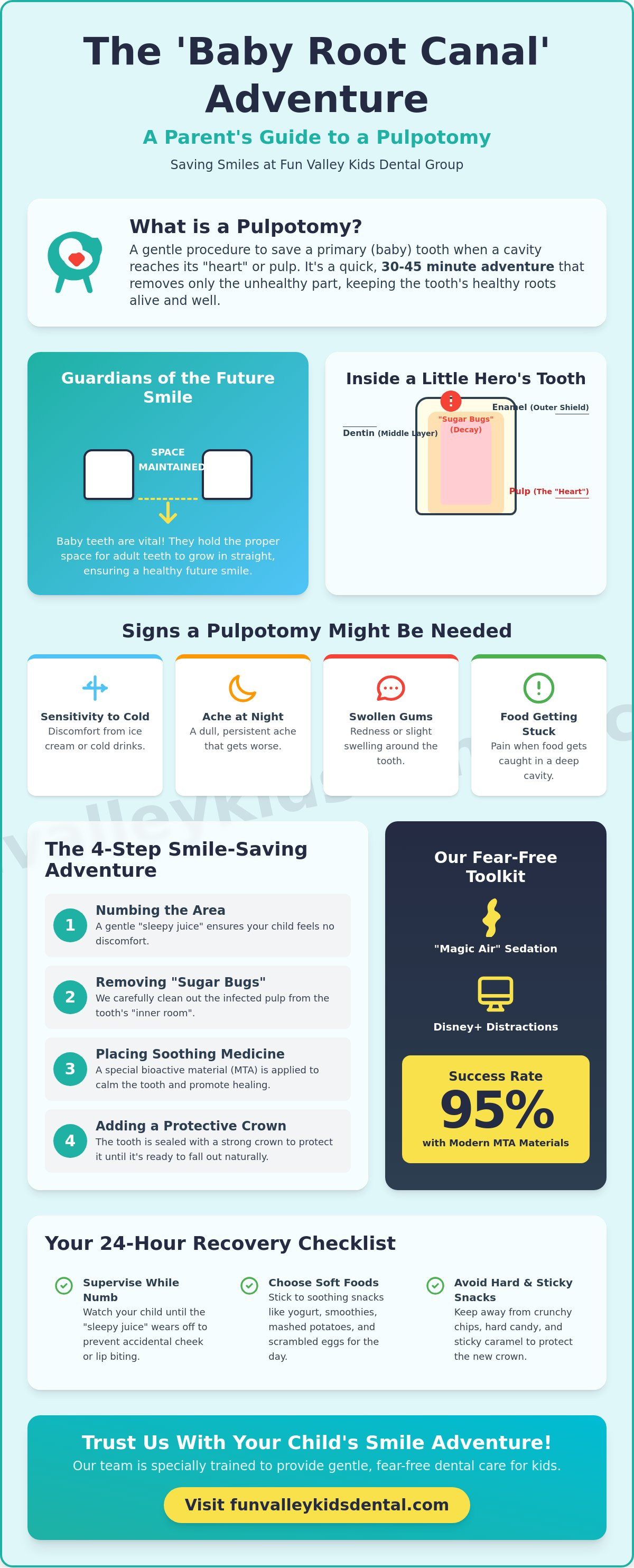
A pulpotomy is a specialized, gentle treatment designed to save a primary tooth when a cavity gets a little too close to the "heart" of the tooth. You might hear this procedure referred to as a "baby root canal" by other parents or dental professionals. While that nickname sounds a bit intense, the process is actually quite simple and much faster than the adult version. Our main goal is to keep your child's natural tooth healthy and in place until the Tooth Fairy is ready for her scheduled visit. Saving these teeth is vital because they act as natural space maintainers for the adult teeth waiting under the gums.
When we talk about What is a Pulpotomy?, we are describing a procedure that focuses only on the top portion of the tooth's internal tissue. Unlike an adult root canal, which involves cleaning out the entire root system, we only remove the part of the pulp that has been affected by decay. This allows the healthy roots to stay alive and keep the tooth stable. Understanding what happens during a pulpotomy can help turn a moment of uncertainty into a confident step forward in your child's dental health journey.
The Anatomy of a Little Hero's Tooth
To understand why this procedure is so helpful, it helps to look at how a tooth is built. Every tooth has a hard outer shield called enamel and a middle layer called dentin. Deep inside these layers sits the pulp. We like to call this the "inner room" or the "heart" of the tooth. This space is filled with tiny blood vessels and nerves that help the tooth grow. When "sugar bugs" or bacteria travel through the enamel and dentin, they can eventually reach this inner room. If the bacteria move in, the pulp becomes inflamed and uncomfortable. A pulpotomy is essentially a deep cleaning for that inner room, removing the "grumpy" part of the nerve so the rest of the tooth can stay happy and healthy.
When is a Pulpotomy Recommended?
We usually recommend this adventure when a cavity is too deep for a standard tooth-colored filling but has not yet caused a full infection in the roots. You might notice your little hero showing signs of discomfort, such as:
Sensitivity to cold treats like ice cream or juice.
A dull ache that seems to get worse at night.
Redness or slight swelling in the gums around a specific tooth.
Food getting stuck in a deep "hole" that causes immediate pain.
At our Sun Valley office, we use digital X-rays to see exactly what happens during a pulpotomy evaluation. These images show us if the decay has reached the pulp chamber. If the roots still look strong and healthy on the X-ray, a pulpotomy is the perfect way to stop the "sugar bugs" in their tracks without having to pull the tooth. This proactive care ensures your child can continue chewing and speaking clearly as they grow.
Step-by-Step: What Happens During a Pulpotomy Procedure?
We believe that every dental visit should feel like a victory for your child. If you are curious about what happens during a pulpotomy, the process is designed to be as swift as it is gentle. Most of these smile adventures are completed in under 45 minutes, ensuring your little hero doesn't have to sit still for too long. Our team acts as "tooth explorers," carefully removing "sugar bugs" while keeping your child entertained and relaxed throughout the entire visit.
Creating a Comfortable Environment
Safety and comfort are our top priorities at Fun Valley Kids Dental Group. We often use nitrous oxide sedation, which the children lovingly call "magic air," to help them feel light and silly. This helps alleviate any jitters before we even begin. To keep the atmosphere lighthearted, we use child-friendly terms like "numbing jelly" and a "tooth raincoat" to describe our professional tools. We even have Disney-themed distractions playing in our treatment rooms to keep their imagination busy while we work on their sparkle. If you have questions about our comfort menu, feel free to chat with our friendly team today.
The Clinical Steps Made Simple
This simple breakdown explains exactly what happens during a pulpotomy from start to finish. We follow the latest clinical guidelines from the American Academy of Pediatric Dentistry to ensure the highest success rates for your child's primary teeth. The procedure follows four clear, easy steps:
Step 1: Numbing the Area. We apply a gentle "sleepy juice" to the specific tooth. Your child won't feel any discomfort, just a soft tingle as the tooth goes to sleep for its big cleaning.
Step 2: Removing the Decay. Our tooth explorer removes only the "grumpy" part of the pulp located in the crown. We leave the healthy roots completely alone so they can continue to support the tooth naturally.
Step 3: Applying Healing Medicine. We place a special medicament over the remaining healthy pulp. This bioactive material acts like a protective bandage that keeps the roots strong and prevents future "sugar bug" invasions.
Step 4: Placing the Crown. To finish the adventure, we protect the tooth with a tooth-colored crown. This restoration provides a durable seal that withstands all the chewing and playing your child does every day.
By the time the "magic air" wears off, your child's tooth is fully repaired and ready for more adventures. This streamlined approach ensures that we preserve the tooth's vitality while maintaining a positive association with the dentist. It's a quick, effective way to keep your child's smile on the right track.
Pulpotomy vs. Pulpectomy vs. Extraction: Choosing the Right Path
Choosing the right path for your child's dental health depends entirely on how far the "sugar bugs" have traveled. While we always aim for the most conservative treatment, our priority is keeping your little one's smile functional and pain-free. When you understand what happens during a pulpotomy, you can see why it's often the "Goldilocks" solution. It is more thorough than a simple filling but much less invasive than a full extraction or a pulpectomy. We use this procedure to stop decay in its tracks while preserving the healthy parts of the tooth that your child still needs for chewing and speaking.
Why We Avoid 'Just Pulling It'
It's a common myth that baby teeth don't matter because they eventually fall out. In reality, these tiny teeth serve as essential placeholders for adult teeth. If we pull a tooth too early, the neighboring teeth often drift into the empty space. This shifting can block the permanent tooth from growing in correctly, which often makes kids orthodontics much more complicated and expensive later. Beyond the physical space, keeping a natural smile helps a child feel confident during their daily social adventures. We view extraction as a last resort, reserved only for cases where the tooth cannot be saved due to extreme damage or a full root infection.
Pulpotomy vs. Pulpectomy: What's the Difference?
The main difference lies in how deep the cleaning needs to go. A pulpectomy is essentially a full root canal for a primary tooth. We choose this path when the "sugar bug" infection has moved past the crown and deep into the roots. Our high-tech digital imaging helps us make this decision with clinical accuracy, ensuring we only do what is necessary. In contrast, a pulpotomy is a partial pulp removal aimed at tooth preservation, focusing only on the top chamber while leaving the roots untouched.
According to 2026 clinical data, a partial pulpotomy has a success rate of 91% to 95% in preserving teeth with deep decay. This high success rate is why we prefer this adventure over more drastic measures. By saving the healthy roots, we ensure the tooth remains stable until it's naturally ready for the Tooth Fairy. We always walk you through the X-rays so you can see exactly what happens during a pulpotomy and why we're recommending this specific path for your child's smile. Our goal is a fear-free experience that sets the foundation for a lifetime of happy dental visits.
Aftercare and Recovery: Helping Your Little Hero at Home
The adventure doesn't end when you leave our Sun Valley office. While you now understand what happens during a pulpotomy in the dental chair, the next few hours are vital for your child's comfort. The "sleepy juice" we use to keep the experience fear-free typically lasts between 2 and 3 hours after the procedure. During this time, your little hero's cheek, lip, and tongue will feel a bit silly and numb. It is very important to watch them closely so they don't accidentally bite or chew on these areas while they lack sensation.
Most children feel back to their energetic selves quite quickly. You can manage any mild tenderness with parent-approved, over-the-counter options like acetaminophen or ibuprofen. We recommend serving soft, cool foods for the first 24 hours to keep the treated area happy. Think of this as a special "treat day" featuring yogurt, smoothies, applesauce, or mashed potatoes. These cool textures feel incredibly soothing on the gums and ensure the new crown stays perfectly in place while the healing medicine does its work.
The First 24 Hours: A Recovery Checklist
To ensure a smooth transition from the dental office to home, follow this simple checklist for the first day of recovery:
Active Monitoring: Keep a close eye on your child until the numbness completely fades to prevent accidental lip or cheek injuries.
Soothe with Coolness: Offer chilled snacks like pudding or cold milk. Avoid hot soups or crunchy snacks that could irritate the site.
Gentle Sparkle: You should continue brushing their teeth tonight, but be extra gentle around the new crown. Avoid using an electric toothbrush on that specific spot for the first 24 hours.
Hydration: Encourage plenty of water, but skip the straws for the first day, as the suction can sometimes be uncomfortable.
Long-Term Care for a Restored Tooth
A pulpotomy is a powerful tool for saving a tooth, but it works best when paired with a great home routine. Now is the perfect time to reinforce the importance of preventing cavities through consistent brushing and flossing. While the new tooth-colored crown is very strong, it's best to avoid extremely sticky candies like taffy, caramels, or gummies. These treats can sometimes tug on the restoration during a vigorous chew. Regular check-ups every six months allow us to monitor the site and ensure the "baby root canal" is still supporting your child's healthy growth.
If you notice a fever, unusual swelling that lasts beyond the first day, or if the crown feels loose, contact our Sun Valley office immediately so we can ensure your child's smile stays on the right track.
Why Sun Valley Parents Trust Fun Valley Kids Dental for Gentle Care
Families throughout the San Fernando Valley, including our neighbors in Burbank and Glendale, choose Fun Valley Kids Dental Group because we've turned the traditional dental visit into a destination for discovery. Dr. Shukan C. Kanuga leads our team with a passionate commitment to "fear-free" pediatric care, ensuring that every child feels like the hero of their own story. We operate as a true "dental home," which means we focus on building a foundation of trust that lasts from your child's first tooth all the way through their teenage years. Our practice is a welcoming community hub where clinical authority meets whimsical warmth, making even complex treatments feel like just another part of the adventure.
We understand that parents in our valley want the best for their children's health without the stress of a clinical, cold environment. That's why we've designed our space to be vibrantly engaging. From the moment you walk through our doors, your child is greeted by a Disney-themed adventure that helps lower heart rates and spark imagination. This playful spirit isn't just for show; it's a vital part of our medical philosophy. When children are relaxed and happy, they're more receptive to care, which leads to better outcomes and a lifetime of positive associations with oral health.
A Fear-Free Environment for Every Child
Our team utilizes the "tell-show-do" method to guide our curious patients through their appointments. This technique is especially helpful when explaining what happens during a pulpotomy to a child who might be feeling a little nervous. We use child-friendly language and physical demonstrations with our tools to demystify the process. By showing them the "tooth raincoat" or the "magic air" before we use it, we replace fear of the unknown with a sense of participation. This empowering approach helps children feel in control of their own smile journey.
Beyond the emotional comfort, we prioritize the highest quality materials for every restoration. We specialize in gentle, tooth-colored restorations that look and feel completely natural. Whether your child needs a simple filling or a protective crown, we ensure the results are as beautiful as they are functional. Our "fun-first" philosophy ensures that your child leaves our office with a sparkle in their eye and a happy smile on their face.
Schedule Your Child's Smile Consultation Today
Proactive care is the best way to keep your child's smile on the right track and avoid the need for emergency dental care down the road. If you've noticed your child complaining of a toothache or sensitivity, don't wait for the "sugar bugs" to travel deeper into the tooth. We make it incredibly easy to join the Fun Valley family and start your child on a path toward lifelong dental health.
Our team is ready to welcome you into our dental home and provide the specialized care your family deserves. We invite you to see for yourself why so many parents trust us with their children's most precious assets. Book your child's adventure at Fun Valley Kids Dental Group today!
Your Partner in a Lifetime of Happy Smiles
Choosing to save your child's tooth is a decision that protects their dental development for years to come. By opting for this gentle repair instead of an early extraction, you ensure their adult teeth have the space they need to grow in correctly. Clinical data from May 2026 shows that pulpotomies maintain a success rate of up to 95% when using bioactive materials to preserve the tooth's vitality. Understanding exactly what happens during a pulpotomy allows you to replace worry with confidence, knowing your little one is in expert hands.
At Fun Valley Kids Dental, Dr. Shukan C. Kanuga and our team specialize in making these moments feel like a Disney-themed adventure. Our Sun Valley office offers safe nitrous oxide sedation to keep every visit fear-free and comfortable for our patients. We're here to be your "dental home," providing the specialized care your family deserves in a warm, welcoming environment. We look forward to celebrating every sparkle and milestone with you.
Start Your Child's Smile Adventure-Schedule a Consultation Today!
Frequently Asked Questions
Does a pulpotomy hurt for a child?
No, your child won't feel pain during this procedure. We use a gentle local anesthetic to numb the specific tooth and often provide "magic air" to keep them completely relaxed and happy. Most children describe the sensation as a light tingle or a "sleepy" feeling rather than anything uncomfortable.
How long does a pulpotomy procedure typically take?
A typical pulpotomy adventure takes about 30 to 45 minutes to complete from start to finish. This timeframe allows our team to be thorough while ensuring your little hero doesn't have to sit still for too long. We work efficiently to get your child back to their normal play schedule as quickly as possible.
Is a pulpotomy safe for toddlers and young children?
Yes, this procedure is incredibly safe and is the standard of care recommended by the American Academy of Pediatric Dentistry. It's a routine way to save a toddler's tooth and prevent the spread of "sugar bugs" to other parts of the mouth. We tailor every step to the specific age and comfort level of your child.
What happens if we choose not to do a pulpotomy?
Choosing not to treat deep decay can lead to a painful infection or a dental abscess. If the bacteria continue to travel, the tooth may eventually need to be pulled entirely. This can cause shifting in the surrounding teeth and lead to more complex dental issues or crowding as your child's adult smile develops.
Will my child need a crown after a pulpotomy?
Yes, a tooth-colored crown is almost always necessary to protect the tooth after the "inner room" has been cleaned. The crown provides a durable seal that prevents future bacteria from entering the pulp chamber. It also strengthens the tooth so your child can chew and play without any worries about the tooth breaking.
Can a pulpotomy be done on a permanent tooth?
A pulpotomy can be performed on a permanent tooth, especially if the roots are not yet fully developed. This is often called a partial pulpotomy for apexogenesis. It helps the permanent tooth continue to grow strong roots even if it has experienced deep decay or a minor injury during a playground adventure.
How much does a pediatric pulpotomy cost in Sun Valley?
In 2026, the cost of a pediatric pulpotomy generally ranges from $75 to $350 per tooth, though complex cases can reach up to $700. Many insurance plans through providers like Covered California offer co-pays between $35 and $60. We always provide a clear estimate before starting any smile adventure so there are no surprises.
What is the success rate of a baby root canal?
The success rate for this procedure is very high, often reaching between 91% and 95% when modern bioactive materials are used. By understanding what happens during a pulpotomy, you can feel confident in this choice. It's a highly reliable way to keep a primary tooth healthy until it is ready to fall out naturally for the Tooth Fairy.



Comments