


What to Do If a Braces Wire Is Poking: A Parent’s Guide

Your child takes a bite of dinner, then winces as a braces wire scrapes their cheek. It’s unsettling to see them uncomfortable, and you may wonder what to do if a braces wire is poking before you can reach the orthodontic team.
A poking wire is a common braces problem. Simple, gentle steps may ease irritation temporarily, but home care should protect your child’s mouth, not involve risky attempts to fix or cut the braces.
This guide explains how to use orthodontic wax, which signs call for prompt professional attention, and what details to share when you contact the orthodontic team. These steps can help you plan a safe next move for your child.
Table of Contents
What to Do First When a Braces Wire Is Poking
A wire rubbing the cheek or gum can make a child uncomfortable and understandably worried. Start with a calm voice and a gentle check. Knowing what to do if a braces wire is poking can help you protect the irritated spot while you arrange guidance from the orthodontic team. A wire or bracket may look out of place, but don’t force, pull, or sharply bend it. That could increase irritation or damage the braces.
Help your child stay calm. Reassure them that you’ll look together and take things one step at a time. Ask them to point to where they feel rubbing or describe when they notice it.
Look gently. Use good lighting and ask your child to open their mouth comfortably. Check whether a wire end or bracket appears displaced, but don’t probe a sore spot or tug on anything.
Protect the irritated area. If you have orthodontic wax, use it as directed to cover the spot that’s rubbing.
Contact the orthodontic team. Explain what you see and how your child feels, then ask what next step is appropriate.
How to look at the wire without making the irritation worse
Let your child guide the check. The wire may be touching the inside of a cheek, the gum, or another area. Good light can help you see whether a wire end or bracket looks displaced without repeatedly moving the lip or cheek. Braces are part of orthodontic treatment, which uses appliances to guide tooth position. Don’t pull on a wire to test whether it’s loose.
If your child can’t open comfortably, seems distressed by the examination, or you can’t see the area clearly, stop rather than forcing a closer look. You don’t need to diagnose the problem at home. Your observations can help the orthodontic team understand what’s happening.
A temporary comfort step while arranging follow-up
Orthodontic wax is a temporary barrier, not a repair. To use it, wash your hands, gently dry the area as much as your child can tolerate, and place wax over the irritating spot according to the package directions. Avoid pressing hard against a sore area. Wax may reduce rubbing for a while, but it won’t secure a loose bracket or fix a broken or shifted wire.
Make a brief note of when the irritation began and whether it’s getting worse. Include where the wire is rubbing and whether you can see a change in the braces. These details give the orthodontic team a clearer starting point when you call. Until you receive guidance, leave the wire and bracket in place rather than attempting a home repair.
How to Tell Whether a Poking Braces Wire Needs Prompt Attention
A little rubbing can leave a tender spot, but not every poking wire needs the same response. If your child has mild irritation and is otherwise comfortable, contact the orthodontic team for guidance and follow-up. More concerning signs, such as significant pain, persistent bleeding, swelling, or an injury to the mouth, call for prompt professional assessment. Don’t wait for routine follow-up if symptoms are worsening or your child is struggling to eat or speak.
Temporary relief can ease rubbing, but only an orthodontic professional can assess whether a damaged appliance needs attention. An online article can’t examine your child, diagnose damage, or determine the right timing for care in their individual situation. If you’re unsure, describe what you see and how your child feels to the orthodontic team and ask what to do next.
Symptoms parents should describe when seeking advice
Clear details help the team understand the concern. Notice where the wire is rubbing, whether it appears to have shifted, and whether a bracket looks loose. Explain if your child has pain, swelling, bleeding, or trouble eating or speaking. Mention whether the wire continues to bother them after a temporary comfort measure and whether symptoms are staying the same or getting worse.
Location: Point out the sore spot, such as the inside of the cheek or gum.
Visible changes: Describe any wire movement or bracket that appears loose or out of position.
Symptoms: Share the level of discomfort, any bleeding or swelling, and changes in eating or speaking.
Timing: Say when the irritation began and whether it’s changed since then.
These observations don’t need to be technical. Your child’s own words, such as “it scratches when I talk,” can be useful. The American Dental Association’s overview of orthodontics explains the purpose of orthodontic treatment, but it can’t assess a particular wire or injury.
When a wire fragment may require urgent help
If your child has difficulty breathing or you suspect they inhaled a piece of wire, seek immediate medical help. Treat breathing difficulty as an emergency. Don’t reach into the mouth or throat to try to retrieve a fragment. If you think your child swallowed a piece but they’re breathing normally, promptly contact a medical professional for advice. Don’t try to make them bring it back up or retrieve it yourself.
For orthodontic guidance about a wire that continues to irritate your child, contact Fun Valley Kids Dental Group’s orthodontic team at its Sun Valley, California office. The team can consider your description and your child’s individual clinical needs when advising on follow-up.
Orthodontic Wax, Gentle Repositioning, or Waiting: Compare Safe Options
For a wire that’s irritating your child’s mouth, choose a temporary step that doesn’t risk changing or damaging the braces. Orthodontic wax may create a comfortable buffer. Waiting while you arrange follow-up may be reasonable if symptoms are mild, but it won’t resolve a wire or bracket that has shifted. Only move a wire if your orthodontic team has specifically shown you how to do so.
When orthodontic wax may help temporarily
Wax can cover a small area that’s rubbing against the cheek or gum, offering a temporary barrier while you arrange follow-up. Follow the product packaging for application, and keep the step simple. Wax may make contact with the wire more comfortable, but it doesn’t treat a cut or sore and won’t correct the cause of the irritation.
If wax doesn’t stay in place or your child remains uncomfortable, don’t keep pressing or packing it into a sore area. Contact the orthodontic team and describe what’s happening. A temporary comfort measure can help in the meantime, but it shouldn’t delay advice about visible appliance damage or symptoms that are getting worse.
Home fixes to avoid without orthodontic guidance
Don’t pull, cut, or forcefully bend a wire. Keep pliers, scissors, and other sharp household tools away from your child’s mouth. Cutting a wire can leave a sharp end or a small loose piece, while forceful bending may damage the braces or add to irritation. Don’t attempt to remove a bracket, either.
If a bracket appears loose or the wire has shifted, describe what you see to the orthodontic team rather than trying to put the appliance back in place. If you’ve received specific instructions for gently moving a wire, follow only those instructions. If not, leave it alone. A careful look and a clear description are a safer starting point than an improvised repair.
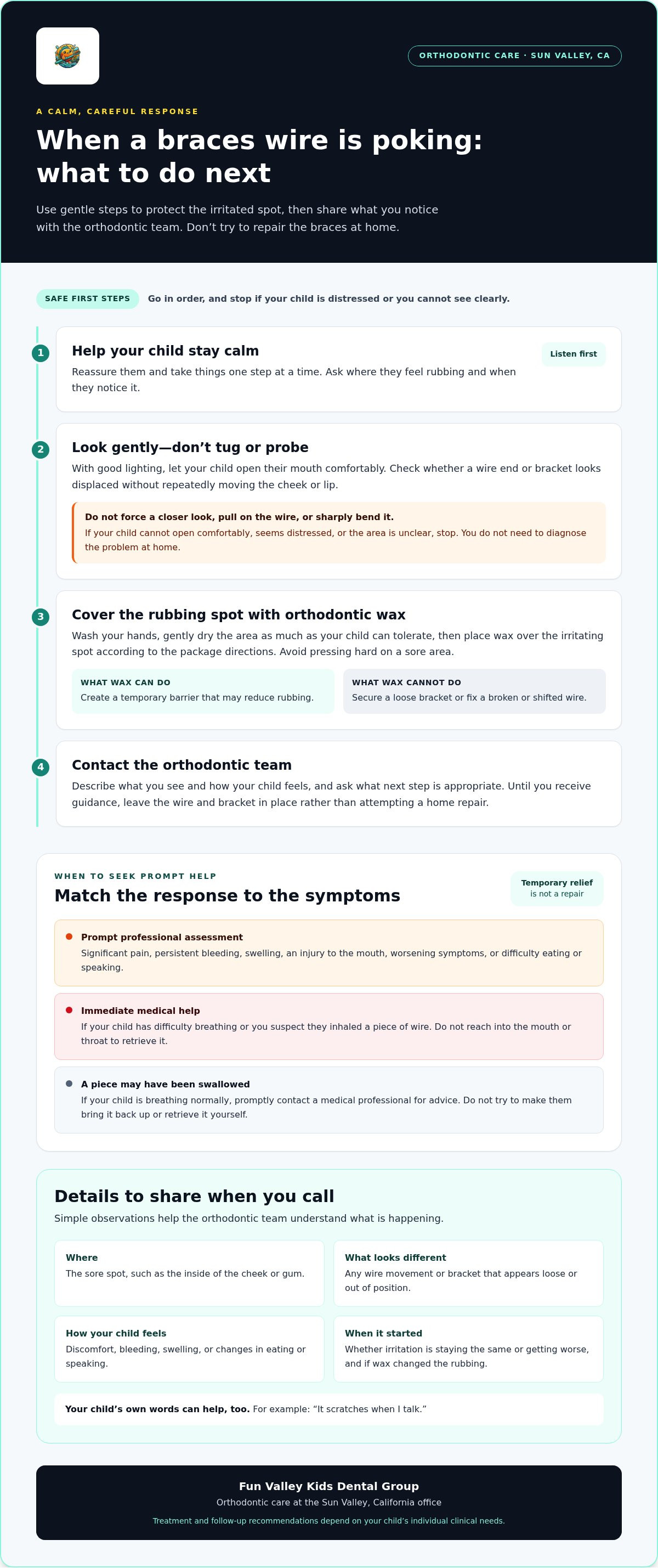
How to Contact the Orthodontic Team and Prepare for Follow-Up
A clear, simple description helps the orthodontic team understand what your child is experiencing and advise you on the next step. You don’t need to name the appliance parts perfectly. Say what your child feels, where the wire is bothering them, and whether anything looks different. If you’re unsure what to do if a braces wire is poking, sharing these details is a good place to start.
What to share when describing the problem
Before calling, jot down a few notes. Include the wire’s location, when the irritation began, and whether your child’s comfort has changed. Mention any visible movement, a bracket that seems loose, or an injury. If you’ve tried a temporary comfort measure, tell the team whether it helped and for how long.
Symptoms: Describe soreness, pain, bleeding, swelling, or difficulty eating or speaking.
Wire and bracket: Explain whether the wire is rubbing, looks loose, or appears displaced, and whether a bracket seems damaged.
Timing: Share when you first noticed the problem and whether it’s getting better, staying the same, or worsening.
Steps already tried: Mention any temporary measure and whether the wire still rubs afterward.
Plain language is enough. For example, you might say, “The wire at the back is scratching the inside of her cheek, and it still bothers her when she eats.” If your child can describe the feeling in their own words, include that too. Ask directly, “What should we do next?” If symptoms are severe or changing quickly, make that clear at the start of the call.
What parents can expect from an orthodontic evaluation
The orthodontic team assesses your child and the braces before recommending care. The evaluation helps determine whether the appliance needs an adjustment or another response, based on your child’s examination and clinical needs. The right next step can’t be decided from a description alone, so don’t assume a particular repair, appointment time, or outcome in advance.
Bring your notes and be ready to point out where the wire has been rubbing. If your child is nervous, explain that the orthodontic team will look at the braces and listen to what feels uncomfortable. A calm, familiar explanation can help the visit feel more manageable.
Fun Valley Kids Dental Group provides pediatric orthodontic care, including traditional braces, at its office in Sun Valley, California. If a wire continues to irritate your child, contact the Sun Valley orthodontic team to discuss follow-up. Recommendations depend on your child’s individual examination and clinical needs.
Pediatric Braces Care at Fun Valley Kids Dental Group in Sun Valley
A poking wire can turn an ordinary day into a bumpy stretch for a child. Temporary comfort steps may help, but ongoing rubbing or visible damage deserves attention from the orthodontic team. If you’re still weighing what to do if a braces wire is poking, professional follow-up can help determine what your child’s braces need next.
Fun Valley Kids Dental Group provides pediatric orthodontic care, including traditional braces, at its physical office in Sun Valley, California. Dr. Haykani provides orthodontic care for children. Whether braces are appropriate, and what care a child may need, depends on an individual orthodontic evaluation, including the child’s bite, tooth position, dental development, and clinical needs.
A child-focused setting for orthodontic visits
The office is designed with children and families in mind, with a welcoming environment and features such as the Robin interactive robot. These details can make the setting feel more familiar, though every child experiences a visit in their own way. Weekend appointments are available, which may offer families another scheduling option; appointment timing depends on the practice’s schedule.
For a child who is uneasy about a wire concern, a simple preview can help: explain that the orthodontic team will look at the braces and listen to what feels uncomfortable. You can bring along details you’ve noticed, such as where the wire rubs and when it started. The team can assess the appliance and your child before recommending an appropriate next step.
Serving Sun Valley families and nearby communities
Sun Valley is Fun Valley Kids Dental Group’s office location. The practice also serves families in nearby San Fernando Valley communities, including Pacoima, Arleta, Panorama City, North Hollywood, Burbank, and Sylmar. These are service areas, not separate office locations.
A poking wire is an orthodontic concern, but a child may also have a broader dental emergency, such as another injury or a separate urgent dental problem. In that case, pediatric emergency dental care may be appropriate. Share all of your child’s symptoms with the care team so they can understand the full picture and guide you toward a suitable next step.
If your child’s wire continues to bother them, contact Fun Valley Kids Dental Group in Sun Valley to discuss pediatric orthodontic follow-up. The team can consider your child’s individual examination and clinical needs when recommending care, since not every wire problem or patient calls for the same response.
Take the Next Step Toward a More Comfortable Smile
A wire concern can feel like a big detour, but you don’t have to figure out the appliance problem on your own. Your child’s description of what feels uncomfortable, along with the changes you’ve noticed, gives the orthodontic team a helpful place to start. If you’re still unsure what to do if a braces wire is poking, reaching out can help you decide how to move forward.
Share what your child is feeling and ask what follow-up is appropriate. Recommendations depend on your child’s individual examination and clinical needs, so the team can guide you toward a suitable next step.
Contact Fun Valley Kids Dental Group in Sun Valley to discuss your child’s orthodontic care and take the next step together. With a clear plan, your family can get back to the bright moments beyond braces.
Frequently Asked Questions
Can a braces wire poke even when the bracket is still attached?
Yes, a wire can irritate the mouth even if its bracket appears attached. The wire may shift or extend far enough to rub as your child’s teeth move or after the braces are bumped. A quick look may not show what caused the change. If your child keeps noticing a sharp spot, describe its location to the orthodontic team rather than trying to adjust the braces yourself.
What should I do if my child swallows a piece of braces wire?
If you think your child swallowed a wire piece, promptly contact a medical professional for advice and explain what happened. Don’t try to retrieve the piece or make your child vomit. If your child has trouble breathing or you suspect the fragment was inhaled, seek emergency medical help immediately. Share when it happened and what you observed, even if your child seems comfortable at first.
Can my child eat normally while a braces wire is poking?
Your child may find chewing uncomfortable, so don’t insist they eat normally if it worsens the rubbing. Offer foods that are soft and easy to manage for now, and avoid hard or sticky foods that could bend or dislodge a wire. If eating remains difficult, or pain increases during meals, contact the orthodontic team for advice instead of relying on food changes alone.
Should my child keep brushing if the wire has made the cheek sore?
Yes, keep up gentle brushing so food doesn’t linger around the braces or sore area. Use a soft-bristled toothbrush and help your child clean carefully without scrubbing the tender spot. If brushing causes notable pain or bleeding, pause and ask the orthodontic team what care is appropriate. A sore cheek is a reason to be gentle, not to skip cleaning the rest of the teeth.
Does a poking braces wire mean my child’s treatment is going wrong?
Not necessarily. A wire can start rubbing as teeth shift, or it may move after braces are bumped or a bracket loosens. That alone doesn’t tell you whether treatment is progressing as planned. If you’re worried, explain what changed and ask the orthodontic team to assess the appliance. An individual evaluation is needed to understand the cause and decide whether an adjustment or other care is appropriate.
Can a loose braces wire wait until the next scheduled orthodontic appointment?
Don’t assume a loose wire can wait, especially if it’s rubbing, causing pain, or making it hard for your child to eat or speak. Call the orthodontic team, describe what you see, and ask how soon your child should be assessed. If the next scheduled visit is approaching, mention its date, but let the team guide you based on the symptoms and appliance condition.
What information should I give the orthodontist when I call about a poking wire?
Say where the wire is bothering your child, when the problem began, and whether you can see a loose bracket or wire movement. Describe any soreness, bleeding, swelling, or difficulty eating, and note whether symptoms are changing. Mention what your child has tried for comfort and whether it helped. For what to do if a braces wire is poking, these simple details help the team advise on a suitable next step.


Comments