


When Should Children Start Flossing? A Parent’s Step-by-Step Guide

What if the right time to start flossing has less to do with your child’s age and more to do with their teeth? If you’re wondering about flossing for children when to start, begin when two teeth touch. A toothbrush may not reach the snug spaces between them, even when they’re baby teeth.
It’s understandable to worry about tender gums or wonder how to make flossing comfortable, especially if your child would rather wiggle away than open wide. Keep this new routine gentle, brief, and pressure-free. You’ll guide the floss at first, while your child gets familiar with the steps at their own pace.
This guide explains when to begin, how to clean between teeth gently, and how to build a daily habit without turning bedtime into a battle. It also covers signs of growing hand coordination that may show your child is ready to practise flossing independently. A pediatric dental exam is a helpful opportunity to talk through a routine that fits your child’s smile.
Table of Contents
When should children start flossing? Look for teeth that touch
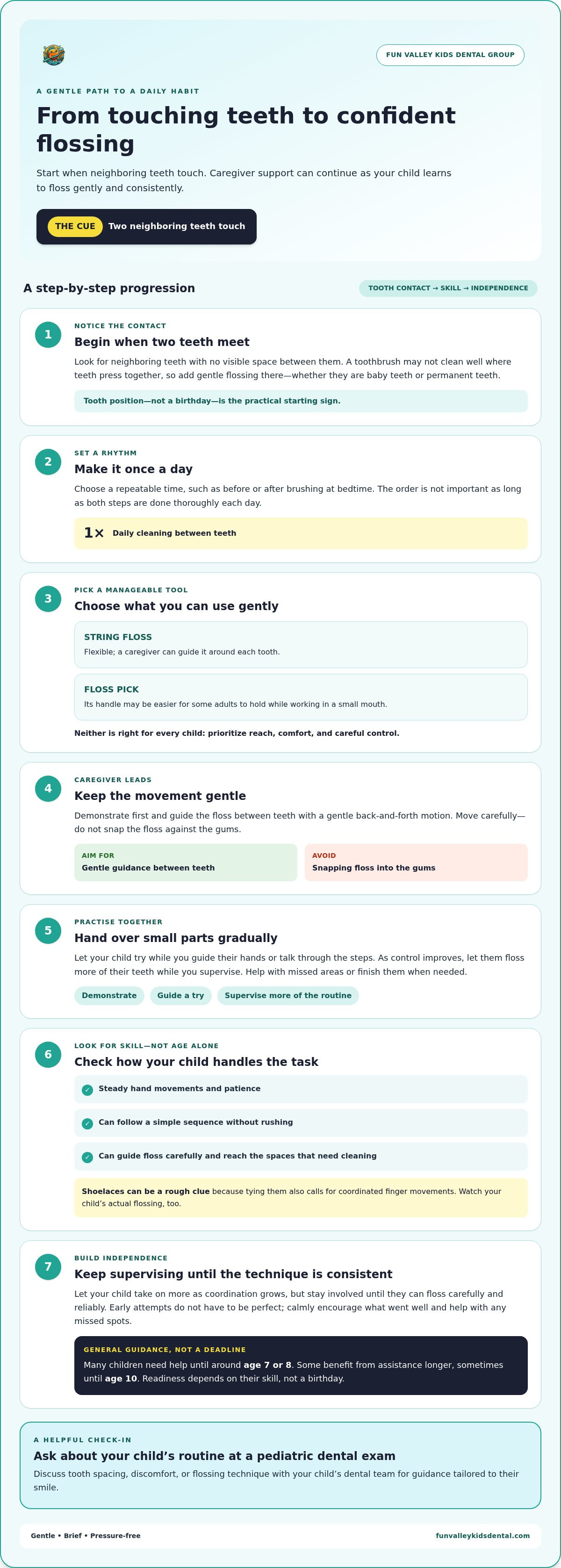
Begin flossing as soon as two neighboring teeth touch. The American Dental Association and the American Academy of Pediatric Dentistry recommend using tooth contact as the cue because a toothbrush may not clean well between teeth that meet. The right time depends on how your child’s teeth are positioned, not on reaching a particular birthday.
Start flossing when two neighboring teeth touch. That’s the simple cue to remember. Children’s teeth emerge and shift on different schedules, so one child may have touching teeth earlier than another. As your child brushes, look for places where two teeth meet with no visible space between them. Add gentle flossing between those teeth to the routine.
Why teeth that touch need cleaning between them
Toothbrush bristles clean many surfaces but can have trouble reaching the narrow spot where neighboring teeth press together. Plaque, a soft film that forms on teeth, can collect there. Floss reaches between teeth and along their sides. For general background on the tool, Dental floss has a long history of use for cleaning between teeth. A child’s age alone can’t show whether flossing is needed. Tooth contact is the practical sign to watch.
Does flossing matter if a child still has baby teeth?
Yes. Baby teeth need attention between contacts, too. They help children chew comfortably, support speech development, and hold space for permanent teeth as they grow. Caring for them is part of looking after your child’s whole smile, even though these teeth will eventually fall out.
Flossing adds to brushing; it doesn’t replace it, fluoride guidance, or regular dental visits. Keep following age-appropriate brushing advice and your child’s dental team’s recommendations. For more ways to support healthy teeth at home, explore this guide to preventing cavities in children.
At a pediatric dental exam, you can ask how your child’s tooth spacing affects their routine and get guidance tailored to their smile. This can be especially helpful if you’re unsure which teeth touch or how to reach them comfortably. The goal is a calm, repeatable habit, not a perfect performance on the first try.
Flossing a child’s teeth and teaching independence are different milestones
Once teeth touch, flossing belongs in your child’s routine, but that doesn’t mean they’re ready to manage it alone. A caregiver may need to do the flossing while the child gets used to the tool and learns how to guide it gently. Starting the habit and mastering the hand movements are two separate steps.
Start flossing when teeth touch; let independence grow when your child can floss carefully and consistently. There’s no birthday that guarantees readiness. Children build hand control at different rates, and effective flossing takes enough coordination to guide the floss between teeth without snapping it into the gums, then clean each space thoroughly.
How long should a parent help with flossing?
Stay involved until your child can handle the task reliably. Many children need help until around age seven or eight, and some benefit from assistance longer, sometimes until age ten. These are general guides, not deadlines. Kaiser Permanente’s advice on flossing children’s teeth also supports treating independent flossing as a skill children develop, rather than assuming a certain age means they’re ready.
Make the transition gradual. First, demonstrate the movements and floss for your child. Next, let them try while you guide their hands or talk them through each step. As their control improves, invite them to floss more of their teeth while you supervise. You can still take over or finish missed areas when needed.
Signs a child may be ready to practise independently
Look for steady hand movements, patience, and the ability to follow a simple sequence without rushing. A useful clue is whether your child can tie their own shoelaces, since that task also calls for coordinated finger movements. It’s only a rough guide, though. Watch how they actually handle floss and whether they can reach and clean the spaces that need attention.
Early attempts don’t have to be perfect. Offer calm, specific encouragement, such as “You guided that floss gently,” then help with any spots they missed. Keep supervising until their technique is consistent, even after they begin doing more on their own. A pediatric dental exam is also a comfortable place to discuss your child’s coordination and home-care routine. A pediatric dental exam gives you a chance to get guidance suited to your child’s needs.
Flossing for children: tools, timing, and common concerns
A comfortable tool and a predictable time can make flossing easier to fit into family life. The American Dental Association recommends cleaning between teeth once a day. Choose a time you can repeat, such as before or after brushing at bedtime. The order isn’t important as long as both steps are done thoroughly each day.
String floss or a floss pick: which may be easier?
String floss is flexible, so a caregiver can guide it around each tooth. A floss pick has a handle that some adults find easier to hold while working in a small mouth. Neither option is right for every child. Choose the tool that lets you reach the spaces that need cleaning and move gently without rushing. With either tool, comfort and careful control matter more than choosing a particular style.
If your child is curious, let them hold the tool or practise a small part of the routine with your help. Keep the experience low-pressure. A familiar song or a simple “tooth explorer” game can make the daily stop feel less like a chore.
What if flossing is uncomfortable or the gums bleed?
Slow down if your child feels discomfort. Guide the floss between teeth with a gentle back-and-forth motion, then curve it against the side of each tooth. Don’t force floss through a tight contact or snap it down onto the gums. If the space feels difficult to reach, pause and try a calmer angle rather than pushing harder.
A small spot of blood can be unsettling, but one brief episode doesn’t tell you what caused it. Use a light touch and watch what happens during later routines. If bleeding keeps returning, seems more than slight, or comes with ongoing discomfort, get individualized advice from your child’s dentist instead of trying to diagnose the cause at home.
Keep the routine steady and reassuring. For parents asking about flossing for children when to start, tooth contact tells you when to begin, and a gentle daily approach helps make the habit comfortable. If your child resists, try a short pause, explain the next step in simple words, and offer a small choice, such as whether to floss before or after brushing. If discomfort or handling the tool remains a concern, bring it up at a pediatric dental exam so the guidance can fit your child’s smile.
How to floss a child’s teeth gently, one step at a time
A calm, steady approach helps your child know what to expect. Set up at the bathroom sink, where you have good light and can see each space. If you use string floss, the American Dental Association describes using about 18 inches, with the ends wrapped around your middle fingers and a short section held taut between your fingers. A floss pick is another option if its handle feels easier to guide.
A gentle caregiver-led flossing routine
Take your time, especially while your child is getting used to the new sensation. Follow these steps for the spaces that need flossing:
Get comfortable. Have your child stand or sit where you can see their teeth clearly. Explain what you’re about to do in simple, reassuring words.
Guide the floss slowly. Use your fingers to ease it between two teeth with a gentle back-and-forth motion. Don’t snap it down or force it through a tight contact.
Clean both sides. Once the floss is between the teeth, curve it into a C shape against one tooth. Move it gently up and down along that side, then repeat against the neighboring tooth.
Move to the next space. Use a clean section of floss as you go, so you’re not carrying debris from one area to another.
Pause if it hurts. Stop if your child feels pain, then try again gently later. If discomfort continues or you can’t reach an area comfortably, bring it up at a pediatric dental exam.
These movements are the heart of flossing for children when to start: once teeth touch, the goal is to clean their sides carefully, not to push floss where it won’t go easily. Your child can watch in a mirror as you work, which may help the steps feel less mysterious.
Make flossing feel like a small, achievable adventure
Choose a regular moment that fits your family’s brushing routine, such as bedtime. Offer a simple choice: “Would you like the floss pick or string floss?” or “Should we sing one short song?” Keep early practice brief and encouraging. Praise cooperation and gentle effort, not perfection. A little patience can turn an unfamiliar task into a familiar stop in your child’s smile-care routine.
If you’d like guidance tailored to your child’s teeth and comfort, schedule a pediatric dental exam with Fun Valley Kids Dental Group.
When to ask a pediatric dentist about your child’s flossing routine
Some flossing questions are easier to answer with a closer look at your child’s smile. Bring them up if you’re unsure which teeth touch, floss feels difficult to guide, or your child regularly feels discomfort. Repeated bleeding is also a reason to seek personalized advice. A symptom alone can’t tell you what’s causing it, but your child’s dentist can help you decide how to adjust the home routine.
Questions to bring to a child’s dental visit
A pediatric dental exam gives you a chance to ask specific, practical questions. You might ask whether your child has tooth contacts that need flossing, which tool may be easiest to handle, or whether you can see a gentle technique demonstrated. Share what you’ve noticed, including repeated bleeding, discomfort, tight spaces, or trouble making flossing part of the daily routine. These details help make the advice relevant to your child.
If you’re looking for more information about choosing pediatric care for your family, read this pediatric dentist guide for Sun Valley families. It offers another starting point for learning about your child’s dental care journey.
Build a healthy routine with support from Fun Valley Kids Dental Group
At Fun Valley Kids Dental Group, pediatric dental exams and cleanings are part of preventive care for infants, children, and teenagers. During an exam, you can talk through your child’s tooth spacing, comfort, and flossing technique, then get age-appropriate guidance for their individual smile. You don’t need to have every step mastered before asking for help. A small adjustment can make a home-care routine feel more comfortable and manageable for the whole family.
Fun Valley Kids Dental Group provides pediatric dental care for families in Sun Valley and across Los Angeles, including Tujunga, Sunland, Glendale, Burbank, Hollywood, Pacoima, Sylmar, the San Fernando Valley, Pasadena, and North Hollywood. If you’re still wondering about flossing for children when to start, a pediatric dental visit is an opportunity to discuss your child’s teeth and everyday care. Schedule a pediatric dental visit.
Make flossing a gentle part of your child’s smile routine
The answer to flossing for children when to start is simple: begin when two neighboring teeth touch. Baby teeth need care between those contacts, too. Flossing can start before a child is ready to do it alone, so guide them gently and let independence grow with practice and hand control.
A calm, consistent routine matters more than getting every step perfect right away. Choose a tool that feels manageable, move floss carefully, and keep practice positive. If tooth spacing, discomfort, repeated bleeding, or technique leaves you unsure, personalized guidance can help.
Fun Valley Kids Dental Group provides pediatric-focused care for infants, children, and teenagers, including preventive exams and cleanings in Sun Valley. A visit is an opportunity to discuss your child’s smile and everyday care. Schedule a pediatric dental visit, and take the next small step toward a comfortable, confident routine.
Frequently Asked Questions
When should I start flossing my child’s teeth?
Start flossing your child’s teeth as soon as two neighboring teeth touch. This is the clearest cue for flossing for children when to start, because a toothbrush may not clean the surfaces where teeth meet. The cue depends on your child’s tooth spacing, not a particular birthday. A caregiver should guide floss gently at first. If you’re unsure whether teeth touch or how to reach them comfortably, ask during a pediatric dental visit.
Should I floss my child’s baby teeth?
Yes, gently floss between baby teeth once neighboring teeth touch. Baby teeth need daily care, and a toothbrush may not reach every surface where teeth meet. Flossing adds to brushing; it doesn’t replace brushing or regular dental visits. If a space is hard to reach or your child seems uncomfortable, bring it up at a pediatric dental exam. The dentist can review your child’s technique and suggest a comfortable approach for their smile.
How often should children floss?
Once flossing is appropriate because teeth touch, aim to clean between them once a day. Choose a time that fits your family’s routine, such as before or after bedtime brushing, and keep the steps calm and consistent. A parent or caregiver may need to do the flossing or check your child’s work. If your child has specific dental needs or you’re unsure about the routine, ask their pediatric dentist for personalized guidance.
Can a young child floss independently?
Some children can practise early, but independent flossing depends on coordination and the ability to use a gentle, consistent technique. There’s no single age when every child is ready. Stay involved until your child can guide floss between teeth carefully and reliably. You can demonstrate first, supervise practice, and help with any areas they miss. Treat early attempts as practice, not a test your child has to pass.
What should I do if my child’s gums bleed when flossing?
Use gentle movements and avoid snapping floss against your child’s gums. If bleeding happens repeatedly, comes with pain, or concerns you, seek advice from a pediatric dentist rather than trying to diagnose the cause at home. A dentist can review your child’s flossing technique and oral health, then suggest an approach suited to their needs. If flossing causes discomfort, pause and share that detail during the visit.
Are floss picks okay for children?
Floss picks can be easier for some caregivers to hold, while string floss offers flexibility around each tooth. Either can work if you can use it gently and clean between your child’s teeth carefully. An adult should guide young children and supervise practice. If you’re unsure which tool feels manageable or how to position it, ask a pediatric dentist to demonstrate. Families in Sun Valley can discuss their child’s routine during a pediatric dental exam.



Comments