


How to Brush Baby's Teeth and Clean Gums Before They Erupt

The first tooth is your cue to start brushing. Most babies get their first tooth around six months, but the answer to when to start brushing your baby’s teeth is simple: as soon as the first tooth appears. Use a small, soft-bristled toothbrush and gentle strokes.
It’s natural to wonder whether brushing can wait until more teeth arrive. It shouldn’t: even one tiny tooth needs care, and your baby’s gums need gentle cleaning before teeth erupt. A simple routine can make mouth care a calm, familiar part of the day.
Learn how to wipe your baby’s gums, brush emerging teeth, and help as your child learns to brush. We’ll cover how often to clean, what to do at each stage, and simple ways to make brushing a cheerful daily ritual rather than a struggle.
Table of Contents
When should I start brushing my baby's teeth?
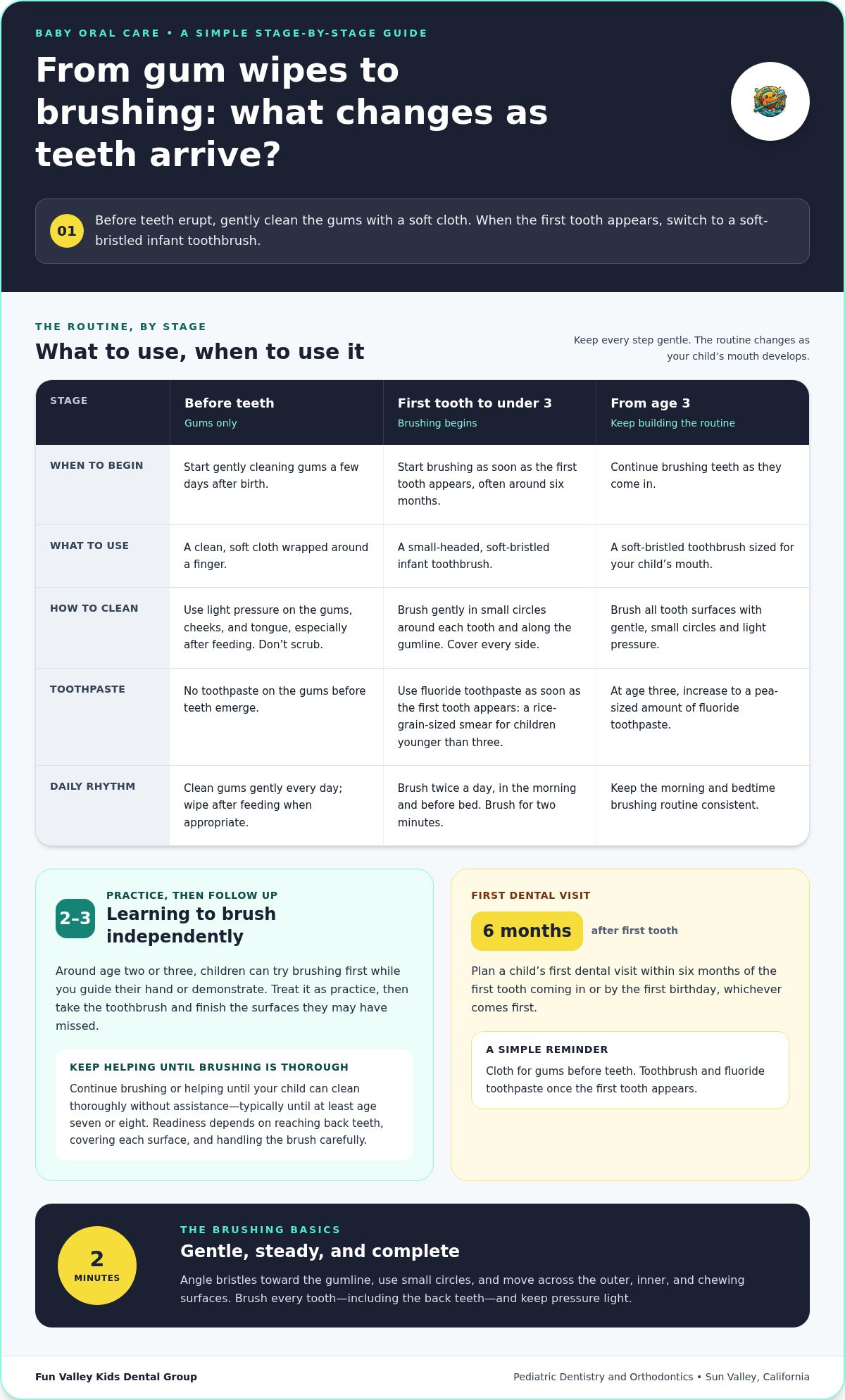
If you’re wondering when to start brushing your baby’s teeth, begin as soon as the first tooth appears, often around six months. Use a gentle brush and make oral care part of your baby’s daily routine.
Begin brushing baby teethStart brushing as soon as you see your baby’s first tooth, even if it’s the only one. A single baby tooth can collect bacteria, so don’t wait for more teeth to appear. Gently brush around the tooth and along the gumline. Daily cleaning helps remove bacteria and food residue before they build up.
Choose an infant toothbrushChoose a toothbrush with a small head and soft bristles, sized for an infant’s mouth. A small brush makes it easier to reach the front, back, and sides of an emerging tooth without pressing hard. Hold it gently and use small circles. Check the bristles as your baby grows, and replace the brush when they become worn or misshapen.
Set a brushing routineBrush your baby’s teeth twice a day, in the morning and before bed. A familiar sequence, such as brushing after breakfast and before a bedtime story, can help toddlers know what comes next. Brush for two minutes, moving over all sides of each tooth. A child should have their first dental visit within six months of their first tooth coming in or by their first birthday, whichever comes first.
Use age-appropriate toothpasteUse fluoride toothpaste as soon as the first tooth appears. The American Academy of Pediatric Dentistry recommends starting fluoride toothpaste at that point. For babies and toddlers younger than three, use only a rice-grain-sized smear. At age three, increase to a pea-sized amount. Keep the dab small and spread it across the bristles instead of applying a long strip.
For each brushing, angle the bristles toward the gumline and move them in gentle, small circles. Work slowly across every surface, including the back of the tooth, where a baby’s tongue may hide it from view. Keep the brush pressure light; scrubbing hard isn’t needed to clean a tiny tooth. As new teeth erupt, brush each one rather than focusing only on the easiest-to-see front teeth.
Make toothpaste use part of the same routine as choosing the brush: prepare the small amount before you begin, then brush while your baby is safely supported. These first steps give you a clear starting point, from the first tooth through the toddler years.
Cleaning a baby's gums before teeth erupt
Begin gently cleaning your baby’s gums a few days after birth, before any teeth appear. Use a clean, soft cloth to wipe the gums, cheeks, and tongue, especially after feeding.
Clean a newborn’s gumsWrap a clean, soft cloth around a finger and gently wipe your newborn’s gums. According to the American Dental Association, regular gum cleaning can begin a few days after birth. Use light pressure across the upper and lower gums, without rubbing back and forth or pressing hard.Keep each wipe gentle and brief. After feeding, clean the gums, inside of the cheeks, and tongue to remove milk residue. If your baby turns away or becomes unsettled, pause, help them settle, and try again calmly. A daily gum-cleaning habit also helps you notice changes in your baby’s mouth.Use a clean cloth each time, and avoid putting toothpaste on the gums before teeth emerge. This step is for cleaning soft tissues, not scrubbing them. If you notice a spot that concerns you or your baby seems uncomfortable during routine care, note what you see and mention it at a dental visit.
Brush gums and teeth safelyWipe the gums gently every day, and include the cheeks and tongue after feeding. To clean your baby’s mouth safely, use a soft cloth and light pressure, covering the mouth in small, calm passes rather than scrubbing one spot.Once a tooth appears, switch to a small-headed, soft-bristled toothbrush for that tooth and any that follow. Brush gently in small circles over the tooth and along its gumline. Keep your movements controlled, and avoid pushing bristles into tender tissue. Before teeth erupt, use a cloth rather than a toothbrush to clean the gums.Think of gum cleaning and tooth brushing as two stages of one pediatric dental routine. The cloth cleans the gums before teeth arrive; the toothbrush cleans erupted teeth. Neither step needs force or a long struggle. Choose a calm moment, support your baby securely, and pause if they need a break.Cleaning gums supports mouth care, but it doesn’t replace brushing once teeth emerge. Baby teeth need regular cleaning because bacteria can collect even when only one tooth is visible. Keep the routine gentle and consistent as your baby’s mouth changes. If a sore, unusual patch, or feeding discomfort makes cleaning difficult, mention it to your baby’s dentist.
Helping with brushing until children can brush independently
Stay involved as your child learns. Their practice and your careful follow-up serve different purposes. Use these steps to build brushing skills while keeping every tooth in the routine.
Brush for your child, then invite them to practice. Around age two or three, children can try brushing first while you guide their hand or demonstrate on your own teeth. Treat their first turns as practice, not a test. Then take the toothbrush and finish cleaning every surface they may have missed.
Follow up until brushing is thorough. Continue brushing or helping until your child can clean their teeth thoroughly without assistance, typically until at least age seven or eight. Readiness depends on whether they can reach the back teeth, cover each surface, and handle the brush carefully. A child who can hold a toothbrush may still need hands-on help.
Use a clear route around the mouth. Hold the toothbrush at a 45-degree angle toward the gumline, then use gentle circles across each tooth. Move from one side of the mouth to the other, cleaning the outer, inner, and chewing surfaces. Keep the brushing session to two minutes. A steady route helps children follow the process and helps you notice skipped spots.
Check each tooth as part of your follow-up. After your child’s turn, look for missed areas around the back teeth and along the gumline. Ask them to open wide, then gently guide the brush where needed. Once they finish, have them spit out the toothpaste rather than rinse with water. This gives your child a repeatable final step.
Add floss when teeth touch. If any of your child’s teeth touch, floss between them at least once a day. Show them how to clean the space gently, without snapping the floss against the gums. Some children over three may find a children’s electric toothbrush suitable, but the brushing route and adult follow-up still matter.
Keep your role steady as your child gains confidence. Let them hold the toothbrush, choose which section to brush first, or demonstrate their technique on a toy. You remain responsible for the final clean until they can brush thoroughly on their own, often through the early school years. A calm, consistent handoff helps your child gradually manage this healthy skill themselves.
At around 2 years of age, children can begin brushing; adults follow up across every tooth surface, and children should spit out toothpaste, not rinse with water.
Making brushing calm and enjoyable
A predictable routine can make brushing feel familiar instead of rushed. Try these simple steps to make each session more comfortable for your child.
Choose a calm moment and keep the sequence familiar. Connect brushing with an activity your child already knows, such as getting ready for bed or changing into pajamas. Follow the same order each time: settle in, brush, spit, then move on to the next activity. If your child is tired, begin before the bedtime rush rather than waiting until they’re ready to sleep.
Offer small choices that keep brushing on track. Let your child choose between two toothbrushes or decide whether to brush the top or bottom teeth first. Keep the essential task clear: an adult still guides the brush and makes sure teeth are cleaned. Choices give children a role without turning brushing into a debate about whether it happens.
Use a playful cue to mark each part of the mouth. Invite your child to imagine the toothbrush taking a little journey around the teeth. You might call the front teeth “the welcome gate” and the back teeth “the cave,” then guide the brush to each area. Keep your voice light and your movements gentle, so the game supports careful brushing rather than distracting from it.
Show the motion before your child’s turn. Brush your own teeth in front of the mirror, then demonstrate small circles on a toy or your fingertip. For a toddler, short phrases such as “front teeth, back teeth, chewing tops” make the route easier to follow. If your child wants to try, let them begin, then calmly finish any missed spots.
Pause and reset if your child becomes upset. If crying or turning away interrupts brushing, stop for a moment, lower your voice, and offer a brief choice, such as standing or sitting. Then return to the routine with gentle movements. Avoid scolding or making oral care sound like a punishment. Keep the message simple: brushing helps clean teeth and remove bacteria.
Notice what helps your child feel comfortable, such as a mirror, a familiar song, or brushing beside a parent. Keep that helpful cue in the routine and adjust it as your child grows. A relaxed, steady approach can make brushing a shared family habit rather than a nightly contest.
How often should you brush a baby's teeth?
Brush erupted teeth twice a day, in the morning and before bed. For infants without teeth, keep gum care brief and regular.
Brush baby teeth twice daily. Clean your baby’s teeth once in the morning and again before bed. Brushing after breakfast gives the morning routine a predictable place in the day. Bedtime brushing finishes the day’s routine, so teeth aren’t left uncleaned overnight. If breakfast timing changes, tie morning brushing to another steady activity, such as getting dressed.
Give infants without teeth brief mouth care. Before the first tooth appears, wipe your infant’s gums, cheeks, and tongue after feeding. A few brief cleanings throughout the day can make mouth care familiar without turning it into a long task. Use a clean, soft cloth and gentle pressure; switch to a toothbrush once a tooth erupts.
Allow two minutes for each brushing. Move the brush gently over the outer, inner, and chewing surfaces of every tooth. If your baby has only one or two teeth, carefully clean each side and the gumline. As more teeth appear, work around the mouth in a consistent order, such as starting at the back and moving forward.
Don’t let a missed brushing become a pattern. If a morning gets busy, brush as soon as you can, then return to the usual morning and bedtime schedule. Don’t replace brushing with a quick rinse; resume the regular cleaning routine at the next opportunity. A reminder beside the toothbrush or near your child’s bedtime items can help caregivers stay consistent.
Keep adult help in the daily plan. A young child may hold the brush, but an adult should guide the cleaning and check for missed surfaces. Keep the same morning and bedtime rhythm as your child grows, adjusting your help as their skills develop. A steady schedule makes it easier to care for each newly erupted tooth.
For guidance on your child’s brushing routine or a first dental visit, schedule a pediatric dental exam.
Use these times as simple anchors: brush your baby’s teeth after breakfast and before bed as part of a consistent daily routine. Tying brushing to the same points in the day gives the routine a clear shape and keeps it part of everyday care.
For infants, give brief oral care throughout the day. Keep each cleaning short and return to it regularly, alongside the brushing routine once teeth appear.
Fun Valley Kids Dental Group: Pediatric Dental Exams
Fun Valley Kids Dental Group provides pediatric dental exams to help families understand their child’s oral health and care needs. An exam is a chance to discuss brushing habits, gum care, and questions about newly erupted teeth.
At the Sun Valley office, families can also access dental cleanings, fluoride treatments, and dental sealants as part of preventive care. A pediatric dental visit can be a helpful next step when your baby’s first tooth appears or when you want guidance on a developing routine. The team can explain age-appropriate care and what to expect during an exam.
For a pediatric dental exam or guidance about your child’s oral care, contact Fun Valley Kids Dental Group in Sun Valley.
Let oral care grow with your child
Your child’s needs will change as their mouth and confidence develop. Keep the routine flexible: notice what feels easy, where your child needs help, and what helps them feel settled. Small adjustments, like letting them choose the brushing song or hold the mirror, can make daily care feel like a shared family habit.
Knowing when to start brushing your baby's teeth gives you a starting point, but the next steps unfold over time. Notice changes, encourage your child’s growing independence, and bring oral-care questions to a pediatric dental visit. Every brushing session doesn’t have to be perfect; steady support helps your child build a skill they can carry forward.
For support with your child’s dental care, contact Fun Valley Kids Dental Group. Each little step can help make a brighter, more comfortable path for your child.
Frequently Asked Questions
Can babies use fluoride toothpaste?
Yes. Fluoride toothpaste is recommended once your baby’s first tooth appears. Apply it yourself to keep the amount small, and keep the tube out of your baby’s reach. If your child has several teeth, spread the smear across the bristles rather than adding more toothpaste. Prepare the toothbrush the same careful way each time.
Do You Brush Newborns’ Gums?
Clean a newborn’s gums with a soft, clean cloth rather than a toothbrush. The American Dental Association recommends beginning regular gum cleaning a few days after birth. Choose a calm moment when your baby is settled, and use a fresh area of the cloth as you wipe. If an area seems sore, avoid rubbing it and mention it during a dental visit.
When should you start brushing a baby's teeth?
Begin as soon as the first tooth appears, often around six months. You don’t need to wait for a full row of teeth before brushing. A child should have their first dental visit within six months of their first tooth coming in or by their first birthday, whichever comes first. Note when the first tooth appears so you can keep track of this visit milestone.
Should you brush before the first tooth appears?
No toothbrush is needed before a tooth appears; clean your baby’s gums with a soft cloth instead. This gives you a gentle way to care for the mouth during the toothless stage. Once you can see an erupted tooth, use a small-headed, soft-bristled toothbrush on it. If you’re unsure whether a pale spot is a tooth, bring the question to your baby’s dentist.
Should babies use fluoride toothpaste?
Ask a dental professional whether fluoride toothpaste is appropriate for your baby. The amount changes with age: use a rice-grain-sized smear for babies and toddlers younger than three, then a pea-sized amount at age three. An adult should put the toothpaste on the brush rather than hand the tube to a young child. This helps keep the amount appropriate.
How can you make toothbrushing easier for a baby?
Keep brushing calm and predictable. Try a position that lets you see your baby’s mouth clearly, such as resting your baby securely in your lap. Use a gentle voice and pause if your baby becomes distressed, then continue when they settle. A familiar caregiver and a consistent sequence can help the toothbrush feel less surprising during daily care.



Comments