


How to Soothe a Teething Baby and Understand the Symptom Timeline

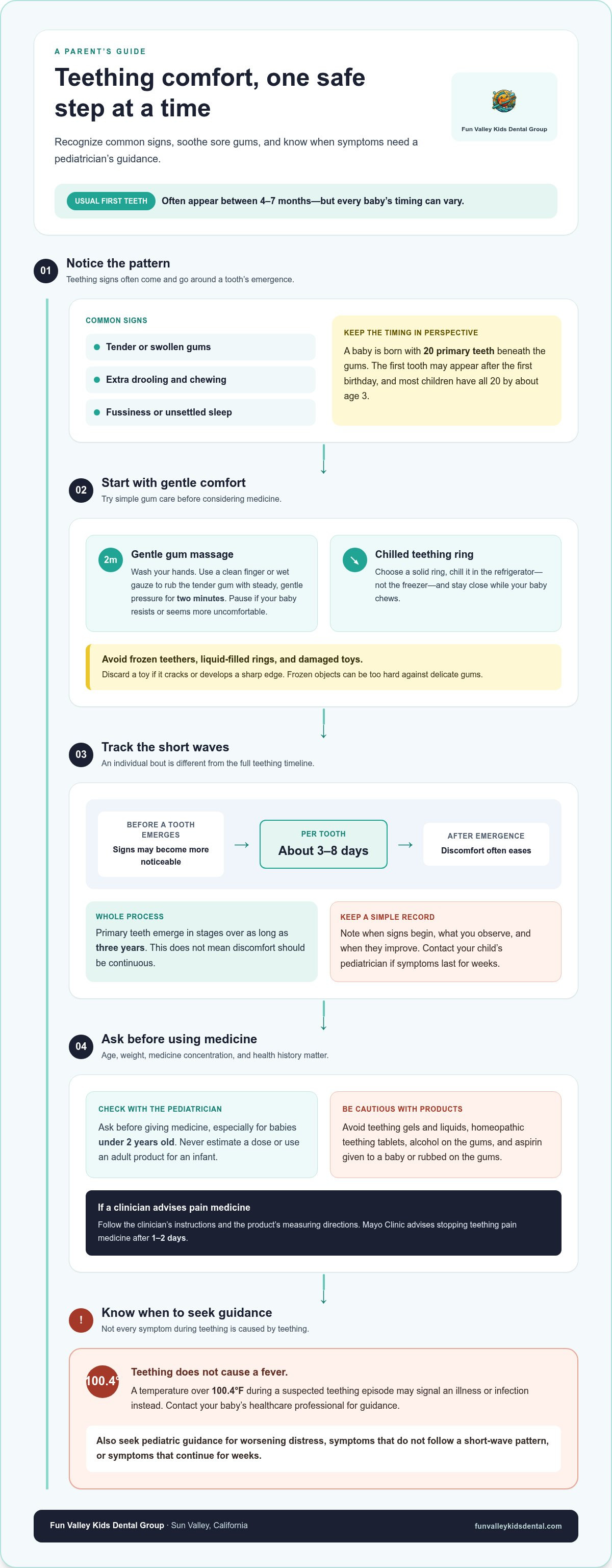
A baby’s first teeth usually arrive between 4 and 7 months, though the timing varies from child to child. Teething discomfort often comes in short waves, lasting about 3-8 days per tooth. To soothe a teething baby, try gentle gum pressure or a chilled teething ring that has been refrigerated, not frozen, as Mayo Clinic advises.
It’s hard to see your little one uncomfortable, especially when drooling, sore gums, or unsettled sleep make it difficult to know what’s typical. This guide explains what teething is, when teeth tend to emerge, and how long symptoms may last. You’ll also find gentle comfort measures, guidance on pain medicine, and signs that warrant a call to your child’s pediatrician. Knowing what to expect can help you soothe a teething baby with more confidence.
Table of Contents
1. What is baby teething?
Teething is the process of a baby tooth moving through the gums and appearing in the mouth. Babies are born with all 20 primary teeth beneath their gums, although the first tooth may not appear until after a child’s first birthday. By about 3 years of age, most children have all 20 baby teeth. As a tooth pushes upward, the gum above it may feel tender, prompting an infant to chew, drool, or seek comfort.
Gentle gum massage offers a simple first step for easing discomfort. Wash your hands, then use a clean finger or wet gauze to rub the sore gum with steady, gentle pressure for two minutes. Move across the tender area rather than pressing hard on one spot. Pause if your baby resists or seems more uncomfortable. This brief massage can provide temporary relief without medicine, and it lets you notice where a tooth may be coming through.
A chilled teething ring can provide soothing pressure after a gum massage. Choose a solid ring, chill it in the refrigerator, and stay close while your baby chews. Mayo Clinic advises refrigerating teething rings, pacifiers, or wet washcloths rather than freezing them, because a frozen object can be too hard against delicate gums. Avoid liquid-filled rings and damaged toys, and discard anything that cracks or develops a sharp edge.
Amber teething necklaces pose choking and strangulation risks, so they aren’t a safe way to seek relief. Homeopathic teething tablets may also be dangerous: testing has found inconsistent amounts of toxic belladonna, and Mayo Clinic warns some products may contain more than their labels state. For sore gums, use a clean finger or a suitable chilled teether instead of jewelry or tablets.
Keep comfort measures simple while each new tooth makes its way into view. For example, offer a chilled solid-rubber teether while holding your infant, or gently massage the gum with wet gauze before settling them. Acetaminophen may be used for pain in some situations, but it doesn’t replace safe gum care; ask your baby’s healthcare professional before giving medicine, especially to a young infant. Avoid putting medicine tablets or other products directly on the gums. Once teeth appear, begin brushing them twice a day with a soft brush and a dab of fluoride toothpaste no larger than a grain of rice.
2. How long do teething symptoms last?
Teething discomfort usually arrives in brief waves, not as one continuous stretch. An episode can last about 3-8 days per tooth. Symptoms often become more noticeable in the days before a tooth emerges, then ease until another tooth starts moving through the gums. That pattern can help parents connect a change in behavior with a new tooth, especially when a visible gum bump appears soon afterward.
Common signs include tender or swollen gums, extra drooling, and a stronger urge to chew. Your baby may also seem fussier than usual or sleep poorly around the time a tooth emerges. These signs can overlap with normal developmental changes, so one restless night alone doesn’t prove a tooth is coming. Consider the timing and combination of symptoms, and whether they settle after the tooth appears.
The full teething process takes much longer than an individual bout of soreness. It can span up to three years as primary teeth emerge in stages, but that doesn’t mean a child should feel uncomfortable continuously. Discomfort may return around separate eruptions, with calmer intervals between them. Some babies may show symptoms for up to a few weeks; symptoms that last for weeks at a time are a reason to contact a pediatrician.
Teething doesn’t cause a fever. A temperature over 100.4 degrees during a suspected teething episode may signal an illness or infection instead. Parents should consider the whole picture, including whether the baby is feeding normally and whether symptoms continue after the gum seems less tender. A fever, worsening distress, or symptoms that don’t follow the short-wave pattern deserve attention beyond assuming another tooth is responsible.
For a simple timeline, record when symptoms begin, what you notice, and when they improve. For example, note a few days of chewing and drooling, followed by a visible tooth and calmer behavior. This can help distinguish a passing teething episode from a longer concern. Use safe comfort measures on sore days, but don’t use frozen objects as teethers. Refrigerate a teething ring rather than freezing it, and supervise your baby while they use it. If symptoms persist for weeks or don’t seem to match tooth emergence, contact your child’s pediatrician rather than attributing every change to teething.
3. Pain medicine and pediatrician guidance
For parents wondering how to soothe a teething baby, start with comfort measures before considering medicine. Gently rub the sore gum with a clean finger, or offer a chilled teething ring. If discomfort continues, ask your pediatrician before giving medicine, especially for babies under 2 years old. The right choice and amount depend on your baby’s age, weight, medicine concentration, and health history. Never estimate a dose or use an adult product for an infant.
Liquid acetaminophen or ibuprofen may help ease pain, but age matters. A pediatrician can advise on a weight-appropriate ibuprofen dose for a baby older than 6 months. Follow the product’s measuring directions and the clinician’s instructions; household spoons don’t measure medicine reliably. Mayo Clinic advises stopping teething pain medicine after 1 to 2 days because longer use can harm the liver or kidneys.
Teething gels and liquids aren’t a safe shortcut for babies. The FDA recommends avoiding benzocaine products for children younger than 2 years; benzocaine can cause methemoglobinemia, a serious condition that reduces oxygen in the blood. Prescription lidocaine solution can cause severe harm if too much is applied or swallowed. Topical anesthetics can also numb a baby’s throat and make swallowing difficult.
Avoid homeopathic teething tablets, alcohol on the gums, and aspirin given to a baby or rubbed onto the gums. Testing has found inconsistent amounts of toxic belladonna in some homeopathic teething tablets. Alcohol can be absorbed quickly through an infant’s gums, while aspirin can create additional health risks. Choose a clean finger or suitable teething ring instead.
If you’re deciding how to soothe a teething baby, watch for symptoms that call for medical guidance. According to Mayo Clinic, contact your baby’s healthcare professional if your baby cries a lot, has diarrhea, or has a rectal temperature of 100.4 degrees Fahrenheit (38 Celsius). Teething itself doesn’t cause fever, so don’t assume a temperature is from an emerging tooth. A pediatrician can help assess symptoms and guide next steps.
Before calling, note your baby’s age, weight, temperature, symptoms, and any medicine already given. Keep the bottle nearby so you can read its active ingredient and concentration accurately. If a dose was missed or spat out, don’t automatically give another; ask the pediatrician or pharmacist what to do. These details help the healthcare professional give clear guidance.
4. What does teething mean?
Teething is a tooth’s gradual movement through the gum, and cool pressure can soothe the tender area. A chilled teething ring, pacifier, or clean washcloth gives your baby something safe to press against sore gums. Put the ring or pacifier in the refrigerator, not the freezer. Mayo Clinic advises refrigerating these items because freezing can make them too hard against delicate gum tissue. Knowing how to soothe a teething baby starts with gentle, supervised comfort, not extreme cold.
Choose a teething ring made from solid rubber or silicone, and inspect it before each use. Avoid liquid-filled rings, which may leak if damaged, and discard any toy with a tear or sharp edge. Offer the ring for your baby to grasp, then stay close while they chew. Never tie it around your baby’s neck, as a cord can create a choking hazard. These simple checks help keep a teething aid safe.
A damp washcloth is another easy option. Wet a clean cloth, chill it in the refrigerator, and let your baby chew while you stay nearby. Choose a cloth large enough to hold securely, and remove it if it becomes torn or frayed. Don’t offer a washcloth frozen solid. Babies should chew a cool, soft cloth, not a hard piece of ice.
For a baby older than 1 year, you can offer a chilled piece of soft fruit in a small mesh teether. The mesh helps keep larger pieces from entering the mouth, but close supervision still matters. Choose food your child can manage safely and remove the teether when the fruit is gone. Avoid hard chunks that could break off and become a choking risk.
A clean, cool spoon may provide brief, gentle pressure when an adult holds it. Chill it in the refrigerator, touch its rounded back lightly to the gum, and keep hold of it throughout. Don’t let your baby mouth a loose spoon or use a frozen one. Use a spoon only as a brief, supervised aid, not as a chew toy.
Cold comfort doesn’t require special remedies. You might alternate a refrigerated rubber teether with a chilled washcloth, taking either away when your baby loses interest. Avoid ice cubes and frozen pops, which can harm gum tissue. Choose a safe, age-appropriate item and supervise your baby while they use it.
5. When baby teeth emerge
Most babies in the United States begin teething between 4 and 7 months. Some start around 3 months, while others show no tooth until after their first birthday. The lower front pair usually appears first, followed by the upper front pair. These ranges are a guide, not a deadline for every child. A few months’ difference can still fit a healthy pattern of primary tooth development.
Here’s the usual order and timing parents can use as a simple guide:
Lower central incisors: the two bottom front teeth, typically 4-7 months.
Upper central incisors: the two top front teeth, typically 8-12 months.
Upper lateral incisors: the teeth beside the top front pair, typically 9-13 months.
Lower lateral incisors: the teeth beside the bottom front pair, typically 10-16 months.
First molars: the four back teeth, typically 13-19 months.
Canines and second molars: canines typically 16-23 months; second molars typically 23-33 months.
Use the sequence as a reference, not a scorecard. A baby may get one bottom incisor before the other becomes visible, for example. Upper and lower teeth can also emerge at different points within their typical ranges. A dated note or photo can help you track what has appeared without repeatedly pressing the gum.
Teething symptoms may flare before a tooth breaks through, then settle until another tooth begins moving upward. A clean finger can gently feel along the gum for a firm edge, but avoid pressing hard or trying to make a tooth appear. If your child seems unusually distressed or symptoms continue for weeks, discuss the pattern with a pediatrician rather than assuming every change is due to teething.
Keep safety in mind as the first teeth arrive. Don’t use teething necklaces, which can pose choking and strangulation risks, and avoid liquid-filled or damaged teethers. A solid teething ring chilled in the refrigerator can provide supervised chewing comfort. Once a tooth is visible, begin brushing it as part of your child’s daily routine.
A dentist can check tooth development and help you understand what you’re seeing. A child should have their first dental visit within six months of their first tooth coming in or by their first birthday, whichever comes first. At the visit, the dentist can look at emerging teeth, answer questions about timing, and offer guidance tailored to your child. If a tooth’s appearance worries you, bring dated notes or photos.
Fun Valley Kids Dental Group: Pediatric Dental Exams
Fun Valley Kids Dental Group provides pediatric dental exams to help families understand their child’s developing teeth and daily oral care. If you have questions about a new tooth, brushing, or your child’s comfort, an exam gives you time to discuss them with a pediatric dental team. Dental cleanings, fluoride treatments, and dental sealants can also support preventive care as your child grows.
The practice welcomes children and families at its office in Sun Valley, California. A visit can help turn tooth milestones into an opportunity to build healthy routines and feel more familiar with dental care.
Make your baby’s next dental step a comfortable one
As your baby’s first teeth arrive, small, steady routines can make oral care feel familiar. Note questions about brushing, soothing sore gums, or changes you’ve noticed, then bring them to a dental visit. You’ll have a chance to discuss your child’s needs and build healthy habits together.
Fun Valley Kids Dental Group offers Pediatric Dental Exams, Dental Cleanings, and Fluoride Treatments for children. A pediatric dental exam gives you a chance to discuss your baby’s oral health and what comes next. If you’re in Sun Valley, Pacoima, Arleta, Panorama City, North Hollywood, Burbank, or Sylmar, contact the practice to arrange a visit with a team focused on children’s care.
For support with your child’s dental care and how to soothe a teething baby, contact Fun Valley Kids Dental Group. You’re helping your little one begin a bright, confident journey toward a healthy smile.
Frequently Asked Questions
What is baby teething?
Baby teething is the process of primary teeth moving through the gums and becoming visible. Babies are born with all 20 primary teeth beneath their gums, and most children have all 20 by about 3 years of age. As each tooth emerges, the nearby gum may feel tender. The process happens in stages, so a child can have comfortable stretches between individual teeth.
When do babies start teething?
Most babies begin teething between 4 and 7 months, though some start around 3 months. The two lower front teeth are often the first to appear, while other teeth follow over time. A baby’s first tooth may not arrive until after their first birthday. These ages describe typical timing, not a deadline, so consider your baby’s overall comfort and development rather than comparing dates with another child.
How can I help my child through the teething stage?
Offer comfort in small, supervised ways. A clean, cool washcloth or a solid teething toy gives your baby something appropriate to chew, while a cuddle or feeding may help them settle. Keep a simple note of new teeth and behavior changes, such as increased chewing before a tooth appears. Don’t tie teethers around the neck, and remove any toy that is damaged or has loose parts.
How long do teething symptoms last?
A single bout of discomfort can last about 3-8 days per tooth, often becoming most noticeable shortly before the tooth appears. The full process of getting primary teeth can take up to three years, but symptoms don’t usually continue throughout that entire period. If discomfort persists for weeks, or your baby seems unwell, contact their pediatrician instead of assuming teething explains every symptom.
What can I expect during the teething process?
You may notice tender gums, drooling, chewing, fussiness, or changes in sleep around a tooth’s emergence. These signs can come and go as teeth appear in stages. Teething does not cause a fever, so don’t automatically link a high temperature with a new tooth. Pay attention to your baby’s overall behavior, including feeding and alertness, and seek medical guidance for concerning symptoms.
What does teething mean?
Teething means a baby tooth is moving upward through the gum as the child’s primary teeth develop. Think of it as a series of separate milestones rather than one continuous event. Your child may have gum tenderness before one tooth appears, for example, then a quieter interval before another begins emerging. The order and timing can vary from child to child.
What treatments should I not use?
Avoid amber teething necklaces because they can create choking and strangulation risks. The FDA recommends avoiding benzocaine products for children younger than 2 years, and homeopathic teething tablets may contain unsafe amounts of belladonna. Don’t rub alcohol or aspirin on a baby’s gums, and don’t give aspirin as a teething remedy. Skip frozen teethers, too, since extreme cold can injure delicate gums.
What’s the best way to soothe sore gums?
Try gently rubbing the sore area with a clean finger or wet gauze for two minutes. A refrigerated, solid teething ring can offer another soothing option while you supervise your baby. Don’t freeze the ring or leave your child alone with it. If these steps aren’t enough and you’re considering medicine, ask your baby’s healthcare professional for age- and weight-appropriate guidance before giving a dose.



Comments